REVIEW · AMSTERDAM
Red Light Secrets: Museum of Prostitution Amsterdam
Book on Viator →Operated by Red Light Secrets Museum · Bookable on Viator
Red Light Secrets is the Red Light District’s museum moment—odd, human, and surprisingly useful. Set in a former brothel, it gives you a guided-style visit through audio stories from Inga and a booklet about the Red Light District, so you’re not just wandering past glass windows.
I especially like the way you can hear sex workers’ lived experiences while standing in the spaces that shaped the neighborhood. I also love the practical twist: this is designed to be informative without the usual wall of taboo, and it even encourages photos inside the museum.
One thing to consider: the museum is small and can feel busy and tight in peak times, so if you hate crowds or claustrophobic spaces, plan your timing carefully.
In This Review
- Key things to know before you go
- Red Light Secrets: what this “museum” really is
- Entering the former brothel: your first taste of the district
- The audio tour (Inga’s stories) and the self-paced design
- The “typical day” storytelling and what it teaches
- The confessions wall: why the ending lingers
- How long it takes: plan for 1 hour, then add breathing room
- Price and value: is $17.42 worth it?
- Photography in the museum: allowed, but don’t make it the whole point
- Crowds, small rooms, and who this feels good for
- Should you book Red Light Secrets? My honest take
- FAQ
- FAQ
- What is Red Light Secrets, and where is it?
- How long does the experience take?
- What’s included with the ticket?
- Is it an audio tour or a guided tour?
- What age is it suitable for?
- Can I take photos inside the museum?
- What’s not included in the price?
- How close is it to public transportation?
- When is the last admission?
Key things to know before you go

- Only in Amsterdam: a museum focused on prostitution, housed in an old brothel setting
- Audio-led experience: you listen to Inga’s personal stories at your own pace
- See the “window life”: you get to sit behind the famous windows and imagine the pitch
- Pictures are allowed: unlike most of the surrounding district, photos are encouraged inside
- Confessions wall ending: the final stretch is intense and not for faint hearted
- Time varies: many people finish around an hour, but some take longer by listening closely
Red Light Secrets: what this “museum” really is
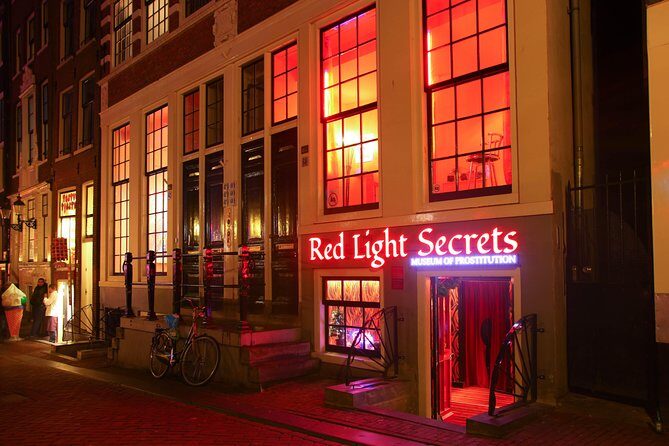
Red Light Secrets is not a textbook exhibit with long, quiet display halls. It’s a short, story-driven walk through a real-world topic—using sets, signage, and audio narration—in a building that still feels like it belongs to the district.
That matters, because context is everything here. The Red Light District outside can feel like a blur of lighting, windows, and tourists trying to get the right angle for a photo. Inside, the goal shifts from spectacle to explanation: what the neighborhood is, how it changed over time, and what the experience can be like for the people working there.
Expect a mix of fun facts and serious moments. The tone is often described as light-hearted and informative, but it doesn’t erase the sadness. I like that balance because it respects the topic: it informs without pretending it’s all jokes.
You can also read our reviews of more museum experiences in Amsterdam


Entering the former brothel: your first taste of the district
Your visit starts as you step into the building and get oriented. This isn’t a huge museum campus. You move through small rooms, guided by audio and the on-site booklet, in a route that stays close to the feel of the neighborhood.
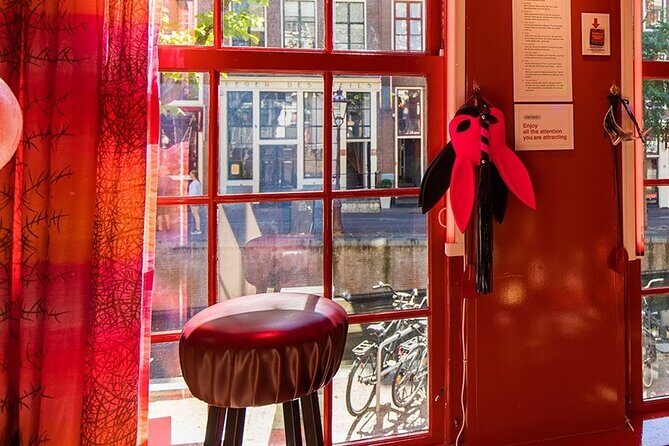
One standout detail: you get to experience what it feels like to sit behind one of the famous windows. That doesn’t “solve” anything about the trade, but it gives you a sense of how the pitch works—how someone has to attract attention in a tight, public space.
And yes, this is also where the museum’s biggest practical difference kicks in. In the rest of the Red Light District, photos are generally not the point. Here, pictures are allowed and encouraged, and that changes how people experience the building. You’re not stuck photographing the street while wondering what you’re actually seeing.
The audio tour (Inga’s stories) and the self-paced design
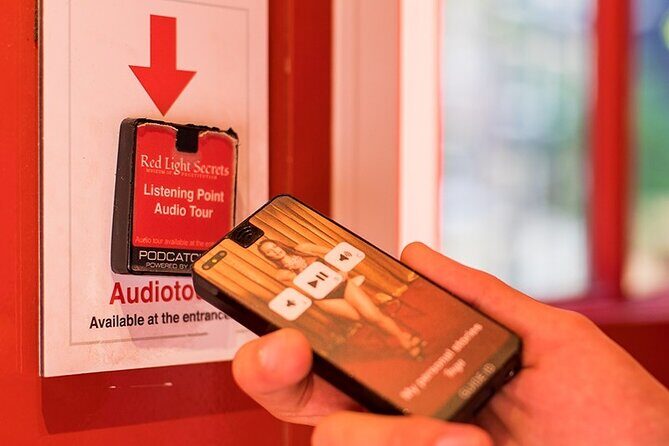
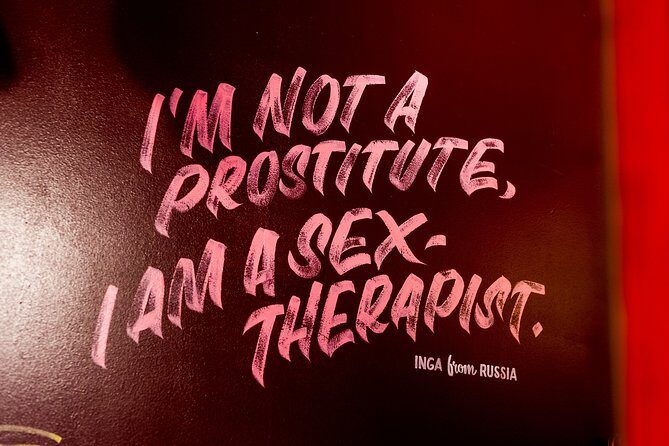
The museum’s backbone is the audio experience—Inga’s personal audio stories are included with admission. That means you’re not waiting for a group to assemble, and you can slow down where the story pulls you in.
The best advice is simple: don’t rush. A common complaint is that people felt it was short. When that happens, it often means the audio got treated like background noise instead of part of the exhibit. If you actually listen, you’ll get more out of the same rooms.
You’ll also have booklets on the Red Light District. That’s handy when your brain is juggling audio, visual details, and your own questions. I like having something you can refer to when a story raises a point you want to remember.
Language-wise, the experience is offered in English. That’s a big deal here, because a topic like this can turn awkward fast if you miss the meaning. Audio in your language keeps it grounded.
The “typical day” storytelling and what it teaches
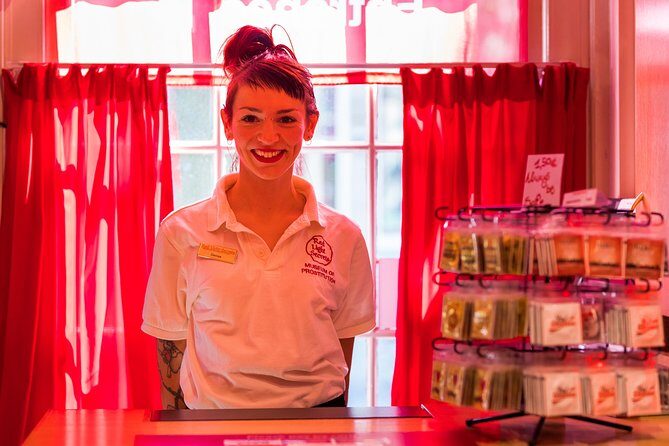
A key promise of Red Light Secrets is that you learn about a typical day in the life of someone working in the district, plus the history of the neighborhood. You’re not just staring at windows—you’re getting explanations for what you’re seeing.
This is where the museum tries to remove the usual negativity and taboo. It’s not trying to make prostitution look “clean” or safe. Instead, it frames the subject with context: choices, constraints, power dynamics, and how things evolve.
Some reviews also mention that the museum connects the topic to other cultural references, including art history moments. That kind of context is useful because it shows prostitution isn’t only about one street corner; it’s also about how society has talked about and represented it over time.
One word of caution: if you walk in expecting a long, deep chronology with lots of gallery-style history panels, you may feel underwhelmed. The museum is built for a focused route and strong storytelling, not for hours and hours of exhibits.
The confessions wall: why the ending lingers
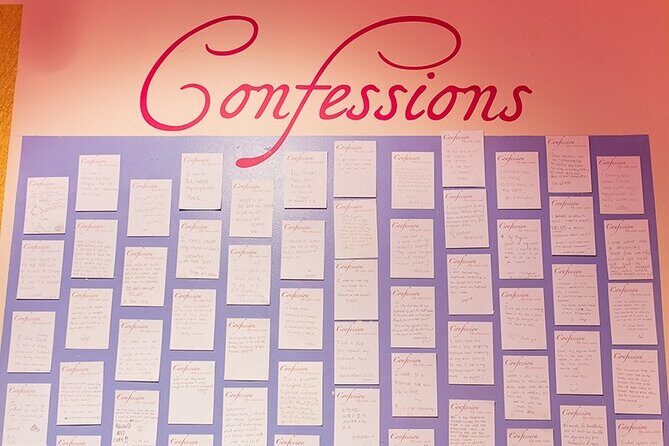
One of the most praised parts is the ending. There’s a wall of confessions, and the vibe shifts from explanation to something more raw.
People describe it as thought provoking, serious, and memorable—also intense enough that it’s not for the faint hearted. That lines up with what makes this museum matter. It’s easy to keep thinking of the district as a “place to look.” The confessions ask you to think of it as lives and experiences.
If you’re the type who likes reflective experiences, don’t try to “finish fast.” Let that ending land. Even if you don’t agree with every implication, the writing and audio structure aim to make you sit with the human side of the topic.






How long it takes: plan for 1 hour, then add breathing room
The tour is listed at about 1 hour, but reality can stretch. Some people report moving through in roughly 15 minutes if they rush. Others say they took their time and it lasted over an hour, with at least one longer visit around 1.5 hours.
So here’s my practical rule: budget 60–90 minutes. If you’re listening carefully and reading as you go, you’ll want the extra time. If you’re traveling with someone who hates small spaces and wants to get out quickly, you’ll probably stay closer to the shorter end.
Timing also matters because the museum can get crowded. Reviews mention feeling rushed due to limited space—you can’t always stand and listen without bumping into the next person. If you can, go earlier in the day to reduce the crush and give yourself room to hear the audio clearly.
Price and value: is $17.42 worth it?
At $17.42 per person, Red Light Secrets sits in that “worth it if you’re curious” category. The admission includes your entrance ticket plus the audio experience and the booklet. That’s the core value: you’re paying for a structured way to understand a topic you can’t learn properly just by walking past it.
Where value gets tricky is expectation. If you want a huge museum with lots of history, the size and pace may feel like a letdown. If you want a focused, story-based introduction—and you actually listen—most people who rate it highly seem happy with what they got for the money.
Also, remember you’re paying for access to a specific experience, not just information. Sitting behind the windows is different from reading about it. The confessions wall is different from hearing a quick summary on a street corner.
Photography in the museum: allowed, but don’t make it the whole point
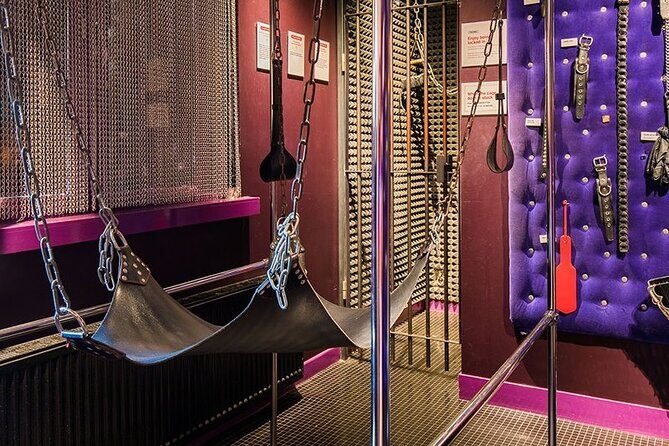
One of the fun practical perks is the photo policy inside. Photos are allowed and encouraged in the museum, unlike much of the surrounding district.
That said, don’t turn the visit into a photo scavenger hunt. The museum works best when you pair what you see with what you hear. If you’re constantly stopping to take pictures, you’ll miss details in the audio stories—and you’ll end up feeling like it was short or repetitive.
Some people also mention photo-related issues (like photos not working). If you’re counting on picture-perfect moments, build in flexibility and don’t expect every tech feature to behave flawlessly.
Crowds, small rooms, and who this feels good for
This museum is small. Even when you’re trying to listen, the layout can create bottlenecks. Reviews specifically mention a claustrophobic feeling when spaces get busy, and people felt rushed because they couldn’t linger without blocking others.
So this is a good fit if:
- you’re okay with a compact indoor layout
- you want an audio-led introduction to the district
- you can tolerate crowds for a short time
It may feel less good if:
- you have trouble in tight spaces
- you get stressed when you can’t comfortably pause and listen
- you’re hoping for a quiet, slow-moving museum atmosphere
Age-wise, it’s only suitable for 16 and older, which is important context for parents and teens deciding what’s appropriate.
Should you book Red Light Secrets? My honest take
Book it if you want a structured way to understand the Red Light District beyond the street-level angle. I think it’s especially worth it if you like story-based experiences and you don’t mind that the museum is compact. The combination of Inga’s audio stories, the former brothel setting, and the confessions wall makes it memorable in a way that a quick walk through the district can’t.
Skip it if you want a long, traditional history museum, or if you strongly dislike crowded, tight rooms. Also, if you’re going to rush through and treat the audio like optional background, you’ll likely feel like it’s overpriced for how fast you finish.
FAQ
FAQ
What is Red Light Secrets, and where is it?
Red Light Secrets is the Museum of Prostitution in Amsterdam, set in a former brothel. It focuses on the Red Light District and prostitution history and experiences.
How long does the experience take?
The experience is listed at about 1 hour. In practice, some people move through faster, while others take longer when they listen and read carefully.
What’s included with the ticket?
Your admission includes the entrance ticket to Red Light Secrets, Inga’s personal audio stories, and a booklet about the Red Light District.
Is it an audio tour or a guided tour?
It’s an audio-based visit. The audio guide is included, and the experience is set up so you can follow it as you go through the museum.
What age is it suitable for?
The experience is only suitable for those aged 16 years and older.
Can I take photos inside the museum?
Yes. Pictures are allowed and encouraged inside the museum, which is different from much of the surrounding Red Light District.
What’s not included in the price?
Souvenir photos (available to purchase) and transportation to or from the attraction are not included.
How close is it to public transportation?
It’s near public transportation.
When is the last admission?
The last admission is 1 hour before closing time.