REVIEW · AMSTERDAM
Amsterdam canal cruise in open boat – Guided tour
Book on Viator →Operated by Amsterdam Boat Trips · Bookable on Viator
Three canals and big stories in an hour. You get a guided ride through the classic Amsterdam grachten (canals) on an open electric boat, with a skipper who mixes facts, local anecdotes, and route context as you glide past bridges and canal houses. It’s a smart way to get oriented fast, especially if it’s your first day in the city.
I particularly like the combination of guided commentary and the view angles you only get from the water. You also have (non)alcoholic drinks available, which makes the hour feel like a proper Amsterdam evening plan, not just transport between sights.
The main drawback to plan around: you don’t have a toilet onboard, and sound can be a challenge on small open boats if you end up in a tough spot for listening. If you’re sensitive to hearing the guide, arrive early and pick your position carefully.
In This Review
- Key highlights before you board
- How an electric open boat changes the Amsterdam cruise feel
- The grachten trio: Prinsengracht, Herengracht, Keizersgracht
- Down the Amstel toward Amsterdam’s oldest area and the Red Light District zone
- Central Station’s front: where modern Amsterdam meets history
- The skipper and host experience: facts, anecdotes, and clear engagement
- Drinks on board and the real value of a $24.19 hour
- Getting on the boat: where people stumble and how to avoid it
- Who this one-hour cruise suits best (and who should consider alternatives)
- Should you book this Amsterdam canal cruise?
- FAQ
- How long is the Amsterdam canal cruise?
- Where does the tour start and end?
- How much does the tour cost?
- Is the cruise in English?
- Is there a mobile ticket?
- Are drinks available during the cruise?
- Is there a toilet on the boat?
- What route does the boat follow?
- How many people are on the tour?
- What happens if the weather is bad?
Key highlights before you board
- Prinsengracht, Herengracht, Keizersgracht in one loop with classic canal-house viewing
- Amstel sailing toward Amsterdam’s oldest area and the Red Light District zone
- Skipper-style storytelling: facts plus anecdotes and personal experience
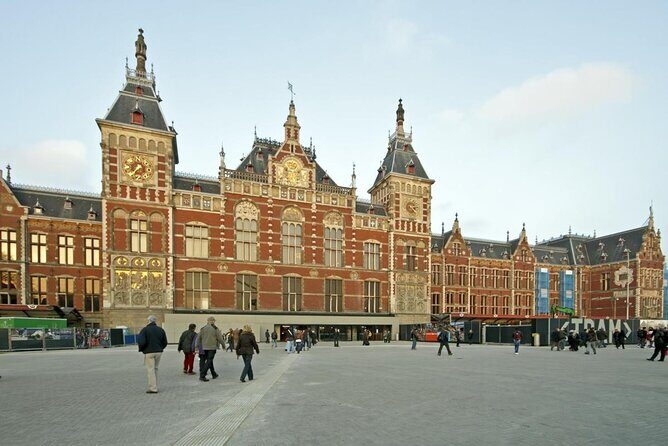
- Central Station waterfront: you see a modern front with deep historical context
- Electric open boat comfort with drinks available during the cruise
- No onboard toilet, so plan ahead
How an electric open boat changes the Amsterdam cruise feel
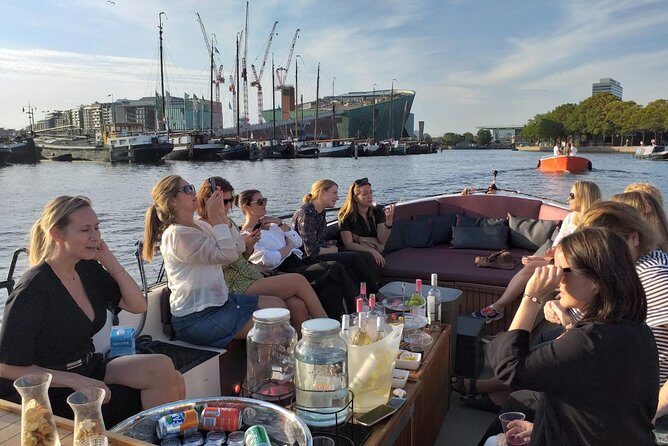
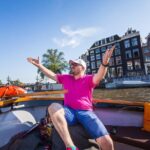
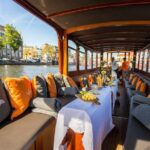
This tour is built around a simple idea: in Amsterdam, the best seat is the one that’s level with the buildings and bridges. The boat is electric and open, so you feel the city’s movement in a way you don’t get on a big, closed canal bus. You’re closer to the waterline, and the bridges feel less like scenery and more like moments you pass through.
Electric also matters in practice. With less engine noise than traditional boats, you have a better shot at hearing the guide—though this still depends on where you sit and how the narration timing works on your specific departure. On some cruises, people note the guide and skipper can sound like they’re talking at the same time, so don’t assume hearing will be perfect from every seat.
Because it’s an open boat, weather is real. If it’s windy or chilly, you’ll feel it more than on a covered vessel. If it’s sunny, you’ll get that crisp “Amsterdam from the water” glow. Either way, this is an hour where you should dress for the elements, not for comfort in a theater.
Finally, the duration is short enough to keep energy up. About one hour is plenty to spot what makes the city distinctive without turning the cruise into a long sit-and-hope session.
You can also read our reviews of more boat tours in Amsterdam

The grachten trio: Prinsengracht, Herengracht, Keizersgracht
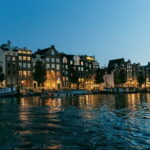
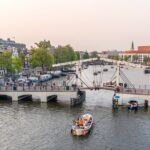
Amsterdam’s canals aren’t one canal—they’re a system. On this cruise, you see three of the biggest stars: Prinsengracht, Herengracht, and Keizersgracht. They’re often discussed as a postcard trio, but on the water you can notice how the canal edges and house fronts create different rhythms.
Here’s what I think makes this section worth paying for as a guided experience: the skipper doesn’t just point and describe. You get context while you’re actively moving through the view. That matters. When you’re on foot, canal details are easy to miss. On the boat, you can actually compare what you’re seeing from one stretch to the next.
You’ll also pass under and beside the city’s bridge work, and the guide’s storytelling helps you read the details as you go. One review even highlighted a bridge-inscription correction—an odd detail, sure, but it points to the larger point: the narration can turn small features into something you understand quickly instead of just staring at.
If you’re someone who likes architecture, canal-side homes, and the patterns of Amsterdam’s streets reflected in water, this part delivers fast. If you mostly care about photos, this route is still good because the boat keeps you moving while giving you stable, repeatable viewing angles.
Possible downside: canal-house photos are best when the light is right and when the boat positioning matches the angle you want. Since it’s open water, you also need to manage your phone or camera around splashes and spray, especially in breezy conditions.
Down the Amstel toward Amsterdam’s oldest area and the Red Light District zone
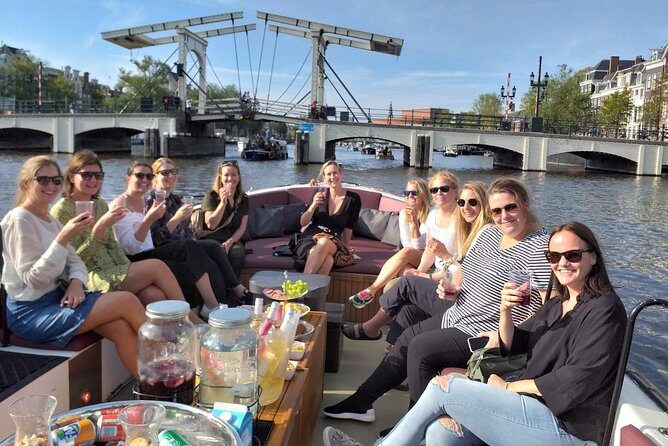
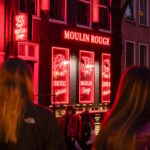
After the classic canals, the route brings you onto the river Amstel and toward Amsterdam’s older core, including the area associated with the Red Light District. This is where the cruise adds something that a simple canal loop usually skips: the story shifts from “pretty canal postcard” to “Amsterdam as a living city with layers.”
From the water, you don’t get the same street-level intensity you might notice walking there. Instead, you see the canal edges, the waterfront street structure, and the way that older neighborhoods sit right up against the city’s constant change. That perspective is useful. It helps you connect what you’ve been seeing in other parts of Amsterdam to the area’s place in the city’s overall timeline.
The skipper’s role here is key. The narration includes facts about the district and mixes in anecdotes drawn from earlier guests and personal experience. That style tends to land well because it’s not just dates and names. It’s also human-scale storytelling—what the area is known for, how it evolved, and what people have found interesting (or surprising) as they’ve come through over time.
One word of caution: the Red Light District topic is sensitive for some people. If you’re traveling with kids or you just want a strictly family-friendly history tour, this cruise can still be handled respectfully, but the area is part of the route by design. For many adults, it’s a “see it from the water and understand it” moment. For others, it might feel too close to their comfort line.
Central Station’s front: where modern Amsterdam meets history
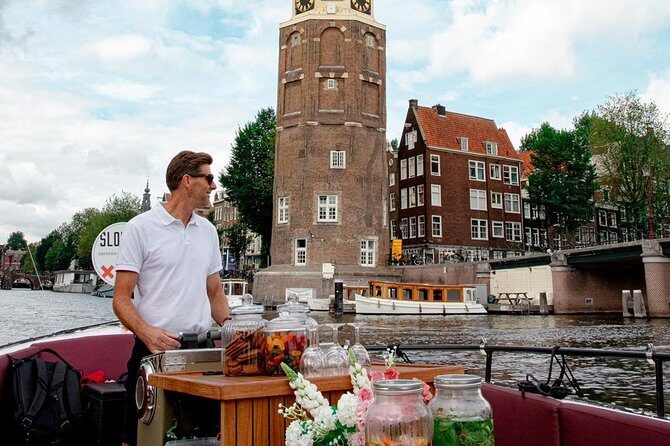
The cruise also continues along the newer area in front of Central Station. This part is interesting because Central Station isn’t just a transport hub—it’s a physical symbol of Amsterdam’s growth beyond its oldest canals.
The guide adds context about how this waterfront area connects back to Amsterdam’s larger story. Even when the buildings and public spaces feel modern, the city’s geography stays the same: waterways, bridges, and the way people move through the city.
This stop tends to work well as a “mirror” for the earlier canal sections. First you see the historic canal layout. Then you shift to a busier, more contemporary edge of town. The result is that you leave with a better sense of Amsterdam as both preserved and evolving.
If you’re someone who worries that canal cruises all blur together, this change of setting helps. Instead of repeating the same canal-house view for an hour straight, you get a clear progression.
The skipper and host experience: facts, anecdotes, and clear engagement
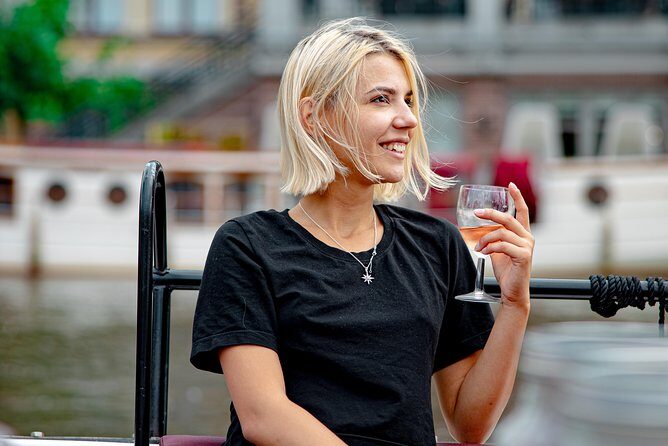
This isn’t a cold audio-guide setup. The cruise is guided by an experienced skipper and an entertaining host style of delivery. In practice, this tends to mean you’re listening for more than just street names—you’re also getting story beats that explain why something matters.
From named guides mentioned in customer experiences, you may hear hosting styles like Angela and Jimmy, Levi and Skye, Teis and Angele, Justin and Kass, Cedric with Captain Debbie, or Nikk and Tallon. You might not have the same people, but it’s a good clue that the crew often brings personality, not just facts.
What I like about this approach is how it helps you connect the city quickly. Amsterdam can feel like a maze at first—canals, bridges, repeating facades, and lots of “wait, which street is that?” moments. When the guide points out meaningful patterns and tells you what you’re looking at, you get your bearings fast.
That said, the biggest quality variable on any open-boat narration is sound. Some people report it was hard to hear because the skipper and guide seemed to talk at the same time, and others mention difficulties locating the boarding area. I treat that as a planning issue, not a reason to avoid the tour—just know that choosing your spot and arriving early improves your odds.
You can also read our reviews of more guided tours in Amsterdam




Drinks on board and the real value of a $24.19 hour

At $24.19 per person for about one hour, this cruise is priced like a high-impact first-night activity. You’re paying for three things:
- time on the water in a central location,
- guided interpretation so you understand what you’re seeing,
- and the relaxed “sit down, look around” format.
The tour includes departure and return at the same location, which sounds basic but matters in Amsterdam. You don’t want to rebuild your evening plan around “where’s the pickup and how do I get there on time?” You meet at Stationsplein 17 and you’re back there when you’re done.
Drinks are also part of the deal: (non)alcoholic drinks are available. Some experiences mention beers and a good vibe when the weather cooperates. Even if you plan to stick to non-alcoholic, it still makes the cruise feel less like a quick sightseeing chore and more like a treat.
Do note what isn’t included: a toilet. That’s not rare for canal boats, but it changes how you plan your timeline. If you’re prone to needing bathroom breaks, you’ll want to handle that before you get on board.
Overall, the best value angle here is not squeezing in more sights. It’s using the cruise to understand Amsterdam’s layout and atmosphere, so the rest of your trip becomes easier.
Getting on the boat: where people stumble and how to avoid it
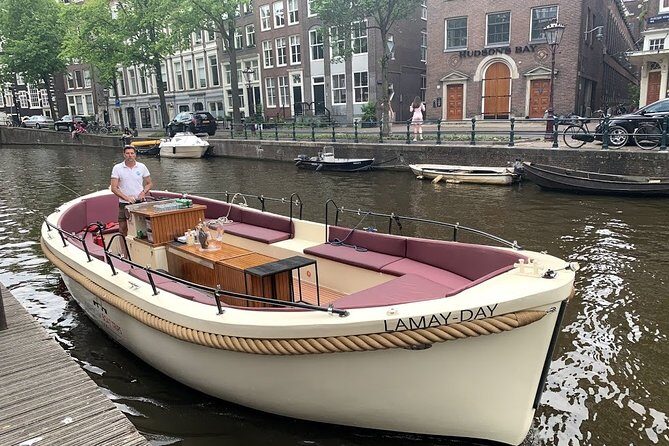
A recurring theme is simple: the onboarding moment can be awkward. Some people mention it was hard to find the boat because there was no clear signage for boarding, and others suggest an easier step for getting on and off.
So here’s what I recommend to you:
- Arrive early at Stationsplein 17, 1012 AB Amsterdam. Don’t show up exactly at departure time.
- Look for the crew and boat style that matches the tour setup. If you’re unsure, ask quickly rather than pacing the pier in circles.
- Bring shoes with grip. Open boats and pier edges don’t always feel designed for slippery footwear.
If you care most about hearing the guide, choose a seat where you can face the narration area. Open boats are physically simple—there’s nowhere to hide acoustically. If the crew positions the conversation in one area, you want to be close enough to catch it.
And again: no toilet onboard. That means plan your timing and don’t assume you’ll have that option mid-cruise.
Who this one-hour cruise suits best (and who should consider alternatives)
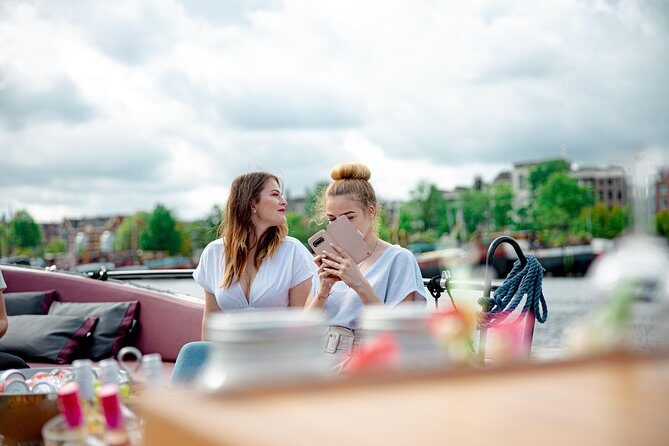
This tour fits well if you want Amsterdam context without spending the day in transit. It’s also a good match for people who like their city introductions guided but not exhausting.
I’d steer you toward this cruise if:
- you’re visiting for the first time and want to understand canal logic quickly,
- you want a comfortable hour with views and commentary,
- you like the idea of seeing the Central Station waterfront after the classic canal sections,
- you’re okay with the Red Light District area being part of the route.
I’d hesitate if:
- you need guaranteed quiet or perfect audio (open boats can make that hard),
- you require an onboard toilet,
- you’re the type who expects long, stop-by-stop museum depth. This is an hour of movement and story, not a deep seminar.
Group size is capped at 60 travelers. That usually keeps it manageable, but it’s still not private. If you prefer a quieter, more tailored tour, you might want a smaller-group or private option. If your priority is value and orientation, this one makes sense.
Should you book this Amsterdam canal cruise?
Yes—if your goal is a fast, guided first taste of Amsterdam’s canals plus meaningful route context. For one hour and $24.19, you get the grachten trio, a shift onto the Amstel, and a look toward the older core and the Red Light District zone, ending with the Central Station waterfront. That’s a lot of “Amsterdam variety” packed into one sitting.
Book it now if:
- you want to get oriented on your first night,
- you like commentary that includes stories, not just street names,
- you’re comfortable with open-boat weather and planning around the lack of a toilet.
Skip or rethink if:
- hearing the guide clearly is your top priority and you’re worried about sound in an open setup,
- you need toilet access onboard,
- or you’re looking for a longer route with more stops and time on land.
If you’re flexible on the listening spot and you arrive early, this is one of those easy wins that turns Amsterdam from confusing into familiar fast.
FAQ
How long is the Amsterdam canal cruise?
It lasts about 1 hour.
Where does the tour start and end?
It starts and ends at the same place: Stationsplein 17, 1012 AB Amsterdam, Netherlands.
How much does the tour cost?
The price listed is $24.19 per person.
Is the cruise in English?
Yes, the tour is offered in English.
Is there a mobile ticket?
Yes, you get a mobile ticket.
Are drinks available during the cruise?
Yes. (Non)alcoholic drinks are available on board.
Is there a toilet on the boat?
No. Toilet is not included.
What route does the boat follow?
You’ll cruise on Prinsengracht, Herengracht, and Keizersgracht, sail on the river Amstel toward the oldest area (including the Red Light District area), and also cruise along the area in front of Central Station.
How many people are on the tour?
The tour has a maximum group size of 60 travelers.
What happens if the weather is bad?
This experience requires good weather. If it’s canceled due to poor weather, you’ll be offered a different date or a full refund.