REVIEW · AMSTERDAM
Amsterdam: Private Guided City Tour by Pedicab
Book on GetYourGuide →Operated by a Pedicab in Amsterdam · Bookable on GetYourGuide
Pedicabs cut through Amsterdam fast. This private guided ride lets you glide past sights in a way that buses and cars can’t reach, slipping down small streets and bridges while your guide explains what you’re seeing. I like that the pacing is relaxed, with stops built in for photos and quick questions, not just a drive-by. I also like the route mix, which lands you on both the big-name landmarks and the calmer canal-side streets. The main drawback to plan around is weather: if conditions are rough, the ride may not be practicable.
For a first afternoon in town, this is one smart move. A great guide can turn a map of Amsterdam into something you actually understand, from why the city’s name matters to how the canal belt shaped neighborhoods. You’ll also notice the personal touch in how guides handle timing and requests, with examples like Kristian and Alfonso/Alphonso earning standout notes for friendly, well-structured storytelling and smooth driving.
In This Review
- Key points before you go
- Why a pedicab tour feels different from walking or buses
- Route overview: how 1–2 hours fits Amsterdam’s layout
- Starting point energy: Historical Center and Newmarket
- Damrak to Dam Square: the classic Amsterdam anchor
- Munttoren and the Flower Market: views with a practical payoff
- Rembrandt Square to Rembrandt House: art history at human speed
- Old Jewish Quarter and the canal belt: the Amsterdam story in layers
- Chinatown and the IJ bay: a different Amsterdam mood
- Museum quarter and Jordaan: finishing with a softer pace
- Price and value: $118 per group for up to 2
- The guides: what makes this tour consistently score high
- What to plan for: weather, comfort, and realistic expectations
- Who should book this (and who might not)
- Should you book the Amsterdam private pedicab tour?
- FAQ
- How long is the Amsterdam private pedicab city tour?
- What does it cost, and how many people can go?
- What languages are offered by the live guide?
- Is hotel pickup included?
- What is the cancellation policy?
- Is the tour accessible for wheelchair users?
Key points before you go

- Small-street route access that larger vehicles can’t match
- Built-in photo stops so you’re not stuck snapping pictures from motion
- A private group of up to 2 for a more tailored pace
- 1 to 2 hours to get your bearings without exhausting your legs
- Hotel pickup is optional within a defined city-center zone
- Guide languages include Italian, English, Spanish, and German
Why a pedicab tour feels different from walking or buses
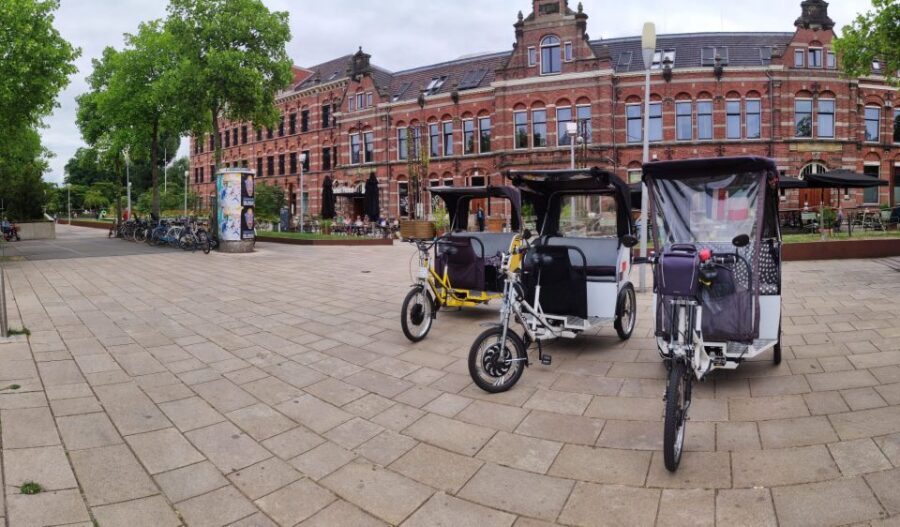
Amsterdam is made for bikes, canals, and foot traffic. The issue is that it’s easy to spend your limited time crisscrossing busy areas, then end up tired before you learn what you’re actually looking at. A pedicab solves that. You get seat-level views of canals and architecture, and you cover more ground than you would on foot.
In practice, this ride is about position and perspective. Pedicabs can take you down narrow lanes and cross over small bridges where cars and buses don’t go. That means you see corners of the historical center that look charming from street level, but would be a chore to reach while navigating crowds and crossings. It’s also why photo stops work: you’re often stopping in the right spot, not just parking somewhere and hoping the angle is good.
The “private” part matters too. The guides who earn the highest praise tend to be flexible with pacing. If you want extra time at a canal façade, a bridge view, or a landmark entrance, you’re not stuck with a group schedule.
You can also read our reviews of more guided tours in Amsterdam



Route overview: how 1–2 hours fits Amsterdam’s layout

This tour runs for 1 to 2 hours, and you can think of it as an orientation circuit with enough variety to set context for the rest of your trip. Instead of only hitting the headline spots, you also get a feel for how different Amsterdam neighborhoods connect—especially around the waterways.
Your ride includes stops around:
- the Historical Center and Newmarket
- Chinatown and the IJ bay
- Damrak and Dam square
- Munttoren
- the Flower market
- Rembrandt Square and the Rembrandt House
- the Old Jewish quarter
- canal belt streets: Herengracht, Keizergracht, Prinsengracht
- the Museum quarter and the Jordaan
If you’re wondering whether you’ll see enough: yes, it’s designed to cover major clusters efficiently. If you only have one arrival day (or you want an easy reset day after travel), the 1–2 hour format can be a lifesaver. Just know that the ride isn’t meant to replace longer museum time. It’s for understanding place.
Starting point energy: Historical Center and Newmarket

Most tours in Amsterdam either start with a bang (a major square) or start with canals. Here you get a mix. The Historical Center is your quick “this is the layout” moment—street patterns, canal rhythm, and the sense of how old Amsterdam grew. It’s also a good time to ask your guide what to watch for, like the way buildings face the water and how main routes guide foot traffic.
Then you hit Newmarket, which helps shift your mind from monuments to daily-life Amsterdam. Market areas are where you see the city as a working place rather than a photo collection. Even if you don’t linger long, the guide’s stories can make the space click, because markets tie into trade, population shifts, and neighborhood development.
A practical note: in central spots, you’ll likely encounter foot traffic and bike movement. The pedicab pace stays comfortable, but expect to slow down for people crossing and for bike-lane flow.
Damrak to Dam Square: the classic Amsterdam anchor
From Damrak to Dam square, you get one of the city’s busiest, most recognizable corridors. Damrak is one of those streets where the scale of Amsterdam’s movement becomes obvious fast: tram lines, foot traffic, and constant motion. Dam square is the social heart where history and modern life overlap.
This stretch is valuable because it gives you something to return to mentally later. Once you understand where Dam square sits relative to the canals and main routes, it’s easier to plan day trips and connect sights without second-guessing the map.
Your guide will usually use this part to explain key context—why certain locations matter and how the city’s story stacks up. People often love how guides pace explanations during the ride, so you’re not stuck hearing everything in one long stop-and-go chunk.
Munttoren and the Flower Market: views with a practical payoff
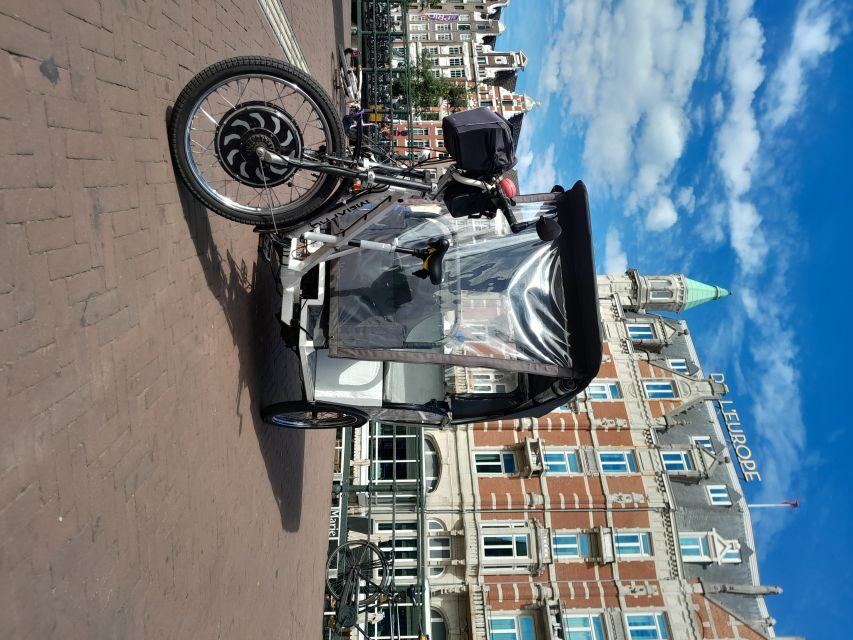
At Munttoren, you’re looking at a historic tower point that helps orient you visually. Towers in Amsterdam aren’t just landmarks; they also act like mental signposts. Even if you don’t remember every detail afterward, you’ll remember the feeling of where you are in relation to the canal system.
Then comes the Flower market, which is more than a colorful detour. It’s a “seasonal Amsterdam” experience—something that signals how the city adapts and reinvents itself over time. It’s also one of the best spots for photos because it’s structured for seeing, not just passing through.
If you’re sensitive to crowds, go into this stretch with realistic expectations. You’ll probably slow down and stop briefly, and it’s normal for the area to feel busy.
You can also read our reviews of more city tours in Amsterdam




Rembrandt Square to Rembrandt House: art history at human speed

Now you get into the neighborhood tied to Rembrandt Square and the Rembrandt House. This part works well on a pedicab because it’s easy to slow down at the right angles. You can take a breath, listen, and then get moving again without the fatigue you’d face if you walked between stops.
Rembrandt Square is a strong “center of gravity” point. It’s memorable because it sits at the intersection of everyday street life and the wider cultural story. The Rembrandt House adds a more personal layer: you’re not just seeing a name on a map; you’re seeing the area connected to a person who shaped how art lives in this city’s imagination.
What you’ll get most out of here is context. The best guides don’t just recite dates. They connect the dots between the neighborhood vibe and the historical timeline, so the architecture and streets start to make sense.
Old Jewish Quarter and the canal belt: the Amsterdam story in layers
One of the most meaningful segments is the Old Jewish quarter area, where the city’s past becomes more than a set of buildings. Even on a short ride, the guide’s explanations can help you understand why this neighborhood’s history matters, and why Amsterdam’s story includes more than just the best-known landmarks.
Right after that, the route moves into the canal belt through Herengracht, Keizergracht, and Prinsengracht. This is where you start seeing the canals as a system, not just scenic water. The canal belt helped shape where people lived, how they traded, and how neighborhoods formed. A pedicab makes this easier because you’re not fighting walking speed while trying to read the city.
Here’s the big practical payoff: the canal belt is long. Walking it all in one day is hard. This ride gives you a clean, timed slice so you can later pick which canals you want to explore more on your own.
Possible drawback: if you’re someone who loves to linger, you might want more time in this part. The tour is designed for a full overview, so stops are purposeful rather than extended.
Chinatown and the IJ bay: a different Amsterdam mood
Then the route shifts toward Chinatown and the IJ bay. This isn’t just a change of scenery; it’s a change of feel. Chinatown helps widen your picture of Amsterdam as a city of communities, not only a city of canals and museums. It’s a reminder that modern Amsterdam has layers, and it keeps evolving.
The IJ bay adds the water-and-wind factor. It often feels more open than the canal streets, which can make the photos pop and give your brain a break from the dense central grid.
This area is also a good moment to ask your guide a question you might have been saving, like how the city expanded or what to prioritize next. Because you’re already moving through the city, you can get quick answers right where the context is visible.
Museum quarter and Jordaan: finishing with a softer pace
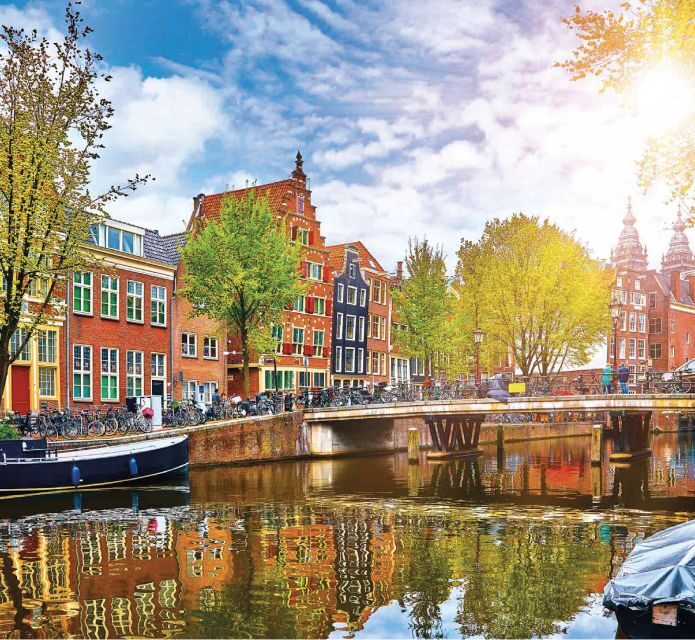
The Museum quarter is your “big institutions” overview zone. Even if you don’t enter museums during the pedicab tour, the stop helps you understand where museums sit and how they connect to the neighborhoods around them.
Then you end up in the Jordaan, a district many people love for its everyday charm and smaller-feeling streets. On a pedicab, Jordaan works because you can take in the vibe without squeezing in long walks. It’s a great finish if you want something that feels more local and less monumental.
If you have a preference, this is also where it pays to communicate. Some guides are especially good at shaping the final moments so it feels like a satisfying landing, not a rushed wrap-up.
Price and value: $118 per group for up to 2
At $118 per group (up to 2 people) for 1 to 2 hours, this isn’t the cheapest activity in Amsterdam, but it can be good value if you match it to your needs.
Here’s how I think about the math in real life:
- If you’re two people and you want a low-effort way to get orientation, the cost per person can feel reasonable.
- If you’re replacing multiple taxis or trying to avoid long walking sessions on a tight schedule, the value rises fast.
- If you’re using the tour to pick priorities for the rest of the trip, that “planning help” can matter as much as the ride itself.
The best value comes when you treat it as a guided kickoff. Get the context first, then spend your remaining time deeper where you want it: museums, canal cruises, and neighborhoods that catch your eye.
The guides: what makes this tour consistently score high
This is one of those Amsterdam experiences where the guide can change everything. Some standouts in the feedback include Kristian, Alfonso/Alphonso, Guido/Guido-like companions, Bobby, Bram, and others. Across the best notes, a few themes repeat.
1) They drive confidently through bike-lane traffic. People often mention the smooth handling, which matters because Amsterdam isn’t quiet.
2) They stop for photos when you ask. This turns the pedicab from transport into a guided sight session.
3) They’re flexible about where you want to end. Several accounts mention guides willing to adjust drop-off locations if possible.
4) They tell stories that connect place to time. You learn not only what’s where, but why.
One practical tip: if you’re hard of hearing, don’t assume the audio setup will work for you. There’s at least one note advising you to check with the company about whether a speaker or ear piece is available.
What to plan for: weather, comfort, and realistic expectations
The activity notes that it might not be practicable during bad weather. That’s not a small detail. Amsterdam weather can flip quickly, and a pedicab is an outdoor ride for a set number of minutes. If rain or strong wind is on the forecast, keep an extra hour of flexibility in your day.
Comfort-wise, it’s designed for people who want low walking but still enjoy seeing places closely. It’s also not suitable for wheelchair users and there’s a weight limit of 243 lbs / 110 kg. If either applies to you, plan a different Amsterdam orientation strategy.
Who should book this (and who might not)
You should book this if:
- you want an easy, fun way to see many top areas fast
- you don’t want to manage navigation or bike-lane routes
- you want a guided explanation while you rest
- you like photo stops and short, focused segments
You might choose something else if:
- you want long time in one neighborhood, like a full museum morning
- you’re planning the tour on a day with serious rain
- you need wheelchair access
Should you book the Amsterdam private pedicab tour?
If you’re arriving in Amsterdam and want a quick understanding of where everything sits, this is one of the smartest ways to spend a short window. I’d especially recommend it for couples (since it’s priced by group up to 2) and for anyone who wants sightseeing without turning the day into a walking test.
Book it if your priority is orientation plus stories, and if you can handle being outdoors even when the sky is a bit moody. Skip it if bad weather is likely to derail your plans or if the mobility/weight limits won’t work for your group.
FAQ
How long is the Amsterdam private pedicab city tour?
The tour runs for 1 to 2 hours, depending on availability and how long you want to stay on the ride.
What does it cost, and how many people can go?
It costs $118 per group, for up to 2 people.
What languages are offered by the live guide?
The tour guide offers live guidance in Italian, English, Spanish, and German.
Is hotel pickup included?
Hotel pickup is optional and is available from hotels within the city center limit around Nassauke-Stadhourderskade. You should ask during reservation to confirm your exact hotel address and pickup point.
What is the cancellation policy?
You can cancel up to 24 hours in advance for a full refund.
Is the tour accessible for wheelchair users?
No. The tour is not suitable for wheelchair users, and there is also a weight limit of 243 lbs / 110 kg.