REVIEW · UTRECHT
Private Walking Tour in Utrecht
Book on Viator →Operated by Tulip Day Tours · Bookable on Viator
Utrecht feels a little quieter than Amsterdam. That calm is exactly why I like this private walking tour: you get a focused look at the city’s architecture and daily life without racing from one landmark to the next. You’ll start at the center square of Vredenburgplein, then glide through the Oudegracht canal and the nearby cellars, where Utrecht’s shipping-and-brewing past still shapes what you see today.
Two things I really appreciate: the headset setup (so you can step away for photos and still hear your guide clearly), and the private, customizable pace (your guide can steer the walk toward what you’re most curious about). A small consideration: since the tour is only about 1.5 hours, it’s a “best-of Utrecht” sampler rather than a deep, all-day study of every street corner.
If you’re short on time but want a real sense of how Utrecht works, this is a smart way to get your bearings fast. And if you’re the kind of traveler who likes details—like why a bridge dates back to 1404 or how old wharf cellars became restaurant terraces—this tour rewards you.
In This Review
- Key highlights in this private Utrecht walk
- Utrecht on foot: why this 90-minute private format makes sense
- Starting at Vredenburgplein: the center square that sets the tone
- Oudegracht canal walk and Maartensbrug: Utrecht’s signature waterline
- Pandhof monastery garden: a calm pocket that still has old functions
- The swampy-ground square: land raised for markets, and darker chapters too
- Dom Tower and the unfinished cathedral: Utrecht’s tallest reminder
- How the tour ends back at Vredenburgplein (and where to go next)
- Value and price: what $184.05 buys for your group
- Who this Utrecht private walking tour fits best
- Quick practical tips before you go
- Should you book this private Utrecht walking tour?
- FAQ
- What’s the duration of the private Utrecht walking tour?
- Where do we meet for the tour?
- Is the tour private?
- What group size is allowed?
- Is the tour offered in English?
- Are headsets provided?
- Is the beer tasting included?
- How much does the tour cost?
- What if I need to cancel?
- Are service animals allowed?
Key highlights in this private Utrecht walk
- Vredenburgplein market atmosphere (markets on Wednesday, Friday, and Sunday, plus live stroopwafel stands)
- Oudegracht canal and Maartensbrug with the oldest still-existing bridge dating to 1404
- The wharf cellars story along Utrecht’s canals, including the long timeline from trade to breweries to restoration
- Pandhof monastery garden calm in a spot that used to be a 15th-century monastery garden
- Dom Tower context: free-standing after the unfinished cathedral’s collapse in 1674
- A small upgrade option to continue to Oudaen for a 3-beer tasting (extra)
Utrecht on foot: why this 90-minute private format makes sense
This tour is built for people who want Utrecht in one tight block of time. The duration is about 1.5 hours, and it’s private for up to 8 people (with children under twelve joining for free). That group size matters: you can ask questions without shouting over a crowd, and the guide can adjust the route if you’re more into canals, churches, markets, or quiet courtyards.
The other practical win is the headset. Utrecht streets are walkable, but they’re also lively—people, bikes, and the usual city noise. With headsets, you’re not stuck standing still like a museum guide tour passenger. You can walk slightly ahead, pause for a photo, and still follow the story.
Finally, this is a city where the “small stuff” is often the big stuff. Old cellars, canal-level terraces, and tucked-in gardens tell you more about daily Utrecht than a checklist of big monuments. This tour aims for that kind of meaning.
You can also read our reviews of more tours and experiences in Utrecht.

Starting at Vredenburgplein: the center square that sets the tone
You meet at Manneken Pis on Vredenburg (Vredenburg 154), right in the city center. It’s a good meeting point because it’s easy to find, and it anchors the walk in the life of Utrecht rather than the outskirts.
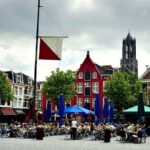
From there, your guide brings you into Vredenburgplein, a place with real rhythm. On Wednesday, Friday, and Sunday, the square becomes a market scene. You can spot fish stands and—importantly—stroopwafels prepared right in front of you. If you’re curious, you can ask your guide to include the market, and on a private tour that’s an easy adjustment.
Even if you’re not there on market days, Vredenburgplein still works. It’s the kind of square where you can feel how Utrecht organizes space: a central hub that isn’t trying too hard. And because your guide is starting you here, you get your bearings immediately before the walk starts turning into canals and older corners.
Oudegracht canal walk and Maartensbrug: Utrecht’s signature waterline
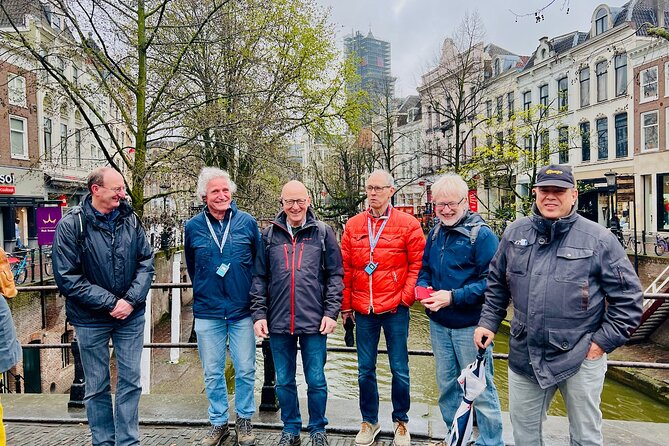
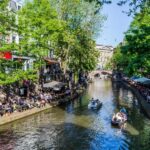
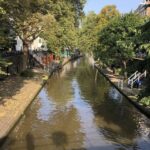
The walk’s centerpiece is Oudegracht, the former moat-canal running about 2 km through Utrecht from north to south. Your guide will explain how the canal shaped city life and trade, and you’ll see why Utrecht’s waterfront looks the way it does today.
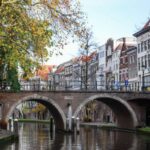
One highlight is Maartensbrug, a bridge near the Dom Tower. It crosses a part of the canal that already existed in Roman times, and the bridge itself dates to the early 1400s—1404—making it the oldest still-existing bridge in the Netherlands. That kind of timeline is exactly what makes Utrecht different from places where everything feels like a neat, single-era story.
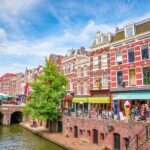
Then come the wharf cellars. Along Utrecht’s canals there are over 730 wharf cellars, with cellars built along the quay so goods could be stored immediately after unloading. The tour also connects dates to how the city changed: the oldest wharf is described as dating from 1150, and later the cellars shifted into brewing and marketplace uses. After 1900, road freight reduced that canal role, and many cellars fell into despair. After WWII, restorations began for cellars, wharfs, and quay walls.
If you want a visual cue for all that history, look for the restaurants along the canal. The tour notes that many are based in those cellars, using the wharfs as terraces. In the evening light, it’s easy to see why people find the atmosphere so good: you’re basically watching old trade infrastructure repurposed into modern social space.
Possible consideration: canal-side walking can mean more pauses and slower sections for photos and explanations. That’s good for understanding the city, but if you’re in a hurry, set expectations that the charm comes from lingering.
Pandhof monastery garden: a calm pocket that still has old functions
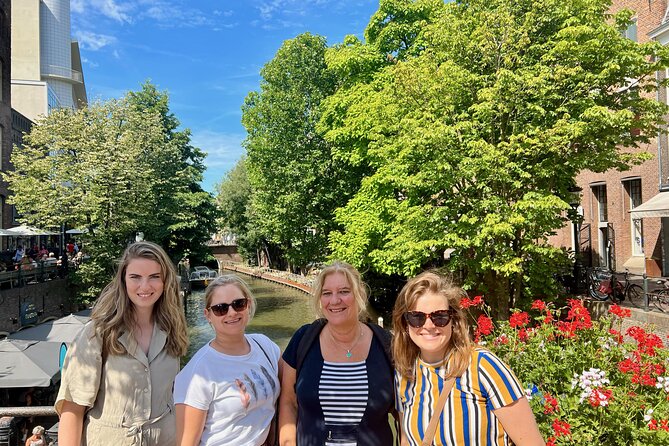
After the canal, the route shifts into quieter territory: Pandhof. The tour frames it as a former 15th-century monastery garden that now functions as a public space. You’re not just walking by a pretty courtyard; you’re stepping into a place with layered use.
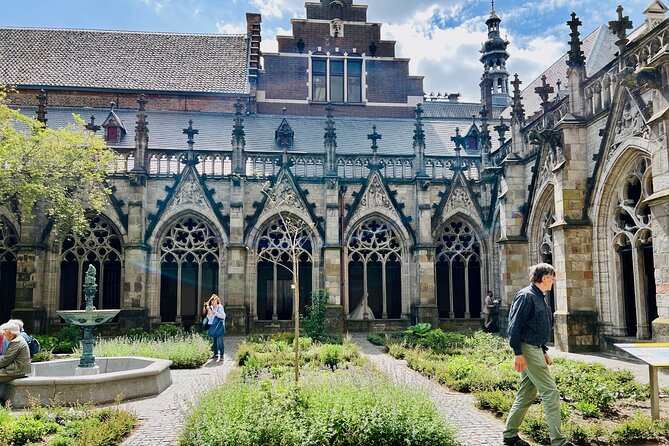
Your guide will point out the “serenity factor,” but also the historical detail. Pandhof has served as a fairground, a guard room for soldiers, and a meat market in different eras. Now, the space is described as an ornamental garden with authentic elements of a monastery garden, including culinary herbs, dye-producing plants, and medicinal plants.
There’s also a statue of the reading canon mentioned as part of what makes the courtyard visually compelling. Even if you’re not a garden person, this stop is useful because it changes the tempo of the walk. Utrecht can feel calm overall, but Pandhof gives you a real contrast: the canal’s trade-and-terrace energy turns into a pause where you can actually hear yourself think.
Practical tip: bring a moment of patience here. Courtyards are small and you’ll want time to look down at plantings and details rather than just move through.
The swampy-ground square: land raised for markets, and darker chapters too
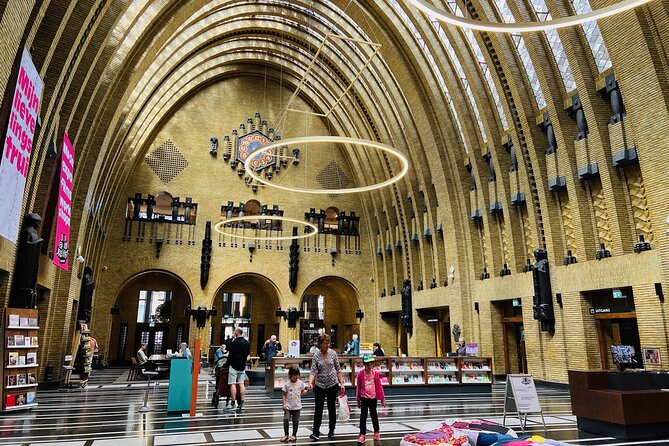
Next comes a square with a name that literally points to its origins: the tour explains that until the end of the 15th century, the area was swampy ground. The city strengthened and raised it using sand, stones, and debris so it could be used.
From the 15th to the 19th centuries, it served as a market square, and the tour also notes that executions took place here. That’s the kind of historical honesty that makes Utrecht feel real. This isn’t just a postcard city; it has a complicated past, and your guide’s job is to connect the physical place to that human story.
Later, until the 1990s, the area was a parking lot. Today, it’s a festival square with plenty of cafés. That transformation is a theme you’ll keep seeing in Utrecht: spaces adapt as needs change, but the geometry and location keep their identity.
Possible consideration: if you prefer only upbeat history, the executions reference may feel heavy. I’d treat it as a heads-up: you’ll learn the full story behind the square, not just a soft version.


Dom Tower and the unfinished cathedral: Utrecht’s tallest reminder
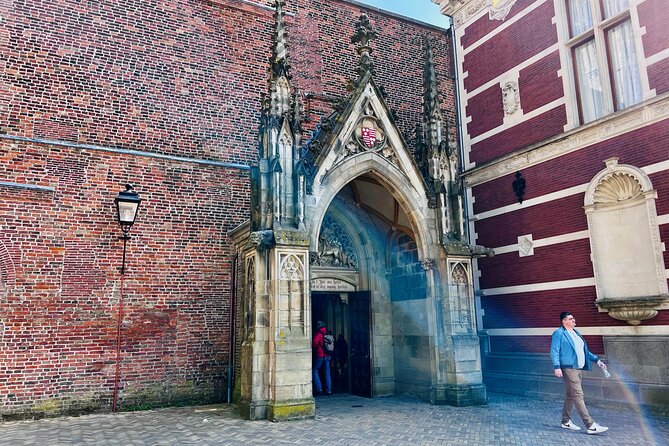
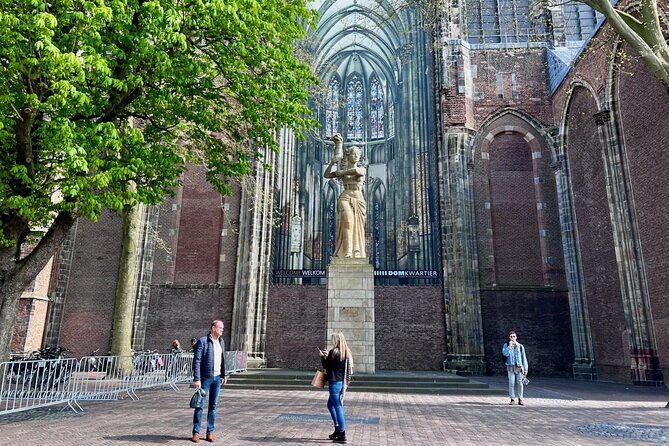
No Utrecht walk is complete without Dom Tower. The tour highlights it as the tallest church tower in the Netherlands. It was part of the Cathedral of Saint Martin (the Dom Church), but the cathedral was never fully completed due to a lack of money.
The real turning point is what happened later: after the unfinished nave collapsed in 1674, the tower became free-standing. Your guide also connects the tower’s position to the oldest layer of the city: it stands near the spot where Utrecht originated nearly 2,000 years ago.
That combination—tall structure, incomplete grand plan, and a very specific catastrophe date—gives you something that’s easy to visualize even while you’re walking. You’ll also understand why the tower feels both monumental and slightly haunting. Utrecht didn’t get a finished cathedral, but it did get a landmark that grew out of the same story.
Practical tip: if you’re doing this in daylight, Dom Tower photographs well from different angles in the surrounding streets. Your guide can point out the easiest viewing lines as you approach.
How the tour ends back at Vredenburgplein (and where to go next)
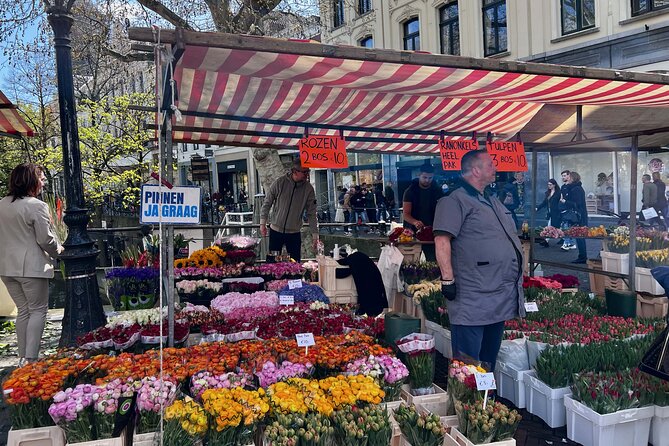
The standard final stop brings you back to Vredenburgplein, where the tour starts at Manneken Pis. This makes the whole experience feel self-contained: you don’t need to think about complicated end points or transport timing.
But there’s an optional add-on. If you want to keep the evening moving, your guide can continue with you to city castle Oudaen for a beer tasting. The tasting is excluded from the tour price, but the idea is simple: use the walk as the history lesson, then shift into something social and local nearby.
Even if you choose not to add the beer tasting, you’ll still likely end in a good spot. Vredenburgplein is central, so you can branch out easily for dinner, a canal stroll on your own, or a last look around the places you enjoyed most.
Value and price: what $184.05 buys for your group
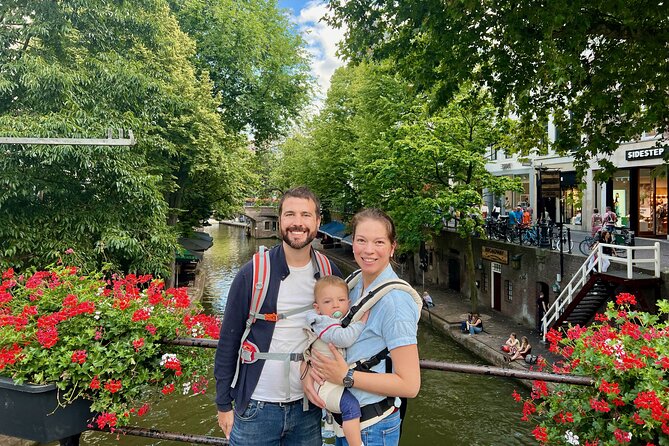
This tour costs $184.05 per group for up to 8 people, lasting about 1.5 hours. On the surface that sounds pricey, but here’s the math and the logic.
If you fill the group, the cost per person drops sharply. Even with a smaller group, you’re paying for three things that are hard to replicate with a standard group tour:
- a private guide who can tailor what you see,
- headsets that let you move around without losing the story,
- and a time-efficient route through Utrecht’s most meaningful, walkable zones.
Also, the tour includes taxes, fees, and handling charges, so you’re less likely to face surprise add-ons during checkout. The only common extras are optional gratuity (always optional) and the Oudaen beer tasting upgrade.
One more value angle: Utrecht is not just a sightseeing city—it’s a “stop and notice” city. If your guide is strong (and the guide feedback here is consistently positive), you end the tour with a much better sense of what you’re looking at when you wander afterward.
Who this Utrecht private walking tour fits best
I’d point you toward this tour if any of these sound like you:
- You want Utrecht’s highlights without sprinting through it.
- You like history explained in plain language, not lecture-style.
- You’re traveling in a small group and want more conversation than a big bus crowd.
- You care about the “why” behind places like wharf cellars and Dom Tower’s unfinished story.
It’s also a strong fit if you’re basing your trip in a nearby city. Utrecht is well connected by train: the tour notes Amsterdam is about 30 minutes, Rotterdam about 45 minutes, and Amersfoort about 15 minutes by direct train. That makes it easy to tack onto a longer Netherlands itinerary.
From the overall tone of the guide feedback, one quality repeats: the guides are friendly, personable, and strong on Utrecht context. One named guide shared in the feedback is Lucy, described as very knowledgeable and personable, and also praised for making the walk relaxed and fun.
Possible consideration: if you want a long, slow photo-walk with minimal structure, 90 minutes may feel tight. This tour is structured on purpose, and your best results come from using that structure to learn the city quickly.
Quick practical tips before you go
A few things to do that make the tour smoother:
- Arrive a few minutes early at Manneken Pis, Vredenburg so you start without stress.
- Wear shoes for cobblestones and canal sidewalks. Utrecht is walkable, but it’s still a city.
- If you’re there on Wednesday, Friday, or Sunday, ask about the market option early so you don’t miss the chance to see the fish stands and stroopwafel prep.
- Bring your phone for canal-side photos, especially along Oudegracht where the cellar-terrace vibe is easiest to capture.
Also, the tour offers a mobile ticket and uses headsets, which means you can focus less on logistics and more on what you’re seeing.
Should you book this private Utrecht walking tour?
I’d say yes, if you want Utrecht with context and you value a guide who can adjust to your interests. This tour delivers exactly what a short trip needs: a smart route through the canal story, the monastery-garden pause, and the Dom Tower’s signature “unfinished but unforgettable” presence.
Book it particularly if:
- you’re coming for architecture + atmosphere, not just photos,
- you’d rather ask questions than follow a fixed script,
- and you want a format that feels personal, thanks to the private group size and headset comfort.
Skip it if you’re looking for a long, unstructured wander with lots of free time. This one is designed to teach you quickly and set you up to enjoy Utrecht afterward.
FAQ
What’s the duration of the private Utrecht walking tour?
The tour runs for about 1.5 hours, including expected and any unexpected stops.
Where do we meet for the tour?
You meet at Manneken Pis Vredenburg, Vredenburg 154, 3511 BG Utrecht.
Is the tour private?
Yes. It’s a private tour, and only your group participates.
What group size is allowed?
The maximum group size is eight travelers (excluding children under twelve). Children under twelve join for free.
Is the tour offered in English?
Yes, the tour is offered in English.
Are headsets provided?
Yes. Headsets are provided so you can hear the guide clearly even when you move away for photos.
Is the beer tasting included?
No. You can continue to Oudaen for a beer tasting after the tour, but it is excluded from the tour price.
How much does the tour cost?
It costs $184.05 per group.
What if I need to cancel?
You can cancel for a full refund if you cancel at least 24 hours before the experience starts.
Are service animals allowed?
Yes. Service animals are allowed, and the tour is noted as suitable for most travelers.