REVIEW · AMSTERDAM
MUST DO: Amsterdam’s Red Light District tour with a local
Book on Viator →Operated by Trigger Tours · Bookable on Viator
Amsterdam’s oldest stories run after dark.
I like that this Amsterdam Red Light District tour with a local guide connects modern reality to what the area used to be, and it does it at street level on foot. I also like the mix of Old Town landmarks (timber-built foundations, the Waag, and landmark buildings still standing) alongside the parts of the neighborhood people usually only think about at a glance. Guides such as Ben and Robin are called out for making the facts feel human and easy to follow.
One watch-out: it’s a walking tour, so you’ll want good shoes and a plan for cold or slippery weather, because the streets can be slow and uneven. If you have limited mobility, this is not the best fit.
In This Review
- Key things to know before you go
- Why this Red Light District tour is good value at $31
- Meeting point and the “start after dark” vibe
- The smart size: up to 20 people with an expert local
- Stop-by-stop: what you’ll actually see on the 2-hour walk
- The Red Light District streets and the neighborhood’s current situation
- The Dam and why Amsterdam is literally built on timber
- Old Town context: the oldest part of the city
- Pub The Ape (Int Aepjen): a surviving wooden building from 1540
- The Waag: a former city gate turned craft center
- The smallest house: VOC storage that turned into long-term living
- A modern contrast: a condom shop since 1987
- What I’d prioritize when you do a tour like this
- The biggest plus: guides who make the facts feel clear
- How to stay comfortable on the streets (and avoid the common problems)
- Should you book this Red Light District tour?
- FAQ
- How long is the Amsterdam Red Light District walking tour?
- Where does the tour start, and does it end nearby?
- What is the price per person?
- Is the tour offered in English?
- Do I need an admission ticket for the stops?
- How big is the group?
- Is it suitable if I have limited mobility?
- Is food included?
- Can I get a mobile ticket?
Key things to know before you go
- Small group size (up to 20) keeps the experience flexible and easier to hear in busy streets
- 2 hours on foot means you’ll see a tight loop of sights without feeling rushed
- After-dark Red Light District focus adds context to what’s happening now, not just what happened long ago
- Old Amsterdam buildings with specific stories, like the Waag and the Pub The Ape, anchor the tour in real place
- A modern stop at a condom specialty shop gives a blunt look at how the district caters to commerce today
- Mobile ticket in English makes it simpler to organize your night
Why this Red Light District tour is good value at $31
For $31.32, you’re paying for something more useful than photos and street names: a guide who can explain why this part of Amsterdam looks the way it does, and how it evolved. Two hours is long enough to connect dots across centuries, but short enough that you don’t burn a whole evening.
The best part is the balance. You get the Red Light District context, then you step into older Amsterdam landmarks that show the city’s building and trade history. It’s not only about the neighborhood’s reputation, it’s about the neighborhood’s role in the city.
You can also read our reviews of more tours and experiences in Amsterdam.


Meeting point and the “start after dark” vibe
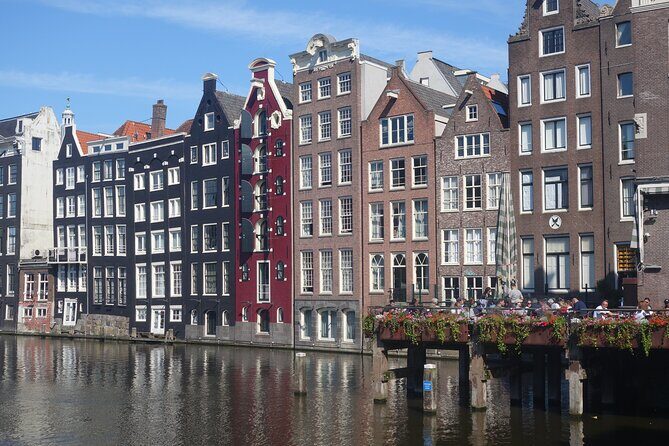
The tour starts at Geldersekade 2, 1012 BH Amsterdam, and it ends back at the same spot. Since the meeting point is easy to reach via public transport, it’s simple to pair this with dinner plans afterward (or before, if you like to eat early).
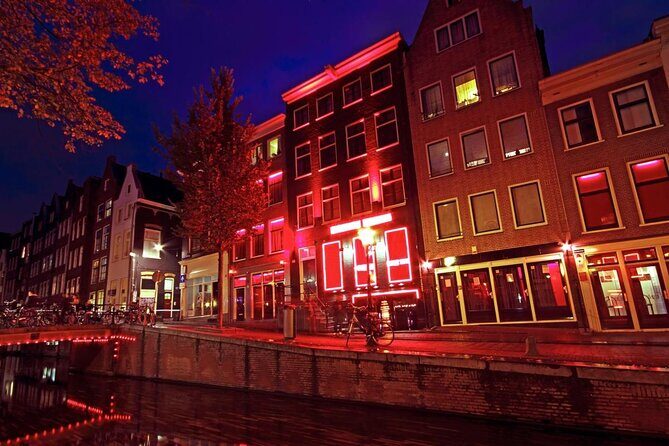
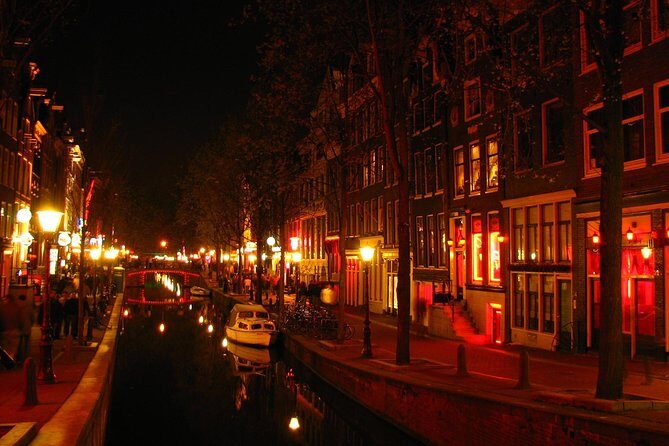
Starting at night changes how you experience the district. The streets feel narrower, the lights are sharper, and the commentary lands differently when you can see what people are talking about in real time. Bring layers even if you think it’ll be mild.
The smart size: up to 20 people with an expert local
This is a maximum of 20 travelers, which matters more than it sounds. In a district that’s naturally busy and visually chaotic, smaller groups help your guide keep everyone together and keep the pacing readable.
You’ll also hear the guide’s personality show through. Several guides connected with this experience (Ben, Robin, Sander, and Max) are described as making the walk entertaining, not just informative. That’s the difference between a “see the sights” tour and a “you understand the city” tour.
Stop-by-stop: what you’ll actually see on the 2-hour walk
The route is a compact loop designed for walking, with stops that explain both the district’s modern identity and Amsterdam’s older foundations. Here’s what to expect at each major moment.
The Red Light District streets and the neighborhood’s current situation
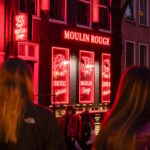
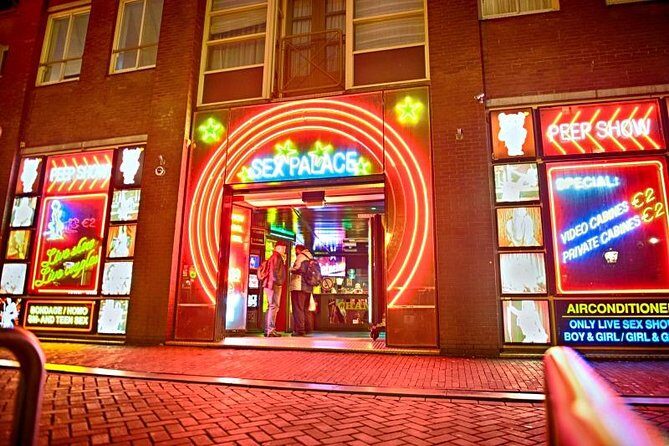
The tour begins right in the Red Light District, walking narrow streets where you’ll learn the area’s history and the current situation. Expect a guide-led stroll that helps you interpret what you’re seeing without turning it into a spectacle.
Since it’s on foot, you’ll get a sense of scale and how the streets connect. That matters because the district isn’t a single landmark you can “point to.” It’s a web of blocks, doorways, and changing storefronts.


The Dam and why Amsterdam is literally built on timber
One of the tour’s key ideas is Amsterdam’s construction story: the city’s soil is thick with fen and clay, so buildings were built on wooden poles driven deep until they reach solid sand layers. The stop tied to the Dam frames Amsterdam as a “city built on trees,” not just a pretty canal place.
This is more than trivia. When you understand the foundation approach, you start noticing why Amsterdam’s buildings feel the way they do and why the city developed the way it did.
Old Town context: the oldest part of the city
You’ll also move through an area described as part of the Old Town, which makes the historical commentary easier to feel. When the guide connects Red Light District stories to the oldest urban fabric, it helps you understand that the area isn’t isolated in time.
Think of it like switching from a chapter about the 1900s to a chapter about the 1400s—same city, totally different mindset.
Pub The Ape (Int Aepjen): a surviving wooden building from 1540
You’ll stop at Pub The Ape, also known as Int Aepjen. It’s built around 1540 and is noted as one of the two remaining wooden buildings in Amsterdam.
The story also mentions the big fire in 1452 and the government decision afterward to use brick facades. It’s a great example of how disasters reshape architecture, and how the city kept parts of its past alive.
The Waag: a former city gate turned craft center
Next comes the Waag, once one of Amsterdam’s city gates and part of the defensive wall, built around the 1400s. The Waag is described as Amsterdam’s second oldest building, and it later became tied to guilds and craftspeople—organizations that sat inside and around the square.
That gives the neighborhood depth. Instead of the district being only a “modern nightlife zone,” it becomes part of the city’s trade and defense story.
The smallest house: VOC storage that turned into long-term living
Another stop is the smallest house of Amsterdam, built around the 1700s. It began as storage for the VOC trading company, then later became a place where people lived for a very long time.
This one can surprise you because it forces a rethink: Amsterdam’s trading power wasn’t abstract. It was housed, stored, and lived inside real, physical spaces—even tiny ones.
A modern contrast: a condom shop since 1987
The final stop is a condom specialty shop—described as the world’s first condom shop, in place since 1987. You can get customized sizes and special condom options.
This part is intentionally modern, and that’s why it works. The Red Light District has history, but it also functions like a commercial district today, with products, services, and niche retail catering to the neighborhood’s needs.
What I’d prioritize when you do a tour like this
If you want the most out of a Red Light District walk, I’d focus on listening for how the guide links time periods. The foundation story (wooden poles), the defensive/guild story (Waag), and the survival/disaster story (Pub The Ape after the 1452 fire) all reinforce each other.
I’d also show up with realistic expectations. This is a walking tour with adult-themed subject matter in the neighborhood, so it’s best for people who can handle it respectfully and calmly. If you’re traveling with teens, consider who in your group feels comfortable with adult topics and night-time street life.
The biggest plus: guides who make the facts feel clear
From the guide names connected to this experience—Ben, Robin, Sander, and Max—the common thread is delivery. They’re described as making the city’s history easy to follow, adding humor, and sharing local context that goes beyond what you’ll read on a sign.
That matters in the Red Light District because the area can look confusing from the outside. A good guide helps you sort what’s historical, what’s current, and what’s just confusing at first glance.
How to stay comfortable on the streets (and avoid the common problems)
This tour is labeled as not recommended for travelers with limited mobility, so plan accordingly. The route is on foot and includes narrow streets, which can be tiring even for people who walk fine day-to-day.
Also, check the weather. One bad-experience report points to icy, difficult walking conditions, so wear shoes with real grip and bring a warm layer. If hearing is a concern for you, arrive a bit early so you’re positioned where you can hear without straining.
Should you book this Red Light District tour?
Book it if you want a 2-hour Amsterdam walking tour that does more than point at the obvious. The value is in the mix: after-dark district context plus specific historical stops like the Waag, Pub The Ape, and the smallest VOC-related house. It’s also a good choice if you like guides who turn history into an easy story, not a lecture.
Skip it if night walking stresses you out, if you need mobility-friendly routes, or if you don’t want adult-adjacent subject matter in a very real street setting. The district is what it is, so this tour only makes sense if you’re ready for that reality.
FAQ
How long is the Amsterdam Red Light District walking tour?
It lasts about 2 hours.
Where does the tour start, and does it end nearby?
It starts at Geldersekade 2, 1012 BH Amsterdam and ends back at the meeting point.
What is the price per person?
The price is $31.32 per person.
Is the tour offered in English?
Yes, it’s offered in English.
Do I need an admission ticket for the stops?
The tour notes admission ticket free, so you should not expect separate paid entries for the included stops.
How big is the group?
The tour has a maximum of 20 travelers.
Is it suitable if I have limited mobility?
It’s not recommended for travelers with limited mobility.
Is food included?
No. Food and drinks are not included.
Can I get a mobile ticket?
Yes, the tour includes a mobile ticket.