Rotterdam port life has a real-world center of gravity. At the Maritiem Museum Rotterdam, you get shipping’s impact on daily life in a way that feels physical, visual, and very made-for-a-day-out. I like that it mixes indoor exhibits with a waterfront area, so you don’t have to choose between “museum time” and “something to see outside.”
Two things I really like: the Offshore Experience concept, and the chance to visit the museum’s Museum Harbor with permanently-docked ships and cranes. One drawback to factor in is that this works best when you go in ready to explore at your own pace—if you want a tight, scripted guided tour, this is not the format.
In This Review
- Key highlights worth your time
- Getting oriented at Leuvehaven: the museum’s port setting
- What the ticket really covers (and why people may stay longer)
- The Offshore Experience: how the museum turns the sea into a theme
- Masterpieces: the collection that keeps the museum from feeling random
- Museum Harbor at Leuvehaven: ships and cranes you can actually visit
- Interactive exhibits and family exhibitions: a rainy-day strategy
- Timing your visit: when 2 hours turns into 3
- Getting your money’s worth from $135
- Who should book this Maritime Museum stop
- Quick logistics you’ll want to know
- Should you book? My honest take
- FAQ
- How long should I plan to spend at Maritiem Museum Rotterdam?
- What do I get with the $135 ticket?
- What are the opening hours?
- Where does the visit start and end?
- Is this activity good for families and kids?
- Do I need to bring anything?
Key highlights worth your time
- Offshore Experience: look for energy themed installations in the middle of the sea
- Masterpieces: see 25 standout works from the museum collection
- Museum Harbor: permanently-docked ships and cranes you can visit
- Family exhibitions and interactive exhibits: a strong rainy-day plan
- Self-guided entry with your group: you control how fast you move
Getting oriented at Leuvehaven: the museum’s port setting
The Maritiem Museum Rotterdam starts you in the heart of Rotterdam’s maritime world, at Leuvehaven 1a. That matters more than you might think. When a museum is placed right near the ships and port activity it talks about, your brain connects the history to the real environment instead of treating it like an indoor lecture.
The setting also helps with pacing. If you’re with kids, you can split your time between hands-on exhibits inside and time outside at the harbor area. If you’re an adult who wants to focus, you can do that too—without feeling like you’re wasting your visit.
This is a private activity for your group, and the basic rhythm is simple: arrive, enter, explore, and then you end back at the meeting point area. There’s no complicated itinerary that pulls you away from what you want to see most.
You can also read our reviews of more tours and experiences in Rotterdam.

What the ticket really covers (and why people may stay longer)
The ticket is museum admission. That’s the whole point. You can plan for roughly 1 to 2 hours, but the honest reason people sometimes linger is that the displays are meant to be explored, not just checked off.
You’re not paying for a guided narration. You’re paying for access—so you can spend extra time where your curiosity grabs you. One useful takeaway: if you think you’ll move fast, great. If you slow down for hands-on or waterfront sections, that’s still on-brand for this kind of museum.
Included in your cost is local taxes. Food and drinks are not included, and alcohol is available to purchase. So bring your own water if you like, and treat on-site refreshment as a convenience rather than part of the deal.
Price check: $135 can feel steep for a one-location, self-paced admission. The value comes from what’s bundled into the visit: interactive exhibits, an offshore oil-platform-style experience, and Museum Harbor access to ships and cranes. If your group would actually use those pieces, it starts to make sense. If you only want one small area, you might be happier with a shorter, cheaper option elsewhere.
The Offshore Experience: how the museum turns the sea into a theme
One of the best parts here is the Offshore Experience, which is built around energy and work happening out in the sea. Even without reading every label, you can still get the idea because the installation concept is meant to feel atmospheric and hands-on—like you’re stepping into the logic of offshore industry.
This section is also a good choice if you like modern shipping and engineering rather than only old boats and old maps. It ties the port’s past to its present workload. If your kids are curious, this is often the part that makes them stop moving and look closer.
What to do: don’t just walk through. Take a slower pass so you can catch what each part of the display is trying to make you notice. The big win is the museum’s effort to make offshore work understandable in a visitor-friendly way.
Masterpieces: the collection that keeps the museum from feeling random
In the exhibition Masterpieces, the museum highlights 25 of the most valuable pieces from its collection. This helps you because it gives your visit a spine. Instead of seeing everything equally, you can focus on a curated set that gives context to what comes before and after.
This is where you’ll likely get the most “ah, that’s why it matters” moments. When a shipping museum points you toward a few key items, you start connecting the dots: trade, technology, and how ships shaped movement of goods and people.
A practical tip: if you’re short on time, prioritize this section before you wander. Once you’ve got the Masterpieces frame, the rest of the exhibits feel more meaningful. If you have time, go back to it later after you’ve seen the harbor area and the offshore themed installation. The museum will start to click in a tighter way.
Museum Harbor at Leuvehaven: ships and cranes you can actually visit
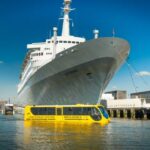
The star for many people is Museum Harbor, where you can visit historic ships and cranes that are permanently docked. This is the kind of museum feature that turns “a quick stop” into “we lost track of time.”
Why it works: indoor exhibits explain. Museum Harbor lets you check scale, details, and materials in real physical space. You can look at how vessels were built and how cranes support the port’s daily reality. For kids, it’s basically a walkable playground of real-world objects. For adults, it’s a chance to see what photos and models can’t fully communicate.
What to expect: this is part of the same museum visit, so you’re not commuting or coordinating a separate attraction. You’re moving from exhibits into the port environment right where the museum sits.
Rain factor: since Rotterdam can bring drizzly weather, this is a solid plan because you’re not stuck fully inside. That said, wear shoes you can stand in comfortably, because the harbor area means more time on outdoor surfaces.



Interactive exhibits and family exhibitions: a rainy-day strategy
This museum is a popular choice for local and visiting families, especially on rainy days. That’s not just marketing. The reason it holds up in bad weather is variety.
You get interactive exhibits and family exhibitions that make it easier for multiple ages to stay engaged. Instead of one long, adult-heavy timeline, you get pockets of discovery—hands-on elements and topic-focused sections that work whether you’re a parent managing attention spans or you’re traveling with teens who want to see something “cool.”
A useful strategy for families: start with the sections that are most visual and interactive, then shift toward the Masterpieces and more interpretive areas once everyone is in museum mode. Ending with Museum Harbor also helps because it gives everyone a final “real thing” to look at before you leave.
Timing your visit: when 2 hours turns into 3
The museum is open Tuesday through Saturday, 11:00 AM to 4:00 PM. With a visit window of about 1 to 2 hours, it’s easy to plan. But here’s the thing: if you linger at the harbor ships or you stop repeatedly for interactive exhibits, you can easily go longer.
One of the most telling signals about value is how often people end up spending more time than the basic estimate. The museum’s structure invites it. You’ll likely start thinking, just one more exhibit, then one more view of the cranes.
My practical advice: if you only have a tight schedule, go in with a plan. Prioritize Offshore Experience, Masterpieces, and Museum Harbor. If you have room to breathe, add the interactive areas without rushing.
Getting your money’s worth from $135
Let’s talk value in plain terms. $135 is not a bargain price for a single museum visit. You should expect that the value is in the combination of experiences, not just the building.
Here’s what justifies the spend:
- You’re paying for both exhibits and access to Museum Harbor
- You get an offshore-themed installation (not only classic shipping history)
- The family exhibitions and interactive elements make it harder for kids to get bored
- You can stay flexible and self-paced, so the time limit doesn’t feel like a trap
When it might not be worth it: if you’re a “see one thing, leave” type, or if your group is only interested in a small slice of maritime culture. In that case, you may want to consider a shorter plan elsewhere, or at least be honest with your group about what they want from the visit.
Who should book this Maritime Museum stop
This is a good match if you:
- Want a hands-on maritime day in Rotterdam
- Are traveling with kids who do better with interactive exhibits
- Like a mix of shipping history and modern offshore energy themes
- Want a rainy-day plan that includes both indoor and waterfront time
It’s also a decent fit if you enjoy watching how museums use real-world context. Museum Harbor is the proof point: the museum isn’t pretending the port is far away.
It’s less ideal if you’re looking for a guided, scripted experience. This is admission where you explore your own route. You’ll get the most from it if you’re comfortable reading signs, picking paths, and spending time where your interests land.
Quick logistics you’ll want to know
This activity has you meet at Leuvehaven 1a, 3011 EA Rotterdam, and it ends back at the meeting point area. It’s near public transportation, so you’re not stuck with complicated transfers.
Service animals are allowed, and children must be accompanied by an adult. Most people can participate, so it’s a reasonable outing for a range of ages.
If you’re planning around the weather, think about what you’ll wear for outdoor harbor time, even if most of your attention is on the indoor exhibits.
Should you book? My honest take
Book it if you want a maritime museum that mixes story, hands-on exhibits, and real ships and cranes in the same visit. The combination of Offshore Experience, Masterpieces, and Museum Harbor is what makes the time feel worth it—even if you end up stretching beyond the basic estimate.
Skip or reconsider if your group hates self-paced museums or only wants a tiny slice of maritime topics. In that case, the price and the “explore at your speed” format might feel like mismatch.
If you do book, go in with three priorities. Hit those first: Offshore Experience, Masterpieces, and Museum Harbor. After that, you can wander like you’re supposed to—because this museum is built for noticing, not rushing.
FAQ
How long should I plan to spend at Maritiem Museum Rotterdam?
Plan for about 1 to 2 hours. If you focus on interactive areas and also spend time visiting the ships and cranes in Museum Harbor, you may go longer.
What do I get with the $135 ticket?
Your ticket includes museum admission plus local taxes. Food, drinks, and alcoholic drinks are not included (you can purchase them on site).
What are the opening hours?
In 2025, the museum is open Tuesday through Saturday, 11:00 AM to 4:00 PM.
Where does the visit start and end?
The meeting point is Leuvehaven 1a, 3011 EA Rotterdam, Netherlands, and the activity ends back at the same meeting point area.
Is this activity good for families and kids?
It’s a popular rainy-day option for families, with family exhibitions and interactive exhibits. Children must be accompanied by an adult.
Do I need to bring anything?
Since food and drinks aren’t included, plan for what you’ll want to drink or eat during your visit. It’s also smart to bring what you need for comfort, especially since part of the experience is in the Museum Harbor area.