A day outside Amsterdam can feel like a secret. This small-group circuit hits five places most people miss, mixing quiet villages with serious Dutch water engineering and a couple of stops that are genuinely odd in the best way. You’ll ride out of the city in an air-conditioned vehicle, then slow down on foot while your guide connects the dots between canals, windmills, and how the Dutch built their land.
Two things I really like: the small group size (maximum seven) that keeps the day from feeling like a conveyor belt, and the guide-led storytelling that makes windmills and dikes click, not just sit there. In the best examples, guides like Simon, Adrian, and Jan are praised for clear English and for making the drive and stops feel friendly rather than rushed.
One possible drawback: it’s a full 8.5-hour day with a lot of transit time, and it isn’t designed for limited physical mobility. Also, lunch isn’t included—so you’ll want to plan around a snack-pack and a couple of short stops rather than a long sit-down meal.
In This Review
- Key highlights that make this day trip worth your time
- A 9:00 start that actually pays off
- De Rijp: golden-age houses and a town hall that still means something
- Schermerhorn windmills: engineering you can see up close
- Franeker’s Eise Eisinga Planetarium: the oldest working one, in a canal-house living room
- Wieuwerd’s mummy crypt in the Hervormde Kerk: a mystery with a chill factor
- Afsluitdijk: the water barrier that explains the Netherlands in one view
- Price and value: what $155 buys you (and what it doesn’t)
- Logistics that matter: time, language, and keeping the day comfortable
- Who this tour fits best (and when to skip it)
- Should you book this Amsterdam countryside circuit?
- FAQ
- What time does the tour start, and how long is it?
- Where do I meet, and where does the tour end?
- How many people are in the group?
- Is the tour offered in English?
- What’s included in the tour price?
- Is lunch included?
- What is the cancellation policy?
Key highlights that make this day trip worth your time
- Max 7 travelers keeps conversations easy and makes it simpler to linger when something catches your eye.
- Dutch water management is the theme, so windmills and dikes feel like part of one story.
- Franeker’s Eise Eisinga Planetarium is the oldest working planetarium in the world, built in the late 1700s.
- Wieuwerd’s mummies in a church crypt add a real-life mystery to the day.
- Afsluitdijk’s watchtower stop lets you see two sides of the water system: Wadden Sea and IJsselmeer.
- Admissions included for key sites, so you’re not constantly checking tickets mid-day.
A 9:00 start that actually pays off
This tour begins at 9:00am at the Italian Chamber, De Ruijterkade 5, 1013 AA Amsterdam, and it returns to the same meeting point. That early start matters because you’ll spend less time staring at traffic and more time walking through places that still feel lived-in.
With a maximum of seven people, the day keeps a calm pace. You’re not sprinting from one highlight to the next; you’re moving through the countryside with stops that are long enough to look closely, not just “pose and go.”
Transportation is in an air-conditioned vehicle, and you’ll get a mobile ticket. There’s also a snack-pack included, which helps a lot on a long day where lunch is not part of the package.
You can also read our reviews of more tours and experiences in Amsterdam.
De Rijp: golden-age houses and a town hall that still means something
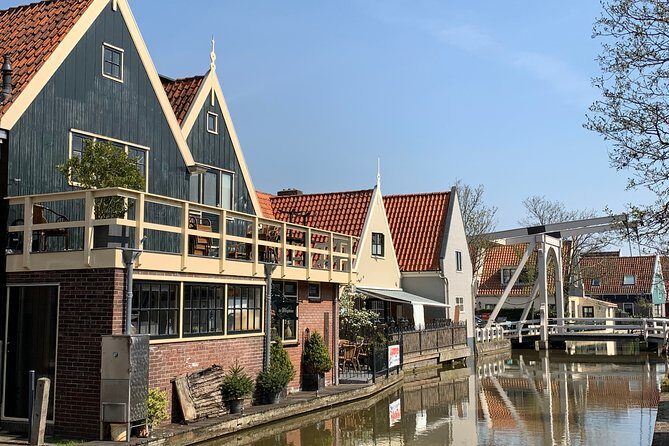
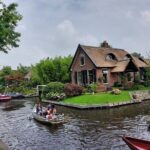
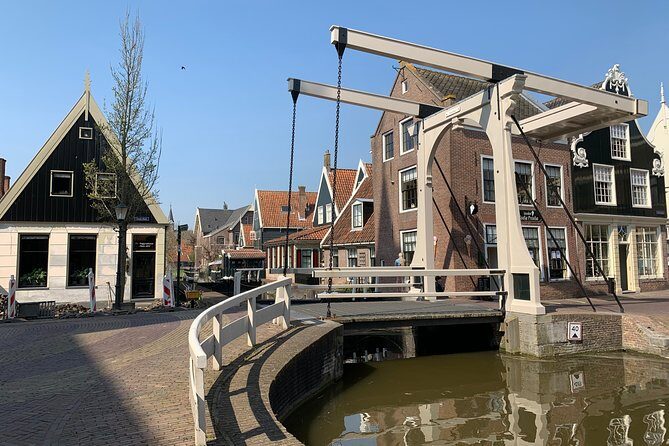
De Rijp is the kind of place that looks like an open-air exhibit—wooden houses with red rooftops, water nearby, and a quiet rhythm to the streets. It’s still very much a real village, which is exactly why it works on a day trip: you get the photo feeling without the “just for tourists” vibe.
You’ll have about one hour here, plus free time to stroll around and take in the details. The highlight is the town’s monumental town hall from the Dutch golden age, which gives you a sense of how serious this region was back when trade and shipping were powering the Netherlands.
Two practical tips for De Rijp: first, bring comfortable shoes even for a “simple walk.” Second, if you want fewer crowds in your photos, aim for quieter corners early in your hour—because the village is small enough that movement changes the whole look.
Schermerhorn windmills: engineering you can see up close
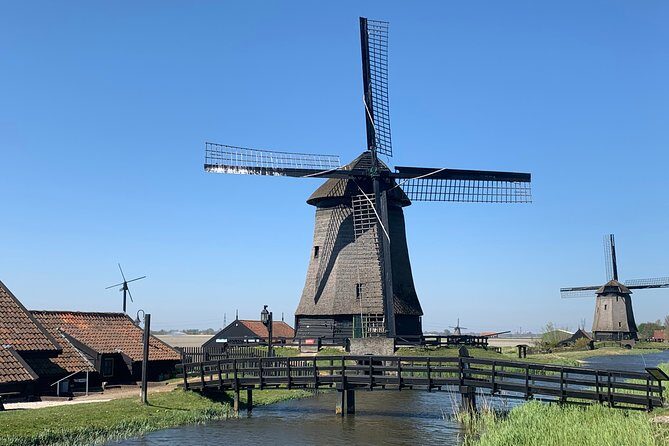
Next comes Schermerhorn, in an area tied to the Dutch golden age and land reclamation. The region was drained by 52 windmills, and the stop here focuses on one of the remaining windmills—so you can actually understand the job it was built to do.
You’ll spend around 45 minutes at this stop, and admission to the windmill is free. The experience is more than watching blades spin. You can explore the windmill from top to bottom, which turns it from a landmark into a machine you can picture working.
What makes this stop especially satisfying is the way it ties into later themes on the tour. When you learn how windmills helped push water away, the dikes later on feel less like random big walls and more like the same idea, upgraded and scaled.
One small consideration: a windmill visit is partly about the climb and the tight spaces. If you’re comfortable with steps and narrow areas, this will feel like one of the day’s best “how it works” moments.
Franeker’s Eise Eisinga Planetarium: the oldest working one, in a canal-house living room
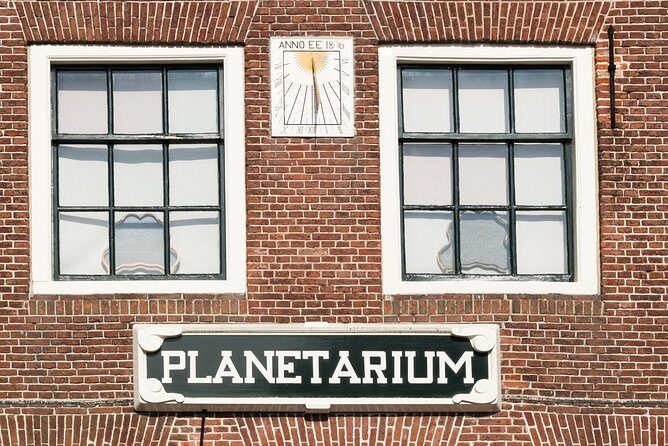
Then you shift from water engineering to something seriously different: the Koninklijk Eise Eisinga Planetarium in Franeker. This is not a museum model behind glass. It’s an old, working device: the oldest working planetarium in the world, designed to move accurately according to the solar system.
You’ll have about 1 hour 30 minutes here, and admission is included. The model was built between 1774 and 1781 by a Frisian wool comber, and it’s suspended from the ceiling of the living room of a beautiful canal house.
So here’s the clever part: the setting is part of the point. You’re not just looking at a science display; you’re seeing how knowledge, craft, and daily life could sit under one roof centuries ago. It also means the planetarium feels intimate. You’ll likely have time to ask questions and connect the science to the human who built it.
This is one of the stops that tends to get the biggest emotional reaction. Expect it to feel a bit like time travel—just with planets that keep doing their thing.
Wieuwerd’s mummy crypt in the Hervormde Kerk: a mystery with a chill factor
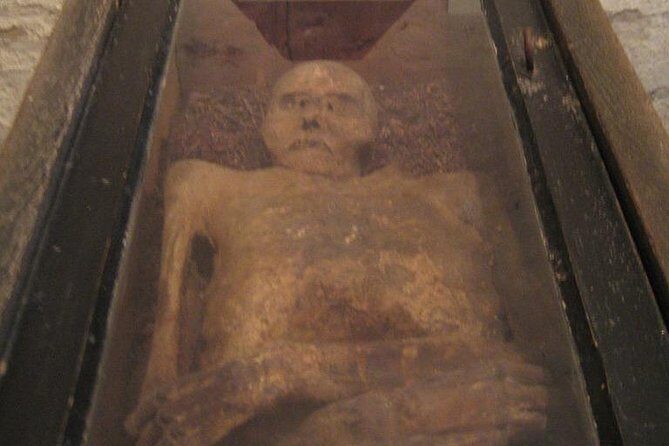
The tour heads to Friesland again, to the small village of Wieuwerd and the Hervormde Kerk. Here, the story shifts into something spooky-scientific: in the church crypt, four mummified people were found, and they’ve been there for more than three centuries.
Admission is included for this stop, and you’ll have about 45 minutes. Even if you’re not into history mysteries, it’s hard not to be intrigued. The items aren’t a Hollywood prop; they’re tied to a specific place, a church space, and a long gap of unanswered questions.
For many people, this is the “wait, what?” stop that makes the whole day memorable. It’s also a good reset after the planetarium, because the atmosphere and focus are totally different.
One consideration: church crypts can be cool and dim. Wear layers you don’t mind for indoor time, and plan to take it slowly—some sights are more meaningful when you give them a little quiet.



Afsluitdijk: the water barrier that explains the Netherlands in one view
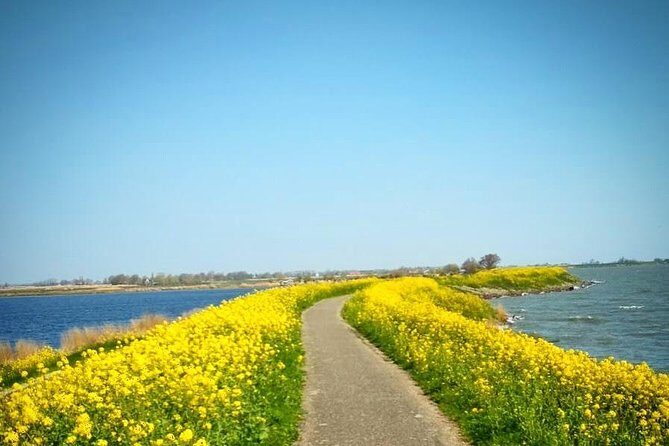
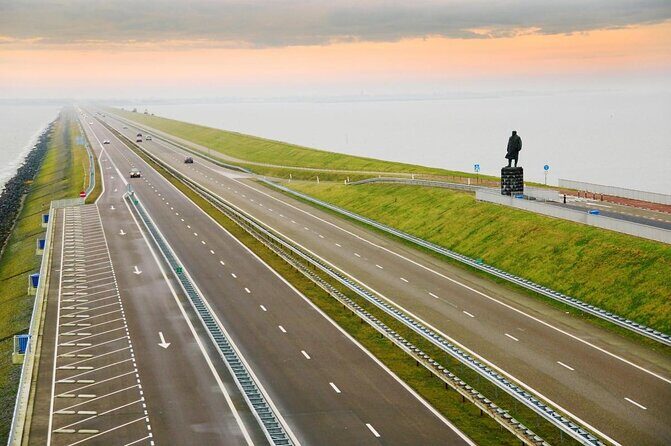
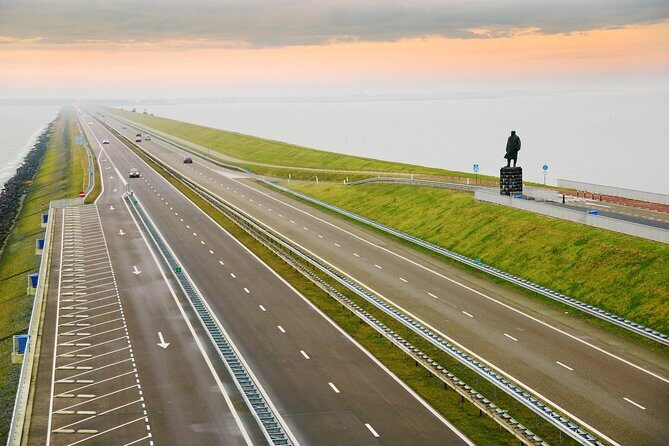
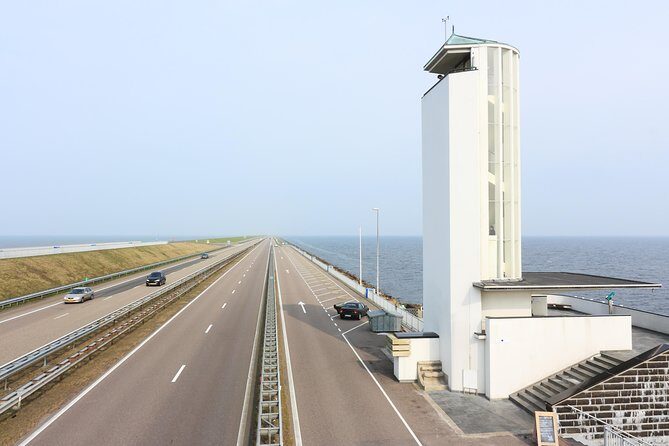
On your way back to Amsterdam, you stop at the Afsluitdijk, one of the clearest examples of Dutch water management. This 32-kilometer water barrier connects Noord Holland and Friesland, and it’s one of the most impressive ways to understand how the Netherlands reshapes water to protect land and livelihoods.
You’ll spend about 30 minutes here, and it’s free to visit the stop. The best payoff is the watchtower viewpoint, where you can see the “before and after” of the system: the Wadden Sea on one side and the IJsselmeer on the other.
It’s short, but it’s a strong close to the day. If you’ve been thinking about windmills and drainage earlier, the Afsluitdijk is where the story lands. You go from “how did they do this?” to “okay, this is why they built all that.”
For photos, climb or position yourself to get a clean line of sight between water and structure. The Afsluitdijk is wide open, so the sky and light can change the look quickly.
Price and value: what $155 buys you (and what it doesn’t)
At $155 per person, you’re paying for a full day with transportation, a small group, and a set of paid attractions. The air-conditioned vehicle and snack-pack cover the basics so you’re not budgeting every hour. More importantly, key admissions are included: the windmill in Schermerhorn, the planetarium in Franeker, and the mummy crypt stop.
What you’re not paying for is also clear: lunch and drinks are not included. That’s the main place where you can control your own spending. If you tend to eat out and buy water often, you’ll want to plan for that cost so the day doesn’t surprise you.
Is it “worth it”? For me, the value comes from two things you can’t easily replicate on your own in one day: the tight theme (windmills + dikes + unusual history) and the small group pace that keeps you from feeling like you’re fighting for time. If you like structure and want to see several lesser-known places with context, this price makes sense.
Logistics that matter: time, language, and keeping the day comfortable
The tour runs in English, which is a big deal here because the whole point is learning the “why.” The guide’s job isn’t just announcing stops; it’s connecting each place to the bigger picture of Dutch building, engineering, and culture.
Duration is listed as about 8 hours 30 minutes. That means you should think of the day as a sequence of short walks plus longer travel stretches. In practical terms: bring water when you can, and plan for indoor time in places like the planetarium and church.
The meeting point is centrally located, near public transportation, which makes it easier to arrive without stress. You’ll also want to arrive a few minutes early so the day starts on time.
One more comfort note: in the best-case days, bathroom access has been helpful at visited locations, without constant extra costs. Still, don’t rely on every stop being “ideal”—build a buffer into your pacing so you’re not stuck waiting.
Who this tour fits best (and when to skip it)
This tour is a good fit if you want to see more than the classic Amsterdam sights. You’re getting countryside villages, engineering landmarks, and two unusual historical stops in one day, and the group stays small enough for real Q&A.
It’s also a good match if you like Dutch themes beyond canals and bicycles—wind power, drainage, dikes, and the way the country’s physical reality shaped daily life.
It may not be the best choice if you have limited physical movement, since the day includes walking time and indoor crypt/planetarium spaces. Also, the experience requires good weather, and if conditions aren’t right, you may be offered a different date or a full refund.
Should you book this Amsterdam countryside circuit?
Book it if you want a day that feels purposeful: countryside views, small-town quiet, and a clear theme linking windmills and water barriers. You’ll likely love how the planetarium and the mummy crypt add variety, instead of turning the trip into just another set of pretty buildings.
Skip it if you need a slower day with lots of free time, or if a long day with several short stops is not your style. Also, if you’re counting on lunch being handled for you, plan ahead since only a snack-pack is included.
If your ideal Netherlands trip includes engineering facts you can actually picture, plus at least two stops that feel truly unusual, this is a strong pick.
FAQ
What time does the tour start, and how long is it?
It starts at 9:00am and runs for about 8 hours 30 minutes.
Where do I meet, and where does the tour end?
You meet at Italian Chamber, De Ruijterkade 5, 1013 AA Amsterdam, Netherlands. The tour ends back at the same meeting point.
How many people are in the group?
The tour has a maximum of 7 travelers.
Is the tour offered in English?
Yes, it’s offered in English.
What’s included in the tour price?
You get snacks, an air-conditioned vehicle, and admission fees for the windmill in Schermerhorn, the planetarium in Franeker, and the mummies crypt in Wieuwerd.
Is lunch included?
No. Lunch and beverages are not included, though there is a free snack-pack.
What is the cancellation policy?
You can cancel for a full refund up to 24 hours before the experience start time. If you cancel less than 24 hours before, the amount paid is not refunded. The tour also requires good weather; if it’s canceled due to poor weather, you’ll be offered a different date or a full refund.