Amsterdam surprises you in layers. This smart 2.5-hour sightseeing walk mixes panoramic views with built-in stops that explain how the city works, from water to war to food. Two things I especially like: the included tastings of cheese and stroopwafels, and the way a real local guide can turn ordinary streets into clear stories (I’ve seen guides like Ana and Sasha praised for how well they answer questions and explain what you’re looking at).
The pace is comfortable, which is great if you want a “see and learn” day rather than a long hike. One possible drawback: if you’re expecting extra snacks beyond what’s included, it’s worth knowing that needs can vary from guide to guide, so ask what’s on the tasting list right up front. Expect small-group attention, and remember that Dutch herring is optional.
In This Review
- Key things you’ll love about this Amsterdam tour
- Getting Oriented on a 2.5-Hour Loop Through Amsterdam
- Rembrandtplein: Your First Real Sense of Amsterdam
- Blauwbrug and the Amstel: Where the Best Views Are Easy
- Pathe Tuschinski Cinema: Art Deco You Can Stand in Front Of
- Bloemenmarkt and Munttoren: Floating Flowers With Financial and Social Clues
- Mouse Mansion and Kalverpassage: Small Places With Big Stories
- Spui Square, Optional Herring, and Begijnhof’s Stillness
- Damrak: Cheese and Stroopwafels Taste Better After You Hear the Why
- National Monument, Royal Palace Outside, and Nieuwe Kerk: Power Meets Memory
- Your PDF One Day Plan: Turning the Walk Into a Full Day
- Price and Value: What $287.58 Buys You in Amsterdam
- What to Expect From the Walking Pace (and Who It Fits Best)
- Should You Book This Amsterdam Sightseeing Tour?
- FAQ
- How long is the Amsterdam sightseeing tour?
- Where does the tour start and end?
- What tastings are included?
- Is Dutch herring included?
- Is this tour private?
- In what language is the tour offered?
- What’s the cancellation policy?
Key things you’ll love about this Amsterdam tour
- Photo-friendly Amstel views at Blauwbrug with easy spots for postcards
- Art Deco Pathe Tuschinski explained beyond the photo ops
- Bloemenmarkt and Munttoren context so you understand what you’re seeing
- Mouse Mansion and Kalverpassage for the sort of details that never fit on a standard checklist
- Included Dutch cheese and stroopwafels tastings with food-culture notes
- Begijnhof + National Monument + Dam Square for history you can actually picture
Getting Oriented on a 2.5-Hour Loop Through Amsterdam
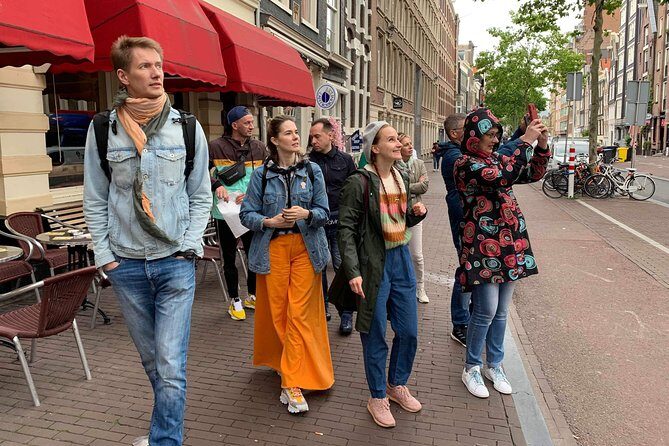
If Amsterdam feels like a maze the first time you walk out of the station, this is the kind of tour that helps you start clicking the pieces into place. You’re not just ticking off landmarks. You’re walking through key neighborhoods and learning why Amsterdam grew the way it did—water first, then trade, then religion, then politics, then the daily stuff like where people eat and shop.
What makes this tour work well is the mix of big-known sights and quieter “how did I miss that?” stops. You’ll spend plenty of time outside, so you get fresh-air breaks and good photo chances, but it’s still structured enough that you don’t wander in circles for hours.
And yes, the small-group setup matters. When there are fewer people, it’s easier for the guide to pace the group, answer questions, and point out details you’d otherwise walk right past.
You can also read our reviews of more guided tours in Amsterdam



Rembrandtplein: Your First Real Sense of Amsterdam
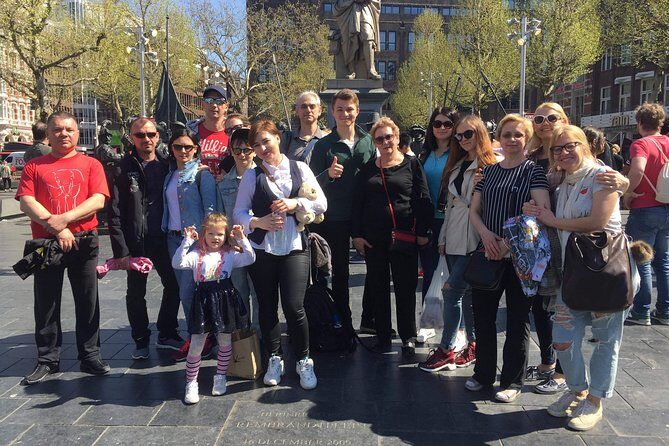
Most trips in Amsterdam start with a map app. This one starts with a street-level introduction at Rembrandtplein. It’s a lively square, a sensible meeting point, and a great place to reset your brain after travel.
Here, your guide sets the tone: what Amsterdam is like, where the main storylines run, and what you should pay attention to as you move. It’s short—think quick orientation rather than a lecture—but it helps the rest of the walk land better. You’ll know what to look for when the city shifts from squares to canals to shopping passages.
If you’re arriving in Amsterdam and want an efficient way to get your bearings fast, this opening stop does the job. You’re already in the city’s energy, not waiting to “start sightseeing” later.
Blauwbrug and the Amstel: Where the Best Views Are Easy
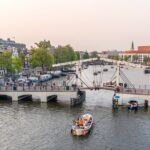
One of the most useful parts of any Amsterdam day is learning where the best angles are. Blauwbrug is one of those places. You get an iconic view over the Amstel River, and your guide will frame what you’re seeing: Amsterdam’s origins and its long relationship with water.
This stop is also a practical photography lesson. The view isn’t just pretty—it’s explainable. You’ll hear why the river mattered, how it shaped daily life and trade, and how the city’s layout makes sense when you think in terms of waterways.
Timing is about 15 minutes, which is enough for a few photos and a quick story without dragging. If you’ve ever been frustrated by tours that rush past the one good viewpoint, this one keeps it realistic.
Pathe Tuschinski Cinema: Art Deco You Can Stand in Front Of
Pathe Tuschinski is one of those buildings that makes you stop even if you’re not a cinema person. The outside and inside reputation is famous, but the value here is how the guide connects the architecture to Dutch design thinking.
You’ll learn about the creator behind the theatre and the style mix—Art Deco plus Amsterdam School influences. Even if you only catch pieces while walking by, it’s still satisfying because you understand what makes it special instead of just snapping a photo and moving on.
Plan on around 15 minutes. You’ll want that time because you’ll naturally slow down here. It’s the kind of stop where your eyes keep finding new details: lines, shapes, the overall “look” that designers still care about.
Bloemenmarkt and Munttoren: Floating Flowers With Financial and Social Clues
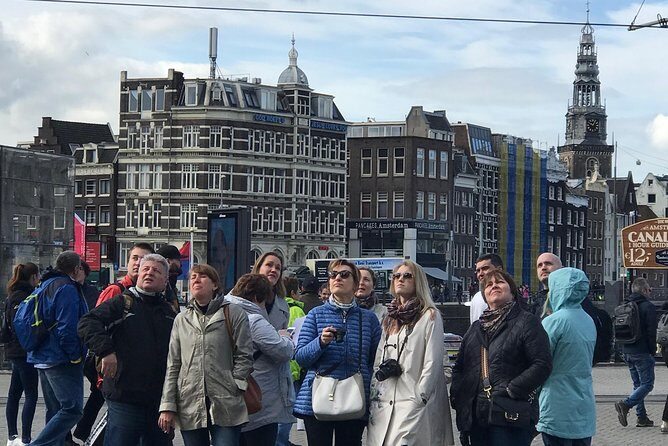
The Bloemenmarkt (the floating flower market) is the only floating flower market in Europe, and it’s exactly the kind of place that’s fun and informative. You’ll walk through color, scents, and symbolism, then the guide gives you the background for why flowers became a national icon.
Next door is Munttoren, and this is where the tour becomes more than shopping-street sightseeing. You’ll hear about the tower’s unexpected role in Dutch financial and social history. That is the whole trick: you stop seeing things as random souvenirs and start seeing them as part of a system.
You’ll get roughly 15 minutes here. If you like markets, this is a strong stop. If you dislike crowds, just go with the flow for a short time—this isn’t a long detour.


Mouse Mansion and Kalverpassage: Small Places With Big Stories

Two stops in this tour are designed for people who love details.
First: The Mouse Mansion. It’s a whimsical miniature world created by a Dutch artist and her daughter, and it’s loved by local families. The key is the contrast—this quiet, handmade pocket is tucked away behind one of the busiest shopping streets. Your guide will explain how this imaginary micro-world came to be and what makes it special, so you’re not just looking at tiny rooms like a confused tourist.
Second: Kalverpassage. You’ll see a modern installation by artist Maarten Baas inside a hidden shopping passage. Then the guide reveals the building’s earlier life: it was once a prison, and later transformed for modern use. That contrast—prison past to everyday shopping street—hits harder when someone explains it while you’re standing there.
Both stops are about 15 minutes each. They work especially well if you already know the obvious highlights and want that extra layer of “I didn’t expect Amsterdam to have this.”
Spui Square, Optional Herring, and Begijnhof’s Stillness
This is the tour’s emotional palate shift.
At Spui Square, you can stop by a traditional herring stand. The tasting of Dutch herring is optional and not included, but your guide gives practical tips on how to eat it like an Amsterdammer, plus the snack’s history. If you like trying local food, it’s a low-pressure add-on. If you’d rather skip, it’s easy to stay focused on the story and move on.
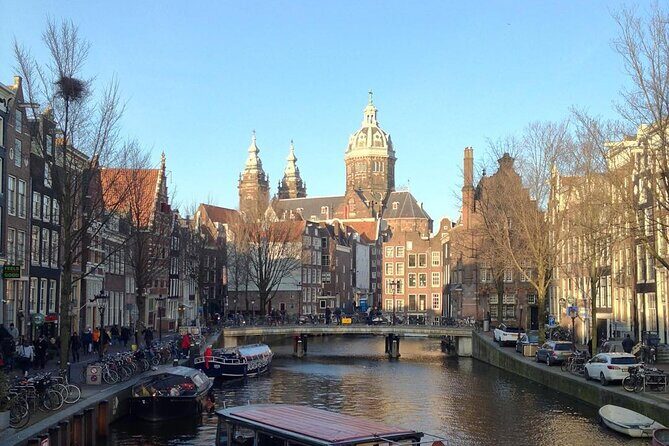
Then comes Begijnhof, one of Amsterdam’s quieter pockets. Your guide will explain this cozy courtyard’s original purpose and take you to a hidden church. You’ll also hear how it ties into the 80 Years’ War, which helps the place feel more grounded in real events rather than just “pretty yard.”
Begijnhof is about 15 minutes. It’s a nice break from street noise and shopping crowds. If you travel with someone who gets tired of constant walking, this stop is a good “sit with the story” moment.
Damrak: Cheese and Stroopwafels Taste Better After You Hear the Why
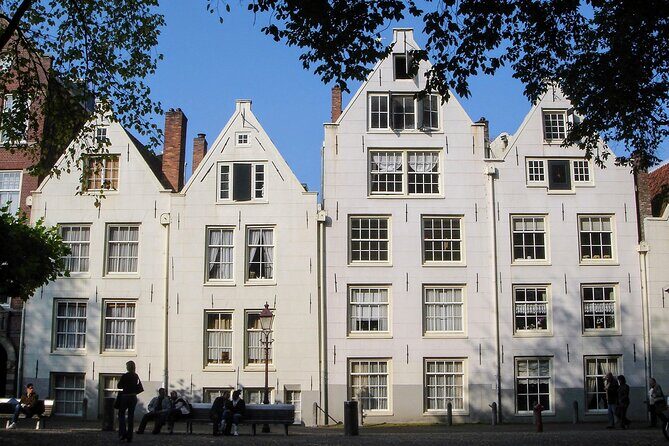
If you only do one food moment on an Amsterdam walk, make it this one. Near Damrak, you’ll have tastings of two of the Netherlands’ best-loved flavors: artisanal Dutch cheese and stroopwafels (syrup waffles). Tastings are included, and you’ll also get context about Dutch food culture and cheese-making traditions.
The way guides connect food to place is what makes this stop worth it. Instead of tasting and forgetting, you’ll understand why cheese matters in daily life and how syrup waffles became a national treat. You’ll be more likely to pick the right snack later, too, because you’ll know what you’re actually buying.
You’ll spend about 15 minutes here. It’s not a long meal, but it’s a satisfying break mid-walk and a solid energy reset.
National Monument, Royal Palace Outside, and Nieuwe Kerk: Power Meets Memory
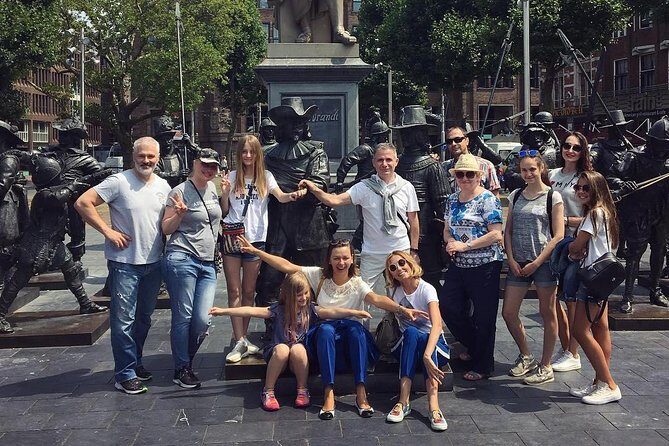
After you eat, you get to think.
The National Monument is more than a background stop. You’ll learn how it works as a symbol of reflection and freedom, and how it can even be linked with quiet protest. It’s a short stop—around 10 minutes—but it’s the kind of place where a guide helps you read the meaning without overcomplicating it.
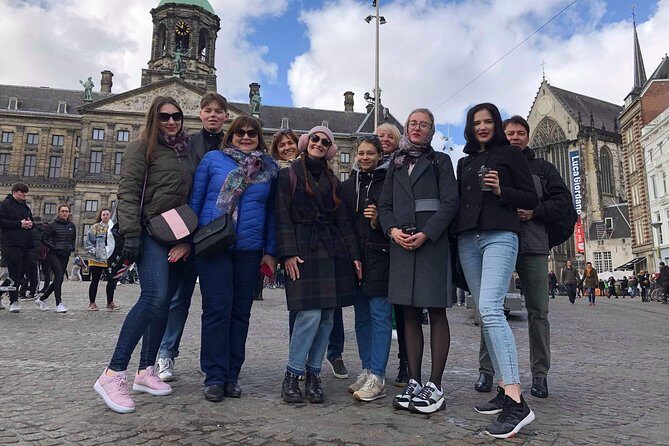
Then you’ll admire the Royal Palace from the outside. Your guide explains how the 17th-century building changed roles over time, from city hall to royal residence. Nearby is Nieuwe Kerk, a former church now used for exhibitions and royal ceremonies. You’ll hear how religion, monarchy, and art interact in a space that still functions culturally.
Finally, you wrap at Dam Square (about 10 minutes). This is the heart of Amsterdam, and the story here is layered—your guide connects the square’s history to what you see today.
This section is less about walking into ticketed attractions and more about learning to “read” the buildings and spaces around you. If you like understanding why cities feel like they do, you’ll enjoy this part.
Your PDF One Day Plan: Turning the Walk Into a Full Day
One of the smartest extras is the bonus PDF guide called Your One Day Plan in Amsterdam. You’re not just leaving with memories; you’re leaving with a practical schedule you can use the same day or the next.
Here’s the best way to use it: treat your tour as the spine of your day. When you get to the streets you learned about—like areas around Dam Square or the market streets—you can plug in the next activity from the PDF without starting from scratch.
Because it’s mobile-friendly (and you also get a mobile ticket for the tour), it’s made for real travel pace. No hunting for paper maps.
If you’re short on time, this PDF helps you avoid the classic problem: seeing a few highlights, then spending the rest of the day wandering like it’s a mystery novel.
Price and Value: What $287.58 Buys You in Amsterdam
At $287.58 per person for about 2 hours 30 minutes, this isn’t a bargain-basement walking tour. The value comes from how the day is packaged.
You’re getting:
- A passionate local guide and a structured route
- Tastings included (Dutch cheese and stroopwafels)
- A bonus PDF one-day plan
- A private setup where only your group participates
- A format that stays in English
- A mobile ticket you can handle on the go
The private-group model can make the price feel more reasonable, especially if you travel as a couple or small group and want more attention. Also, the tastings are built in. Food stops add cost fast if you do them on your own, and here they’re organized as part of the lesson.
One thing to keep in mind: this tour is designed for quality and context, not marathon-distance sightseeing. If you were hoping for an all-day, high-mileage “everything walk,” you might want to pair it with extra time on your own later.
What to Expect From the Walking Pace (and Who It Fits Best)
From the way the tour is structured, I’d call it a “comfortable sightseeing walk.” You’ll cover a lot of streets, but the stops are frequent enough that it doesn’t feel punishing.
This tour is a good fit if:
- You’re a first-timer and want the city explained in a clean storyline
- You like photo spots but don’t want a frantic checklist
- You care about food culture and want tastings included
- You enjoy architectural and historical context without overload
- You want a guide who can handle questions clearly (people have highlighted guides such as Ana and Sasha for this)
It might be less ideal if you:
- Want tons of long walking with minimal stopping
- Prefer ticketed museum time over street-level storytelling
- Hate optional food items and want zero chance of a food detour (though herring is optional)
Should You Book This Amsterdam Sightseeing Tour?
I’d book it if you want a smart introduction to Amsterdam that blends photo viewpoints, architecture, and food—without turning your day into a logistics puzzle.
If you like learning why things matter, this tour does that well. The stops aren’t random, and the guide approach is built for clarity and attention. The tastings give you an immediate payoff, and the PDF helps you keep momentum after the walk ends.
The one “watch this” moment: if you’re someone who counts on snacks beyond the included cheese and stroopwafels, ask at the start what you’ll receive. That way, you avoid any mismatch between what you expect and what’s actually planned for your group.
FAQ
How long is the Amsterdam sightseeing tour?
It runs for about 2 hours 30 minutes.
Where does the tour start and end?
It starts at Rembrandtplein (Rembrandtplein 1017 CV, Amsterdam) and ends at Dam Square (Dam, 1012 Amsterdam).
What tastings are included?
The tour includes tastings of Dutch cheese and stroopwafels.
Is Dutch herring included?
No. You can stop by a traditional herring stand for an optional Dutch herring tasting, which is at your own expense.
Is this tour private?
Yes. It’s listed as a private tour/activity, with only your group participating.
In what language is the tour offered?
The tour is offered in English.
What’s the cancellation policy?
You can cancel for free up to 24 hours in advance for a full refund.