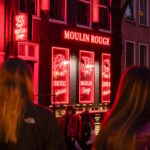
REVIEW · AMSTERDAM
Amsterdam Red Light District tour with a local guide
Book on GetYourGuide →Operated by Your Amsterdam's Red Light District guide · Bookable on GetYourGuide
It’s a street tour with real context. This guided walk through Amsterdam’s Red Light District explains how the city’s reputation for sex work grew over time, while you look at the famous red tinted windows and the streets that surround them. I like that the guide keeps it local and practical, not just shock-and-awe, and I also enjoy the historical framing that connects the area to bigger Amsterdam stories.
You’ll also get time to notice details and ask questions, plus a chance to stop for photos and even pop into a few shops along the way. One thing to consider: the tour depends on hearing your guide clearly in a busy, echo-y neighborhood, and one review flagged that volume can be an issue.
Key highlights at a glance
- Zeedijk Street and the sailor-era origins of prostitution in the city
- Red tinted windows, brothels, and pub culture seen up close, with context
- Old Church as the geographic and symbolic center of the area
- Former town hall, the narrowest street, and landmark street layouts
- Coffee shop culture, smartshops, and the politics around it
- Extra detours that can include the harbor area and Chinatown, depending on the route
In This Review
- A two-hour walk through the Red Light District’s real street-level layout
- Meeting your local English guide and setting the tone
- Zeedijk Street: the sailor neighborhood where prostitution took shape
- Napoleon-era clues and medieval street history you can spot while walking
- Red tinted windows, brothels, and pubs: what you’re seeing and why it’s there
- Old Church: the center point where the story tightens
- Coffeeshops, smartshops, and the political knot behind the culture
- Hidden gems locals notice: shops, side streets, and route surprises
- Price and what $40 buys you in 2 hours
- Who this tour is best for (and who might want to adjust expectations)
- Quick practical tips so you get more from the walk
- Should you book the Amsterdam Red Light District tour?
- FAQ
- What is the duration of the Amsterdam Red Light District tour?
- How much does the tour cost per person?
- What language is the tour guide?
- What does the tour include?
- Where does the tour start and end?
- Is the group size small?
- Is free cancellation offered?
- Is there an option to reserve now and pay later?
A two-hour walk through the Red Light District’s real street-level layout
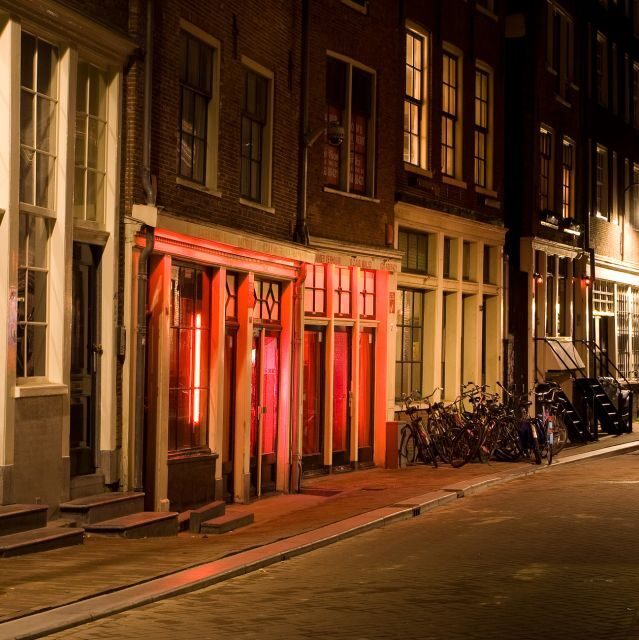
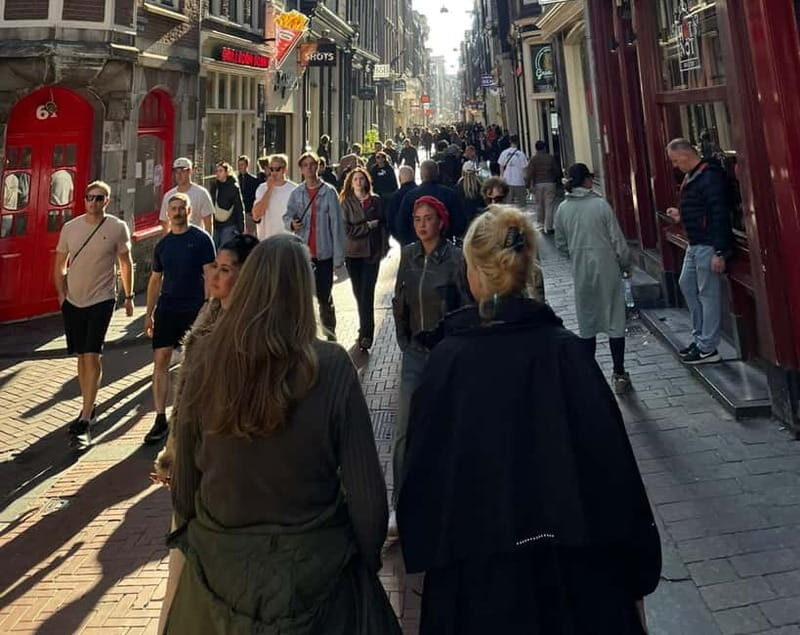
This tour works because it stays on the ground, at eye level, in the actual streets people use. In just two hours, you start noticing how Amsterdam’s Red Light District is shaped: canals nearby, narrow lanes, shopfronts, and the mix of everyday nightlife with a very specific kind of business window.
The guide isn’t there to be scandalous. The job is to explain the neighborhood from a local perspective—what you’re seeing, how long it has been there, and why it matters to Amsterdam’s identity. That’s the best kind of tour: you leave with better instincts, so you can explore the rest of the city without getting lost in rumors.
Also, the group format is built for conversation. It’s a small group available experience with a live English guide, so you should be able to keep up with explanations rather than just follow a line of tourists.
One practical note: you’ll be walking through an active area, so the pace may feel quick if you stop to read signs or watch the windows. If you want more time to linger, plan to arrive a little early for the start and keep your phone handy for the photo moments your guide mentions.
Meeting your local English guide and setting the tone
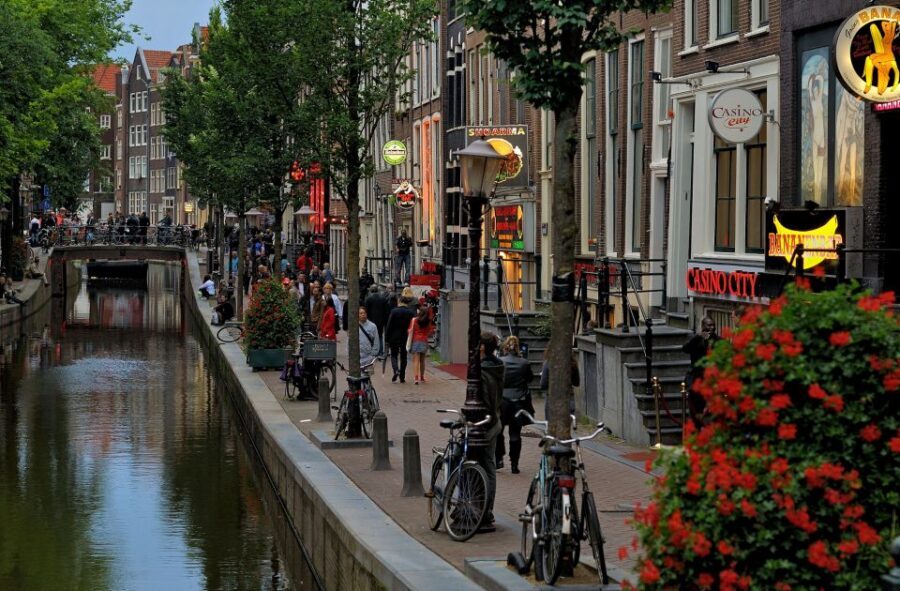
Your guide for this walk is a local, and the tone is important here. The subject is sensitive, and what makes the experience worthwhile is respectful, clear context—how the system works historically, how Amsterdam talks about it now, and how policy and culture intersect at street level.
The tour is English, and it’s designed for a normal pace of listening and walking. In one review, a guest said the guide was hard to hear, so consider this: if you’re in the back or near a loud pub, you may want to position yourself closer at the start. If you know you struggle with hearing in noisy streets, keep an eye on where you stand.
That’s also why the “small group” matters. A big group can turn into a wall of sound and motion. A smaller group makes it easier to ask a question and hear the answer.
You can also read our reviews of more guided tours in Amsterdam



Zeedijk Street: the sailor neighborhood where prostitution took shape
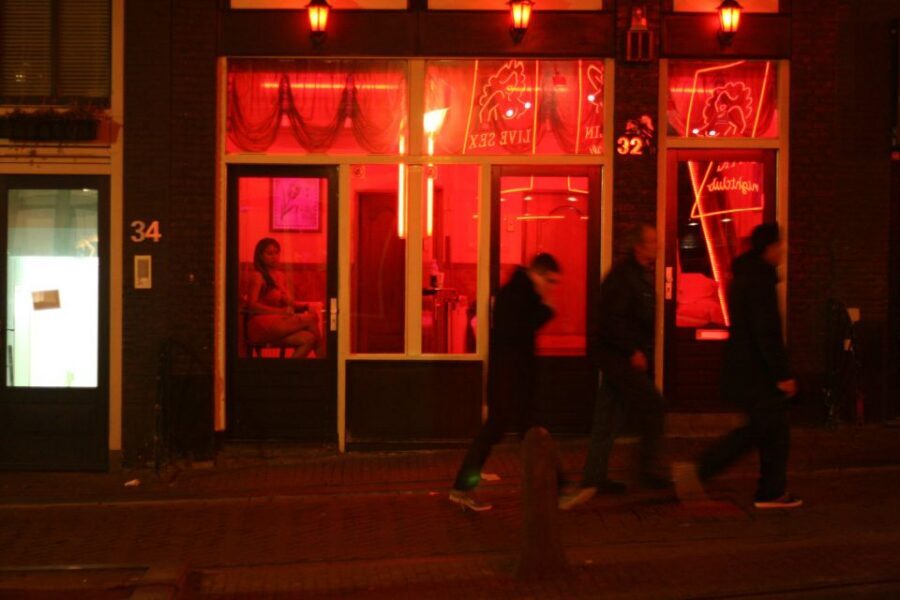
The walk begins by grounding you in one of the area’s key roots: the old sailor neighborhood called Zeedijk Street. This is where the story shifts from today’s red windows to how the district developed in a broader city setting.
The tour explains that prostitution in Amsterdam didn’t appear out of nowhere. It grew from specific social and economic conditions, and the sailor connection gives you a timeline you can actually visualize. Even if you know little about Amsterdam’s past, you’ll understand why a port city attracts certain kinds of services—and why those services become part of a neighborhood’s identity.
What I like about this part is how it turns the Red Light District into something you can read like a map of history. You aren’t just staring at windows. You’re learning why these streets matter and how Amsterdam’s urban growth shaped the area.
Napoleon-era clues and medieval street history you can spot while walking
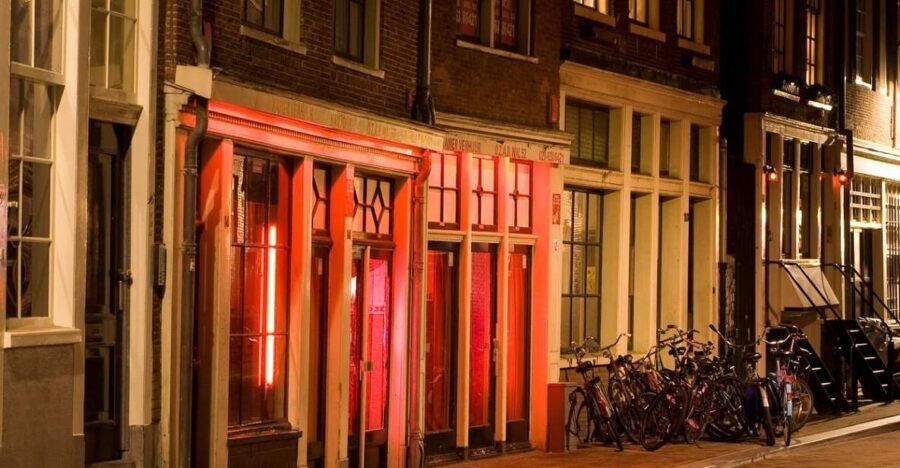
As you go, the guide explains what the area used to look like in Napoleon times and in medieval times. You won’t see those eras preserved like a museum. Instead, you get the detective work angle: street layouts, older building patterns, and the way Amsterdam’s core evolved.
This is a useful way to learn travel history. Rather than memorizing dates, you learn what to look for. The Red Light District becomes a living layer-cake of eras, with the present built on top of older street lines.
If you’re the type who likes to understand a city’s “why,” this section will click. It helps you connect Amsterdam’s liberal attitudes—often discussed in broad terms—to the practical reality of how an urban area changes over centuries.
Red tinted windows, brothels, and pubs: what you’re seeing and why it’s there
Then comes the part most people picture first: the famous Red Light District visuals. You’ll pass red tinted windows and learn what’s behind them, including how brothels and pubs fit into the street economy.
A good tour doesn’t just point and move on. It explains how the neighborhood works as a place, not just as an image. This one focuses on the culture around sex work—how it became normalized in certain ways, and why Amsterdam continues to treat the topic differently than many other places.
One thing I’d stress to you: treat this as a history-and-culture walk, not a voyeur ride. The tour’s value is the context you get along the way: coffee shop culture, political issues, and the timeline of prostitution in the city.
You’ll also hear about the district from a “current situation” angle. That matters because it keeps the conversation grounded in the present, not trapped in old stories.
Old Church: the center point where the story tightens
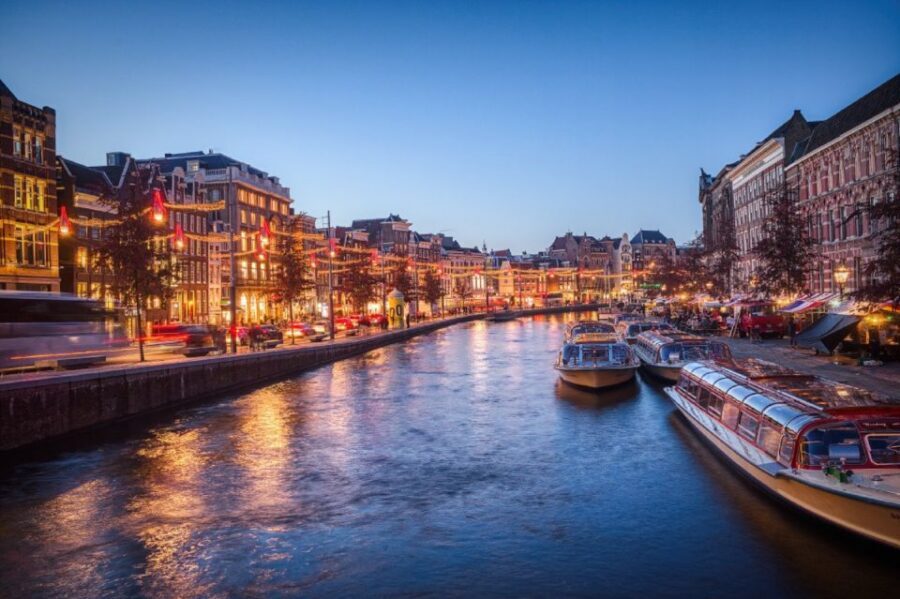
A key stop is the Old Church, described as the oldest building in Amsterdam. It’s a powerful anchor point because it shifts the mood from nightlife back into the deep bones of the city.
Being in the church area—right at the center of the Red Light District—helps you see the neighborhood as something more than entertainment. You’re watching how a historic landmark sits inside a modern controversial district. That contrast is exactly why the tour feels more meaningful than just sightseeing.
Here, the guide points out several standout features:
- the former town hall
- the narrowest street of Amsterdam
- an indoor prostitute street where you learn more about how the history has evolved
Even if you don’t love dense urban history, these are “look and understand” moments. You’ll walk away with a sharper sense of how small streets and old civic spaces created the stage for what developed around them.





Coffeeshops, smartshops, and the political knot behind the culture
One of the most interesting shifts on this tour is the move into Amsterdam’s broader counterculture vibe. The guide talks about coffee shop culture, along with one of the first coffeeshops, smartshops, and how those industries overlap with the Red Light District’s social identity.
This is where Amsterdam stops being only a sex work story and becomes an Amsterdam story. The tour connects the district to political issues—how lawmakers and city thinking shape what’s tolerated, regulated, or discussed publicly.
I like this approach because it stops you from thinking of the Red Light District as an isolated bubble. In Amsterdam, multiple “adult” and “alternative” worlds share geography and conversation space. You’ll see how the city’s reputation for liberal attitudes is built through decades of debate and compromise—not just one big decision.
If you’re curious about why Amsterdam talks so openly about these topics compared to other European cities, this is the section that helps you understand the mechanics.
Hidden gems locals notice: shops, side streets, and route surprises
The tour promises hidden gems only locals are aware of, and you’ll likely feel that in the way the guide handles details. Instead of only relying on the biggest camera spots, you get directed attention to smaller street features and places that help you make sense of what you’re walking past.
A couple of reviews also mention that good historical detours may appear along the way—like the harbor area and Chinatown—as pleasant surprises. That’s a big part of the value for me. A guided walk can do more than label landmarks. It can connect dots you’d miss if you explored alone.
There’s also a practical benefit: the guide often gives you time to take pictures and visit a few shops along the way. That’s not about souvenirs. It’s about making the walk feel like an experience, not a hurried lecture.
Price and what $40 buys you in 2 hours
At $40 per person for a 2-hour guided walking tour, you’re paying for a few things that are hard to DIY:
- a local perspective on a place many people only know from headlines
- a guided narrative that links sex work, street layout, and city policy
- time to pause for photos and to interact with a few stops along the route
Is it cheap? No. But it’s also not “theme park expensive,” and the topic requires sensitivity and context. If you’re the kind of traveler who prefers to understand what you’re seeing instead of just collecting photos, this is a reasonable way to spend two hours.
You should also compare this to what a self-guided walk costs you: time sorting through what’s accurate, what’s regulated, and what’s just gossip. A good guide saves you that mental work.
The rating—4.8 with strong feedback—also suggests you’re more likely to get clarity than confusion, especially when the guide is funny and keeps things moving.
Who this tour is best for (and who might want to adjust expectations)
This works best for you if you:
- want honest context about a place Amsterdam is famous for
- like walking tours with history and real street observations
- enjoy learning about coffee shop culture and how it links to policy conversations
- want a guide to help you notice details you’d miss alone
It might be less satisfying if you:
- mainly want a silent stroll and lots of unstructured time
- struggle to hear in busy streets and don’t like moving closer for sound
- expect the tour to be purely nightlife-focused rather than history-and-culture focused
If you’re nervous about visiting the area, you don’t have to be. The goal here isn’t to “shock” you. It’s to help you understand the neighborhood’s role in Amsterdam’s story.
Quick practical tips so you get more from the walk
A few small choices will make this tour smoother:
- Wear comfy shoes. The route is a walking experience through narrow streets and active corners.
- Bring a phone with enough battery for photo moments.
- If you care about hearing, position yourself where you can clearly hear the guide.
- Come with questions. If you’re wondering how Amsterdam handles regulation and culture, your guide can connect the dots.
And one mindset shift helps: treat it like a study of urban life. The Red Light District is both street theater and policy reality. The guide’s explanations are what turn it from an image into an understanding.
Should you book the Amsterdam Red Light District tour?
I think you should book this tour if you want a local, English walking guide to explain the Red Light District beyond stereotypes. The best parts are the street-level history you can picture, the way the tour connects sex work with Amsterdam’s broader coffee shop culture and politics, and the chance to spot landmarks like the Old Church while learning why they matter.
Skip it if you mainly want nightlife photos with no heavy listening, or if you already know you have trouble hearing your guide in crowds. Otherwise, this is a solid use of two hours in Amsterdam—clear, structured, and focused on making the neighborhood make sense.
FAQ
What is the duration of the Amsterdam Red Light District tour?
The tour lasts 2 hours.
How much does the tour cost per person?
The price is $40 per person.
What language is the tour guide?
The live tour guide is English.
What does the tour include?
It includes a guided walking tour with a local guide (listed as a professional guide) and a live tour guide.
Where does the tour start and end?
The meeting point may vary depending on the option booked, and the tour ends back at the meeting point.
Is the group size small?
Yes, a small group option is available.
Is free cancellation offered?
Yes, there is free cancellation up to 24 hours in advance for a full refund.
Is there an option to reserve now and pay later?
Yes, you can reserve now & pay later, with payment deferred.