REVIEW · AMSTERDAM
Amsterdam: Guided Open Boat Canal Cruise Unlimited Drinks Option
Book on Viator →Operated by Mokumboot · Bookable on Viator
In This Review
- What makes this cruise a smart Amsterdam move
- Key highlights you’ll feel on the water
- Open-boat, electric, and made for seeing quickly
- Starting at Stationsplein: how to set yourself up for the best hour
- The route in plain language: what you glide past and why it matters
- Pierre Cuypers, ship captains, and Amsterdam’s defensive past
- NEMO and the maritime story built into the waterfront
- Watchtowers and clocks: silly Jake and a famous pub vibe
- Diamonds, the Jewish quarter, and Rembrandt’s workshop feel
- Theatre stages, a flee market moment, and a French gift raised for ships
- Museums you can plan for: H’ART, Foam, Grachtenmuseum
- Iconic bridges, canal belt houses, and the camera-friendly corners
- Heineken’s old home and a seven-bridge night trick
- Concertgebouw, Museumplein, and the art-and-stage zone
- Keizersgracht facts you can remember, plus houseboats
- Homomonument, Westerkerk, and the Anne Frank House area
- Brouwersgracht, locks, and the city expanding outward
- Unlimited drinks: a fun option, but pace matters
- Guide quality swings: Captain Jang, Emil, and the role of good audio
- Price and value: what $23.59 buys in a short Amsterdam window
- Who should book this canal cruise, and who might prefer something else
- Should you book the Mokumboot open-boat canal cruise?
- FAQ
- How long is the Amsterdam open-boat canal cruise?
- What language is the cruise offered in?
- Are drinks included with the tour price?
- What weather protection do they provide?
- Where does the tour start and end?
- Are life jackets provided for young children?
- What’s the cancellation policy?
What makes this cruise a smart Amsterdam move
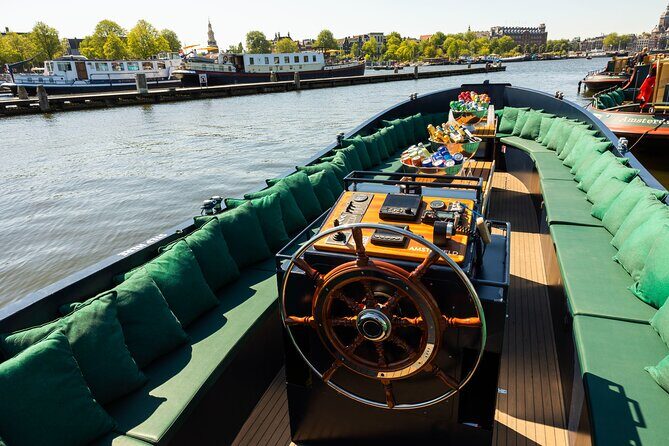
You get the canal-belt quick version.
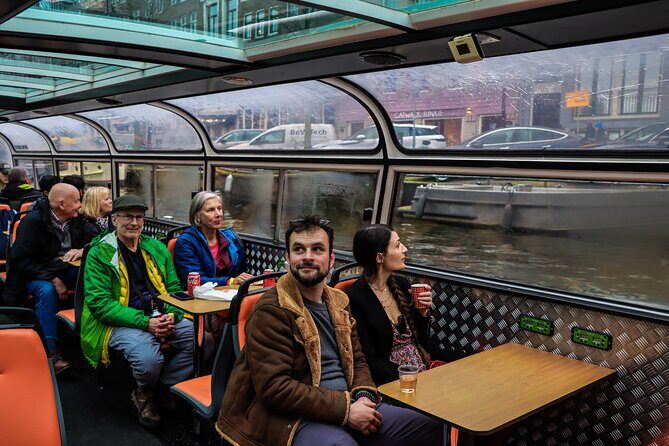
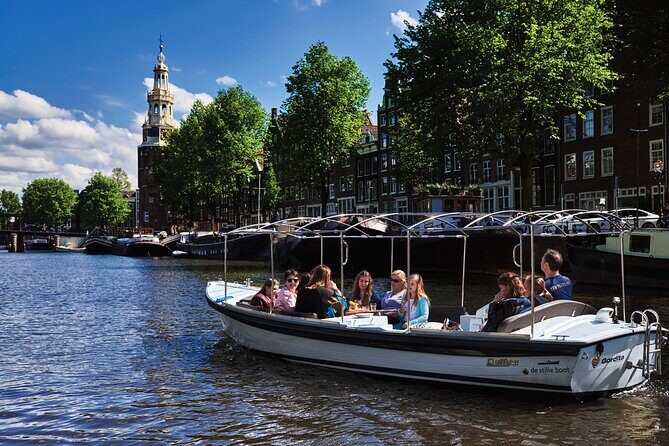
This 1-hour open-boat ride is built for clear views and fast context, with an on-board guide telling you what you’re actually looking at. I love the unobstructed open-boat sightlines and the live commentary that turns postcard canals into real places with real stories.
The main trade-off is simple: in a busy departure, sound and space can feel tight, and you’ll want to pick your spot early. I’ve also seen rare complaints about things like guides being hard to hear or boats being hard to find at the pier, so arrive a bit early and keep your expectations realistic.
Still, it’s a great fit if you want to see Amsterdam’s big-name canal sights without a long walking day. The added comfort kit—blankets, and ponchos/umbrellas—plus an onboard bar option makes it easy to stay in cruise mode instead of rushing for weather or snacks.
Key highlights you’ll feel on the water
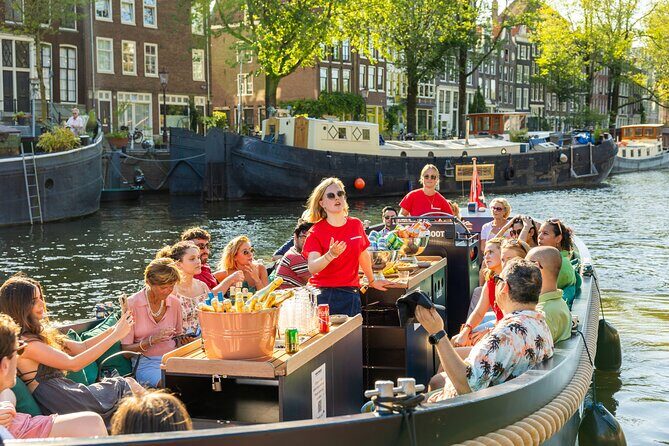
- Open-boat views, 100% electrical: quieter boat time and fewer visual barriers for photos
- Live guide stories: the hour becomes a guided walk-by tour, not just scenery
- Unlimited drinks option: good value if you plan to sip through most of the cruise
- Weather-friendly gear: blankets and ponchos/umbrellas help on cooler or rainy days
- Route packed with Amsterdam icons: defenses, science, maritime history, Jewish heritage, and theatre all in one loop
You can also read our reviews of more boat tours in Amsterdam

Open-boat, electric, and made for seeing quickly
This cruise is designed around one thing: you should be able to look out and actually see the canal life. The boat is open so you don’t get that “window glare” feeling you can get elsewhere. It’s also 100% electrical and quiet, which matters more than you’d think when you’re trying to hear the guide and enjoy the ride.
You’ll spend about one hour on the water, looping through central Amsterdam’s canal belt highlights. That time window is perfect for first-day orientation or for the days you feel like your feet are done.
Also, don’t ignore the small comforts. You can get blankets, and there are ponchos and/or umbrellas available if the weather changes. One day can start sunny and turn cold fast in Amsterdam, and this cruise helps you roll with it.
Starting at Stationsplein: how to set yourself up for the best hour
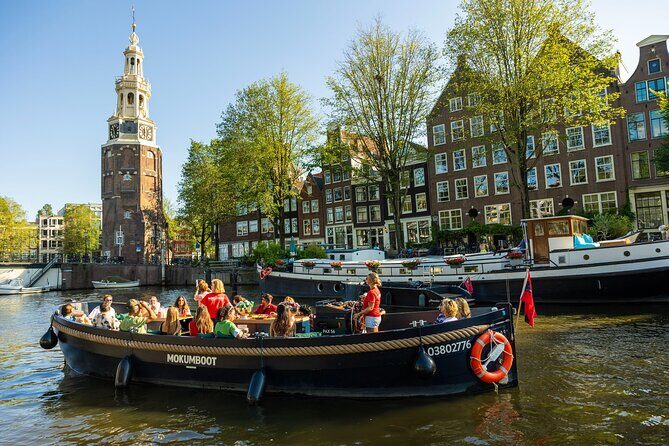
You meet at Stationsplein 28, 1012 AB Amsterdam, and the tour ends back at the same place. That’s convenient because you’re near major transit, and it’s easy to fold into a longer plan.
Arrive early. Some people have reported it can be tricky to find the right operator among other boats at the pier. Even if everything runs smoothly, being early helps you choose a good seat so you can see canal houses clearly and hear the guide without straining.
If you care most about views, go where you can lean toward the railing without blocking your own legs. If you care most about hearing, move toward the front area where the guide is positioned. There have been complaints about hearing when boats were full and people were seated in the wrong spots, so seating choice is real.
The route in plain language: what you glide past and why it matters
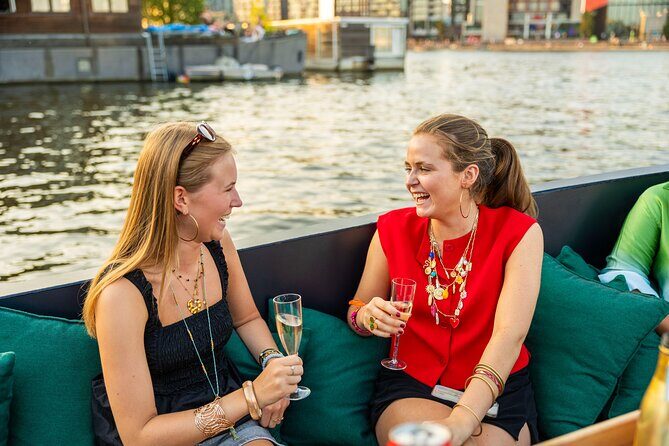
On this tour, you won’t just see famous buildings. You’ll also get the “why” behind them—defense, trade, science, culture, and community—compressed into one hour.
Pierre Cuypers, ship captains, and Amsterdam’s defensive past
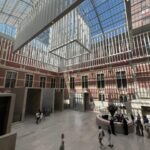
You start near the architect Pierre Cuypers, the designer behind major landmarks like the Rijksmuseum. It’s a nice entry point because it tells you Amsterdam isn’t just pretty—it’s planned, designed, and built by people with big ideas.
From there, you head toward the former harbor front and Saint Nicholas Church, patron of sailors. That’s your reminder that canals were never only for views. They were working infrastructure for movement and livelihood.
You also pass the last remaining tower of Amsterdam’s city defense, built in 1487. It’s a blunt, practical piece of history, and it helps you picture how the city protected itself before today’s canal-belt elegance.
You can also read our reviews of more guided tours in Amsterdam




NEMO and the maritime story built into the waterfront
Next comes NEMO, Amsterdam’s “Hands On!” science museum. Even from the canal, it’s a fun stop because it signals how the city shifted from trading power to knowledge power. If you’ve got kids, or you’re the type who likes hands-on learning, NEMO is the kind of place you’ll want to walk to later.
You’ll also glide past a site linked to maritime storage and museum collections, including a major maritime collection housed in a former navy storage facility. There’s real value here even if you don’t go inside: maritime museums explain why so many canal fronts look like they were built for goods and ships first, and for living later.
Then you move past a canal-side building once connected to wealthy shipping companies, now a luxury hotel. That shift—trade wealth turning into elite real estate—is one of Amsterdam’s most common (and most interesting) transformations.
Watchtowers and clocks: silly Jake and a famous pub vibe
Amsterdam has personality in its old infrastructure. One of the stops you pass is a watchtower in the eastern defenses built in 1516, known locally as silly Jake because the clock has a habit of ringing at strange times. It’s a small detail, but those quirks are what make a guide’s story stick.
You also pass by one of the city’s most recognizable, cosy pubs. It’s a quick stop, but it gives you a sense of what the canal neighborhoods feel like when you’re on foot later—authentic and lived-in, not only museum-clean.
Diamonds, the Jewish quarter, and Rembrandt’s workshop feel
From the waterfront you slide toward the old Jewish neighborhood. You’ll see a family-run diamant factory, tied to Amsterdam’s diamond legacy. Watching how that industry fits into neighborhood life is a good “big picture” moment.
Then you pass a museum dedicated to Amsterdam’s Jewish history, including the chance to visit the Portuguese Synagogue. Even if you just catch it from the water, the messaging is clear: Amsterdam became home to many Jews, and it left cultural fingerprints that still matter.
You’ll also glide past Rembrandt van Rijn’s former home, where you can see how the master created his work, plus collections of his etchings. From the canal, that stop works as a tone shift: trade and defense move into art and daily life.
Theatre stages, a flee market moment, and a French gift raised for ships
Your hour keeps bouncing between culture and city rhythm. You’ll pass the area tied to major ballets and opera stages, and later you’ll get the Royal Theatre Carré, which has its own history as a horse circus before becoming a top performance venue.
You’ll also pass the Netherlands’ most famous daily flee market. If you like browsing, Amsterdam is one of Europe’s best cities for quick shopping missions, and this stop sets that expectation.
Then there’s the French gift to Amsterdam, described as something that once sat too low for many ships to pass. That’s a useful detail because it shows how even art gifts get shaped by the practical canal reality.
Museums you can plan for: H’ART, Foam, Grachtenmuseum
The route includes the H’ART Museum on the Amstel, with changing exhibitions pulled from various collections. It’s a nice “future visit” clue because H’ART is the kind of museum you can fit in without feeling like you must commit an entire day.
You’ll also pass Foam, a photography museum on the Keizersgracht with rotating photo genres—from historical to art and fashion. If photography is your thing, this is an easy “add to list” moment because the canal-front location is easy to remember.
And you’ll glide past Grachtenmuseum Amsterdam, dedicated to the 17th-century canal belt and the history behind the canal houses. If you’re the type who likes your sightseeing explained, this one pairs well with what the guide is already doing on the boat.
Iconic bridges, canal belt houses, and the camera-friendly corners
Amsterdam’s bridges are stories in metal. One of the stops focuses on a very recognizable cosy bridge, plus local tales where your guide shares which story is true and which is false. That’s a classic Amsterdam move: myth plus reality in the same breath.
You’ll also pass Herengracht, one of the earliest canals, originally tied to city defense and later lined with merchant homes. It’s a stop that helps you understand why the canal belt feels so uniform in beauty: the city grew in patterned layers.
A standout canal-house stop is Willet-Holthuysen House on Herengracht 605. The key value here is that it’s open to the public with fully furnished period rooms, so you can picture what “chic canal life” looked like in the 18th and 19th centuries.
There are more museum and cultural stops too: Felix Meritis on Keizersgracht 324, where lectures, debates, performances, films, exhibitions, and workshops run again; the square filled with bars and restaurants nearby; and the mayor’s residence area you pass along the way.
Heineken’s old home and a seven-bridge night trick
You’ll also pass the old Heineken brewery. Even if you don’t plan a full brewery tour that day, it’s a useful landmark because Heineken is tied to Amsterdam’s modern identity.
Another cool moment comes from the Reguliersgracht sightline, where you can see seven bridges when looking through the canal axes. The guide may mention that the night view is especially special when bridges are illuminated—so if you’re out later, that’s a great clue for where to return.
Concertgebouw, Museumplein, and the art-and-stage zone
The route reaches the area around Royal Concertgebouw, opened in 1888, home to the Royal Concertgebouw Orchestra. It’s an important Amsterdam identity marker: the city takes music seriously.
From there, you pass Museumplein with the museum cluster and the Concertgebouw opposite. You also get the area known as Amsterdam’s pop music stage scene, plus the famous square with the Bulldog café and Stadsschouwburg theatre nearby.
And if you like charming lanes, you pass the nine picturesque little streets known for quaint shops, giving you that “walk-in and wander” energy.
Keizersgracht facts you can remember, plus houseboats
Keizersgracht gets spelled out clearly through the canal belt logic. You pass information that the first part was dug in 1615, and that Keizersgracht is the widest of the three main canals at 28.31 meters. It’s named after Emperor Maximilian I. These are the details that make the canal belt feel less like Instagram and more like engineering.
You also pass the Amsterdam Houseboat Museum, where you can experience what it’s like to live on the canals. It’s based in a former cargo ship, the Hendrika Maria (built in 1914). That kind of place makes the canal feel personal instead of distant.
Homomonument, Westerkerk, and the Anne Frank House area
As you move toward the Jordaan and west side, the stops get quieter and heavier in tone. You’ll pass the Homomonument on the Westermarkt, built from three pink granite triangles and meant to commemorate gay men and women persecuted for their orientation.
Then comes the Westerkerk area and its famous tower, finished in 1638, tied to a local folk song. The Westerkerk itself was built between 1620 and 1631 in Renaissance style.
Finally, you pass the Anne Frank House memorial area at Westermarkt 20, tied to her hiding place at Prinsengracht 263. Even from the water, this stop anchors the whole trip with a reminder that Amsterdam’s canals weren’t always cheerful.
Brouwersgracht, locks, and the city expanding outward
The late-part canal area includes Brouwersgracht, named in connection with 16th and 17th century breweries. It also references the last Amsterdam jenever and liqueur distillery, De Ooievaar, near Driehoekstraat.
And you end your mental map with Nieuwe Haarlemmersluis, completed in 1602 as a lock in the sea dike system to prevent seawater from flowing into canals at high tide. It’s a final reminder that this city’s beauty was engineered to survive the water.
Unlimited drinks: a fun option, but pace matters
The cruise is set up with an onboard bar. Drinks are for sale, and there’s an unlimited drinks option people specifically book for. On at least some departures, guides also share small Amsterdam treats or a complimentary moment, which can add to the feeling of getting more than just a ride.
If you go with the unlimited option, you’re choosing a more social, more relaxed pace. That can be perfect on a warm day or if you’re turning the cruise into part of a longer night.
Just keep control of your timing. The tour is only about an hour. If you spend the whole time ordering and pouring, you might miss the guide’s best stories—especially the bridge tales, the canal-belt engineering context, and the nods to places you’ll want to visit later.
Also note: snacks are not included and are for sale. So if you think you’ll need food, plan something before or after.
Guide quality swings: Captain Jang, Emil, and the role of good audio
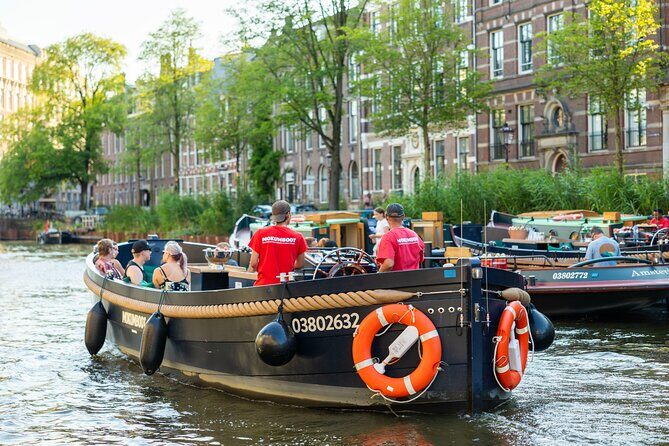
This is a guided cruise, so the guide matters. The best experiences include guides who keep the boat moving with clear stories and humor. Names that came up in strong reports include Captain Jang and Emil, plus others like Capt Mike and a pairing of Nils and Tom. When the guide is dialed in, the hour feels like a guided tour of Amsterdam’s identity, not just a slow loop.
There are also caution notes. Some people have reported trouble locating staff at the pier, late blankets, limited talking during the cruise, or that audio was hard to hear when the boat was crowded. In one case, a guide reportedly spent time on a phone and did not use a mic. None of that is the norm you want to plan around, but it’s a good reason to pick a seat near where the guide talks and to stay patient.
If you’re the type who hates uncertainty, treat this cruise as a quick orientation. Then plan one or two independent museum visits afterward for deeper time.
Price and value: what $23.59 buys in a short Amsterdam window
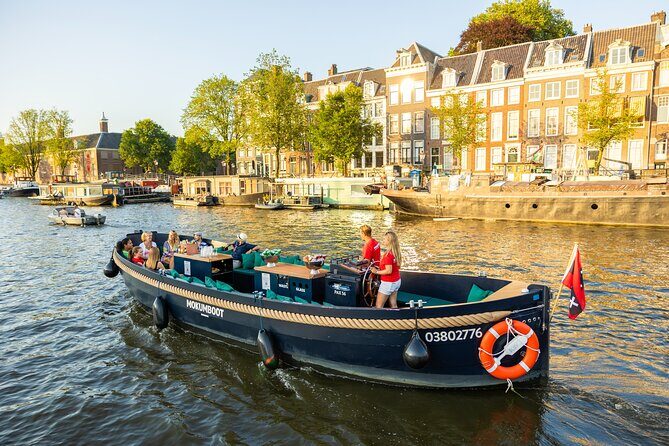
At $23.59 per person for about one hour, you’re paying for a high-value shortcut: canal access plus live interpretation. You’re not paying for a multi-hour itinerary or museum entry fees. Instead, you’re paying for time on the water, access to prime canal-side views, and a guide to connect the sights.
The value shifts depending on what you order. If you’re drawn to the unlimited drinks option, it can turn into a smart deal because Amsterdam drink pricing is rarely cheap. One strong positive write-up even framed it as a bargain compared with buying drinks in the city.
Even without the drink push, the comfort add-ons—blankets and ponchos/umbrellas—and the electric boat reduce friction. Less fuss. More cruising.
Who should book this canal cruise, and who might prefer something else
I’d put this high on the list if:
- You have one day or less and want the canal belt highlights fast
- You like guided context while you’re relaxing on water
- You want a low-effort way to map where museums and neighborhoods are
I’d pause if:
- You need perfect audio and hate crowds, because some departures can feel packed
- You want deep, detailed history at every stop—this is an hour, so it’s more curated than encyclopedic
- You’re booking mainly to drink and don’t care about the guide stories, since you’ll still want to stay present
Should you book the Mokumboot open-boat canal cruise?
Yes, if your priority is seeing Amsterdam from the water with clear views and getting a guide to connect the dots in about an hour. The electric boat, the quick pacing, and the comfort gear help a lot.
Book with confidence, but not blind faith. Arrive early to find the right meeting spot, pick a seat where you can hear, and keep an eye on the weather. If the day is calm and the guide is on form, this is exactly the kind of Amsterdam experience that makes the rest of your trip feel easier.
If you want a safe second choice, make sure you still have a flexible plan for a museum or two after. That way, even if the cruise feels more relaxed than educational on a given day, you still get plenty of Amsterdam out of the overall itinerary.
FAQ
How long is the Amsterdam open-boat canal cruise?
It’s about 1 hour.
What language is the cruise offered in?
The live guiding is offered in English.
Are drinks included with the tour price?
Drinks are available on board for sale, and there is an unlimited drinks option. Snacks are not included.
What weather protection do they provide?
Blankets are available, and ponchos and/or umbrellas are provided.
Where does the tour start and end?
You start at Stationsplein 28, 1012 AB Amsterdam, Netherlands, and the tour ends back at the meeting point.
Are life jackets provided for young children?
Yes. Life jackets for ages 0–6 are provided free of charge.
What’s the cancellation policy?
You can cancel for free up to 24 hours before the experience for a full refund. The tour requires good weather; if it’s canceled due to poor weather, you’ll be offered a different date or a full refund.