REVIEW · UTRECHT
Utrecht Private Walking Tour With A Professional Guide
Book on Viator →Operated by Global Guide Services · Bookable on Viator
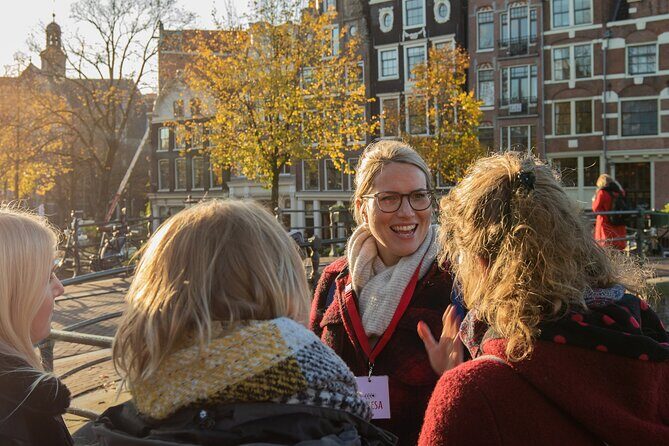
Utrecht’s history is right on the street. This private walking tour strings together centuries of change in a way that actually makes sense as you go. You’ll walk with a local pro guide such as Willemijn, and the route ties the big story of Traiectum to the landmarks you see today. I especially like two things: the way the guide turns major eras (Roman through WWII) into real scenes, and the relaxed route that lets you enjoy the Oudegracht canal instead of rushing past it.
One thing to consider: this is a walk-first experience, and entrance fees are not included, so if you want inside access at multiple churches/cathedral stops, that can add cost and time.
You’ll meet at Neude and finish back where you started. It runs about 2 hours, it’s offered in English, and you’ll have your guide just for your group (up to 15). Confirmation comes at booking, and you get a mobile ticket.
In This Review
- Key Highlights You’ll Actually Feel While Walking
- Why a Private Utrecht Walk Works Better Than a Mega-Tour
- The Story Thread: Roman Traiectum to Modern Reconstruction
- Dom Tower and Domkerk: The Big Anchor of Utrecht
- Neude Square, Oudaen, Janskerk, and Voorstraat: Where the City Feels Lived-In
- Oudegracht Canal Time: The Pretty Part That Still Has a Purpose
- The Other Church Landmarks: Sint-Catharinakathedraal, Sint-Willibrordkerk, and Oude Hortus
- Pace, Group Size, and Getting Around in 2 Hours
- Price and Value: $313 per Group (Up to 15) in Real Terms
- Should You Book the Utrecht Private Walking Tour?
- FAQ
- How long is the Utrecht private walking tour?
- What’s the group size limit?
- Is the tour offered in English?
- Where does the tour start?
- Where does the tour end?
- What’s included in the price?
- Are entrance fees included?
- What historical topics will the guide cover?
- Will I be walking with other groups?
- Is public transportation nearby, and is a service animal allowed?
- When will I receive confirmation?
Key Highlights You’ll Actually Feel While Walking
- Private guide, private pacing: your group only, with on-the-spot customizing if you want to steer the focus.
- A timeline you can follow: from the Roman period and the origin of the city’s name to modern reconstruction.
- Landmarks plus context: you’ll see Dom Tower, Neude Square, and other major sites with clear explanations.
- Oudegracht canal time: a picturesque stretch that makes the history feel less like a lecture.
- Churches across the centuries: Domkerk, Sint-Catharinakathedraal, Sint-Willibrordkerk, and Janskerk appear as story checkpoints.
Why a Private Utrecht Walk Works Better Than a Mega-Tour
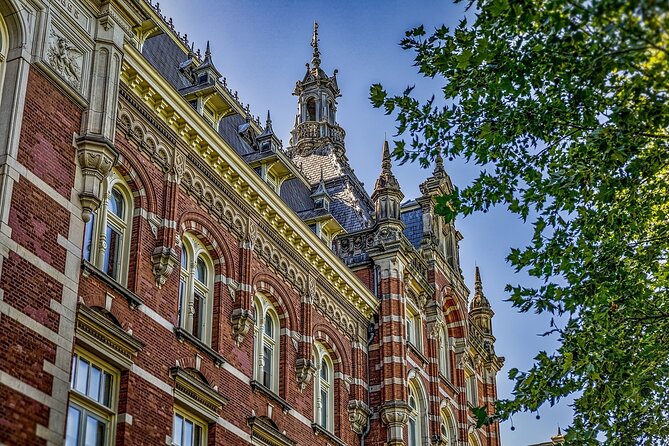
Utrecht can feel like one of those cities you could easily skim. This tour fights that problem by keeping the focus tight and personal. You’re not mixing with a crowd. Your local guide works with your group’s questions and energy level, and that changes everything—especially when the goal is history rather than just photos.
I also like that it’s not a cookie-cutter route with zero flexibility. You can ask the guide to adjust your route on the spot. That means if your group is more curious about, say, Utrecht’s religious role in northern Europe or how the city reformed after conflict, you can spend more time on what matters to you.
And from the way guides have been described—friendly, easy to talk with, and even patient—you get the sense that the experience is designed to feel conversational. One guide (Famke) was praised for showing parts you might miss on your own, and another (Giovanna) was noted for being very engaging and approachable.
You can also read our reviews of more tours and experiences in Utrecht.

The Story Thread: Roman Traiectum to Modern Reconstruction
The heart of this tour is the chronological guide narrative. It’s not just name-dropping. The guide walks you through the stages that shaped Utrecht, and then you connect those stages to what you can see.
Here’s the storyline you’ll work through:
- Roman period: you’ll hear how early Utrecht fits into the larger Roman world.
- Traiectum and the origin of the city’s name: you get the naming story tied to what later becomes Utrecht.
- Germanic invasions: you’ll learn how shifting power changes the direction of the city.
- Carolingian Empire: Utrecht’s role evolves further during this period.
- Christian center and trade hub: you’ll understand why Utrecht becomes important in northern Christianity and commerce.
- 16th century end of independence: the political storyline shifts, and the city’s trajectory follows.
- Republic of the Netherlands: the overview continues into the era when the Republic takes shape.
- Industrial age: the city changes again, this time with industry and modernization.
- World War II: you’ll cover the blitz, Nazi domain, and liberation as part of Utrecht’s 20th-century story.
- Modern reconstruction: you’ll end with how Utrecht looks and functions after rebuilding.
Why I think this “story thread” approach is valuable: once your brain has a timeline, the landmarks stop feeling random. Dom Tower and the churches aren’t just pretty stops. They become markers along the city’s changing identity—religious power, political shifts, wartime rupture, and rebuilding.
Dom Tower and Domkerk: The Big Anchor of Utrecht
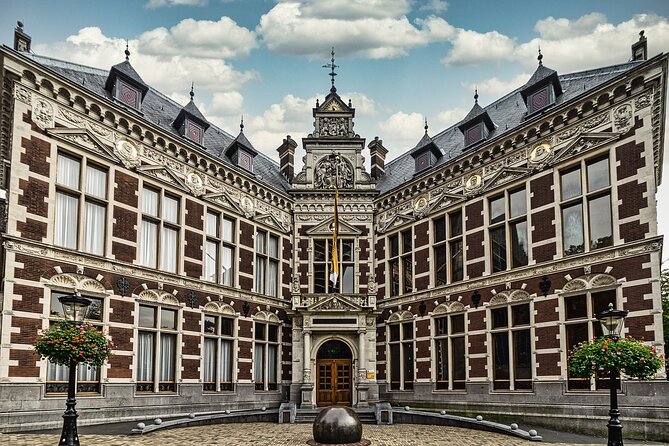
You’ll start your landmark focus with the Dom Tower (Dom Tower) and Domkerk. Even if you’ve never studied Utrecht before, these stops give you a fast sense of scale: this is a city that has always mattered, not a town that grew by accident.
What makes this pair useful for first-time visitors is that they act like an orientation point. As the guide moves through Utrecht’s long timeline, you’ll be able to mentally “put” each era onto a physical location. That’s the magic of guided history in a compact format.
If you’re the type who likes to know what you’re looking at before you take pictures, this is a strong start. And if you prefer to ask questions mid-walk, a private guide is ideal. You won’t get cut off by a schedule that assumes every group moves the same pace.
Neude Square, Oudaen, Janskerk, and Voorstraat: Where the City Feels Lived-In
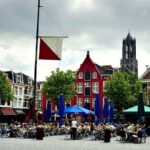
After the major anchor landmarks, you’ll move into the older city center vibe: squares, street life, and church checkpoints. Neude Square is a key part of that experience, because it’s one of the places you can feel the city’s daily energy while still learning why Utrecht developed where it did.
From there, you’ll see:
- Neude Square (a landmark you’ll come to recognize quickly)
- Oudaen (a classic city-area stop that helps connect the walking rhythm)
- Janskerk (another major church landmark that fits the tour’s Christianity-and-history theme)
- Voorstraat (a street stop that keeps the route grounded in real urban texture)
Why these stops work: they prevent history from becoming abstract. You’re learning about Christianity, trade, independence, and reconstruction—but you’re also walking through the spaces where those themes played out. Even if you only remember a few names afterward, you’ll remember the feel of Utrecht’s center: open squares, church presence, and street-level life.
A nice benefit of this private format is that you can slow down when something grabs your attention. If a facade, a spot near the canal, or a particular church area pulls you in, the guide can adjust the pace without throwing off a group of strangers.
Oudegracht Canal Time: The Pretty Part That Still Has a Purpose
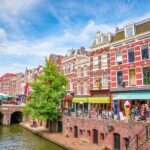
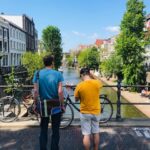
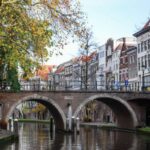
One of the standout highlights is the walk along the Oudegracht. This canal stretch is why Utrecht works so well on foot: it’s scenic without feeling staged.
But the guide usually doesn’t treat the canal as just a backdrop. As you’re walking, you’ll connect what you learn about Utrecht’s role as a trade hub and a major regional center with the physical layout of the city. That’s what turns “pretty water views” into something more memorable.
Practical tip: plan to take a moment here for slow looking rather than hurried sightseeing. The tour pace is designed to be leisurely (and that matches the best feedback: people liked spending their 2+ hours learning without feeling rushed).
Also, if your group enjoys photos, this canal area gives you options without forcing you to choose between comfort and views. You can stop briefly, listen fully, and still get the walk you came for.


The Other Church Landmarks: Sint-Catharinakathedraal, Sint-Willibrordkerk, and Oude Hortus
The itinerary includes several major religious landmarks that fit the tour’s big theme: Utrecht’s importance as a Christianity center in northern Europe.
You’ll see:
- Sint-Catharinakathedraal
- Oude Hortus
- Sint-Willibrordkerk
And you’ll also pass additional church-related stops like Janskerk and the Dom complex already mentioned. The guide ties these locations into the larger story arc, so you’re not just ticking off “church #3” on a list.
What I like about including multiple church landmarks is that it reinforces the tour’s message. Instead of one building carrying the entire narrative, you get checkpoints. Over 2 hours, that keeps attention from drifting—and it makes the history feel like it’s unfolding around you rather than being delivered from one podium.
One more thing: one guide described a “video” as brilliant. You might not see the same style with every guide, but it hints that some guides use helpful visual moments to connect periods and places. If you’re the type who learns faster with visuals, that’s a plus to look out for.
Pace, Group Size, and Getting Around in 2 Hours
This tour is about 2 hours long and is private for your group (up to 15). That group limit matters. With a small group, your guide can keep the conversation moving, stop for questions, and maintain a pace that works for everyone.
Logistically, the tour starts at Neude and ends back at the meeting point. That’s convenient when you’re deciding what to do afterward—no extra travel needed to “get to the next thing.”
It’s also near public transportation, which is helpful if you’re mixing it with other plans in Utrecht. And service animals are allowed, so if you travel with one, you can feel comfortable that it’s supported.
Most travelers can participate. Still, keep in mind this is a walking tour. If you know you need frequent breaks, tell your guide early so they can adjust the rhythm—private guides are better at that than group tours.
Price and Value: $313 per Group (Up to 15) in Real Terms
The price is $313 per group for up to 15 people, for roughly 2 hours with a local professional guide. The value depends on how many people you bring.
Here’s the simple math:
- If you’re 2 people, you’re paying about $156.50 per person.
- If you’re 4 people, it’s about $78.25 per person.
- If you’re 6 people, it’s about $52.17 per person.
So the best value is for families, small friend groups, or anyone who wants a private guide without paying a per-person rate that spikes quickly. If you’re solo, it can still be worth it if you really want the full personal attention and the story-based pacing.
One more “value” signal: it’s often booked well in advance (on average, about 129 days). That usually means demand is steady, and that’s often a good sign for guides and scheduling quality.
Entrance fees are not included. If you want to step inside buildings at multiple stops, budget extra. If you’re mostly there for the guide story and exterior landmarks, you may not feel that cost as much.
Should You Book the Utrecht Private Walking Tour?
Book it if you want Utrecht history with a clear timeline and you’d rather walk with a guide than try to piece the city together yourself. This is especially smart for:
- first-time Utrecht visits
- groups who like asking questions
- anyone who cares about how cities evolve across Roman, medieval, political, industrial, and WWII eras
- people who prefer a relaxed pace (not a sprint)
Skip or adjust expectations if your main goal is maximizing interior visits with lots of ticketed stops. Since entrance fees aren’t included, you’ll need to decide what you want to do inside versus what you want the guide to cover through the walk.
If your trip schedule is tight, this tour still works because it hits major anchors like Dom Tower / Domkerk, Neude Square, and the Oudegracht canal while covering the long story behind them. You’ll leave with a sense of Utrecht as something that kept changing—then rebuilt itself—and not just as a collection of nice buildings.
FAQ
How long is the Utrecht private walking tour?
It runs for about 2 hours.
What’s the group size limit?
It’s a private tour for your group, up to 15 people.
Is the tour offered in English?
Yes, it’s offered in English.
Where does the tour start?
The tour starts at Neude, 3512 Utrecht, Netherlands.
Where does the tour end?
The activity ends back at the meeting point.
What’s included in the price?
You get a local guide, a private guided tour, and the option for possible customizing on the spot.
Are entrance fees included?
No, entrance fees are not included.
What historical topics will the guide cover?
The tour covers the Roman period, Traiectum and the origin of the city’s name, Germanic invasions, the Carolingian Empire, Utrecht’s role in Christianity and trade, the end of independence in the 16th century, the Republic of the Netherlands, the Industrial age, World War II (blitz, Nazi domain, and liberation), and modern reconstruction.
Will I be walking with other groups?
No. This is private, so only your group participates.
Is public transportation nearby, and is a service animal allowed?
Yes, it’s near public transportation, and service animals are allowed.
When will I receive confirmation?
Confirmation is received at the time of booking.