REVIEW · AMSTERDAM
Giethoorn, Zaandam & Zaanse Schans Day Tour w/ Small Boat Ride
Book on Viator →Operated by Cherry Travel & Tours · Bookable on Viator
Every Dutch daydream is here.
This is a small-group trip that strings together two of Holland’s most famous postcard stops: Zaanse Schans (windmills, clogs, cheese, diamonds) and Giethoorn (canals and thatch-roof cottages). The big twist is the electric boat in Giethoorn, led by your guide with a chance to drive the boat yourself, which makes the day feel less like sightseeing and more like you’re borrowing daily life.
I especially like the way this tour reduces stress. You start with round-trip transport from central Amsterdam and you get guided time at the hands-on workshops, not just photo stops. I also like that the group stays small (up to 16), so your guide can actually answer questions and keep everyone pointed the right direction when the day gets busy.
One consideration: it’s a long day. It’s about 9 hours, and even with good planning, summer crowds at both attractions can make parts of the day feel fast. If you hate queues and prefer quiet villages, pick your season carefully.
In This Review
- Key points to know before you go
- Zaanse Schans and Giethoorn in one day: the big idea
- Getting to the countryside from Amsterdam (and why it matters)
- Zaanse Schans: windmills, river views, and Dutch craft stops
- Windmills and the Zaan River photo moment
- Clogs workshop: more than just trying shoes
- Cheese farm: tasting plus a process demo
- Diamonds: the surprise factory stop
- The drawback at Zaanse Schans: crowds can make it feel rushed
- The transfer: IJsselmeer, Afsluitdijk, and dikes with real scale
- Giethoorn by small electric boat: the part you’ll talk about later
- What the cruise actually feels like
- Driving the boat: the local-life moment
- The thatch-roof and bridge “wow factor”
- Crowds can be loud in Giethoorn too
- How much time do you really have in each place?
- Guides and group size: what the best days have in common
- Price and value: what about $166.96 feels fair
- Who should book this tour, and who should pass
- Should you book? My practical verdict
- FAQ
- What is the duration of the tour?
- Where does the tour start?
- Is lunch included in the price?
- Is the boat trip guided, and can I drive the boat?
- How many people are on the Giethoorn boat?
- What will I see at Zaanse Schans?
- What language is the tour offered in?
- Can I cancel for a full refund?
Key points to know before you go
- Small group format with a guide and a max of 16 travelers, plus an intimate boat experience in Giethoorn
- Electric boat in Giethoorn (up to 9 people maximum) where you can drive the boat
- Zaanse Schans workshops that include guided clog and cheese experiences, plus a diamond factory visit
- Great viewpoints timed around the Zaan River for windmill photos
- A long but informative transfer that includes IJsselmeer and the Afsluitdijk story on the way
- Peak season can mean busy paths and shop crowds, especially around the windmills
Zaanse Schans and Giethoorn in one day: the big idea
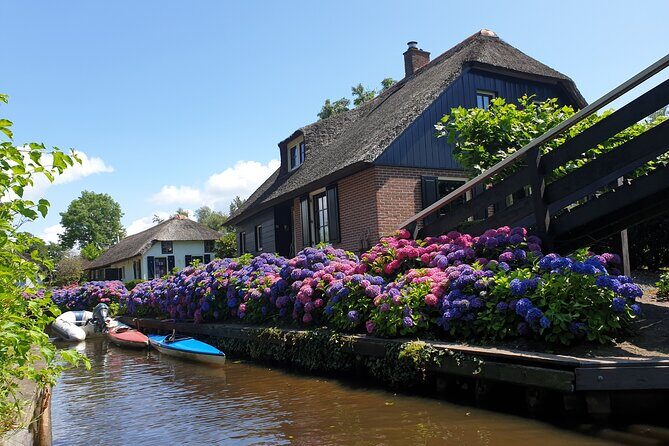
If you only have one day from Amsterdam and you want the classic Holland look, this trip is built for that job. You’ll see operating windmills in a recreated village setting at Zaanse Schans, then you’ll head to Giethoorn, often called the Venice of the Netherlands because there are no main roads and most movement is by water.
What makes this outing feel practical is the flow. You’re not trying to “figure it out” between two far-flung places with buses that don’t care if you’re lost. You meet at DoubleTree by Hilton Amsterdam Centraal (Oosterdoksstraat 4) at 9:30 am, then you’re guided through both destinations with dedicated time blocks.
The day is also structured around hands-on Dutch craft themes. Instead of only reading plaques, you get guided stops connected to wooden shoes (clogs), cheese-making, and diamond cutting. That mix tends to work well if you like learning how things are made, not just where they are.
You can also read our reviews of more boat tours in Amsterdam

Getting to the countryside from Amsterdam (and why it matters)
This is a door-to-day format. You don’t need tickets to a separate train, you don’t need to translate station signs, and you don’t have to gamble with public transport timing.
Your start point is fixed at DoubleTree by Hilton Amsterdam Centraal Station, and the tour returns there at the end. That matters because Amsterdam’s center can be chaotic at peak times, and you don’t want to spend your limited holiday day sprinting for a bus.
On the ride out, the guide adds context. You’ll pass by IJsselmeer (Lake IJssel), and you’ll get the story of the Afsluitdijk, the large dike system that helped reshape Dutch water management. The tour also points out Ketelbrug, a shorter bridge-dike stretch that helps you understand the scale of how the Dutch design “water routes” into daily life.
Why I like this part for your trip: it makes the countryside feel connected to real Dutch engineering, not just scenery. Even if you’re not a history buff, the “why does this landscape look like this?” questions get answered while you’re still fresh.
Zaanse Schans: windmills, river views, and Dutch craft stops
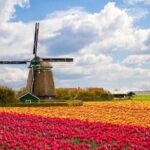
Your first major block is Zaanse Schans, scheduled for about 1.5 hours including demonstrations. This is where the tour leans into the most recognizable Dutch visuals: traditional wooden windmills and the green wooden houses that were relocated to recreate an older village atmosphere.
Windmills and the Zaan River photo moment
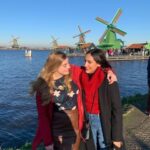
There’s a dedicated photo stop near the Zaan River for panoramic windmill views. If you care about photos (and most people do), this is the piece that prevents you from wasting time wandering at the wrong moment. Windmills are photogenic, but lighting and angles change fast when the crowd flow is moving.
Clogs workshop: more than just trying shoes
You’ll also get time at a wooden shoe workshop focused on the history and making of traditional Dutch clogs. A demonstration shows how clogs are produced, and there’s a chance to fit wooden shoes so you can feel what that iconic footwear is like.
This is one of the most practical parts of the day. Many tours treat clogs as a souvenir stop. Here, you get the explanation and the demo, which helps you buy with context. It’s also a fun sensory experience because clogs are a real, physical product, not just a design.

Cheese farm: tasting plus a process demo
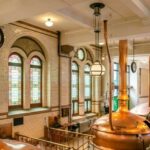
Next is Catharina Hoeve Cheese Farm, where you watch a professional cheese-making demonstration in traditional Dutch attire, followed by tasting. The tasting is framed as a broad selection of cheeses and other typical Dutch treats.
Two tips for you here:
- Go in ready to taste. If you’re the type who skips samples, you’ll miss the best payoff.
- Ask questions about the basics of what you’re eating during the demo. It’s the kind of information that turns tasting from “free food” into a story you remember.
Diamonds: the surprise factory stop
Zaanse Schans also includes a diamond factory visit as part of the guided time. One of the standout details people mention is diamond cutting, and it fits the theme of Dutch craftsmanship: turning raw material into precision objects.
This portion is shorter than the windmill walk, so treat it like a “watch and learn” stop. You’re not here to become a gem expert, but you can walk away with that satisfying feeling of seeing skilled work in action.
The drawback at Zaanse Schans: crowds can make it feel rushed
There’s no sugarcoating this. In peak summer, Zaanse Schans can feel packed. When the windmill zone is busy, it becomes harder to slow down, hear every detail, and take your time shopping.
On busy days, your best strategy is to keep your priorities straight: windmill photos, clog demo, cheese tasting. If you try to do everything equally, you’ll feel the day moving faster than you want.
The transfer: IJsselmeer, Afsluitdijk, and dikes with real scale
Between the two attractions, you’ll travel across a water-and-dike landscape. The tour uses the drive to connect the dots between what you see and how the Netherlands manages water.
You’ll learn facts about IJsselmeer, including that it’s a closed-off inland bay bordered by the Afsluitdijk. The Afsluitdijk is described as the largest dike in the Netherlands, roughly 32 km long, constructed between 1927 and 1932, and connected to the Delta Works story.
You’ll also pass by Ketelbrug, a bridge-dike that offers a sense of scale in a smaller form, described as about 800 meters long and opened in 1970.
This might sound like “stuff you’ll forget,” but it usually sticks because it matches the scenery. Every time you see a waterway, a canal, or a low coastal landscape later, you’ll remember that it’s designed, not accidental.
Giethoorn by small electric boat: the part you’ll talk about later
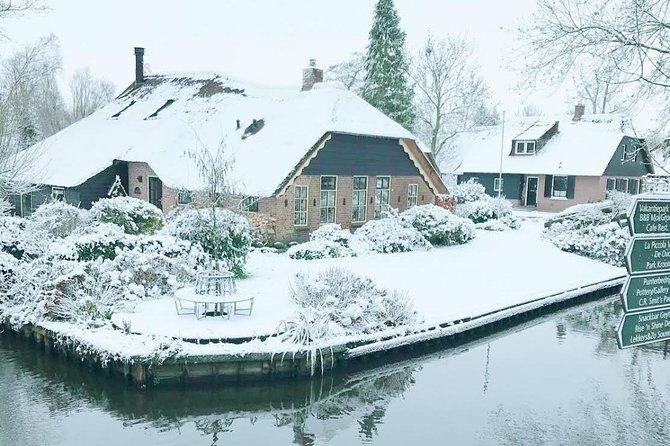
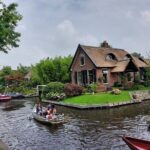
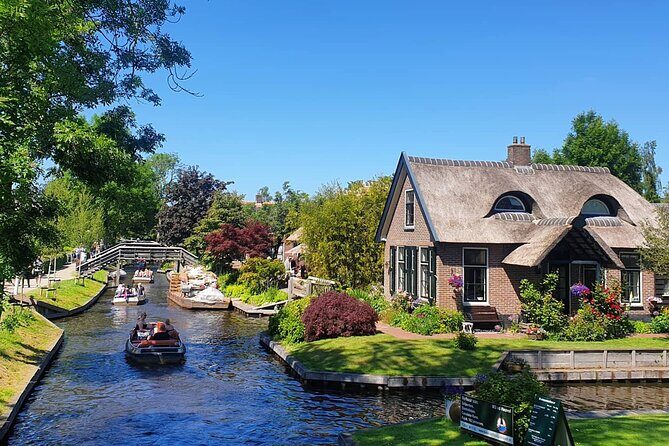
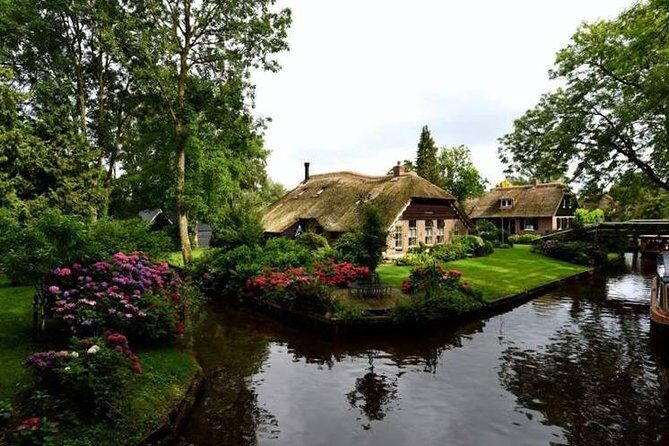
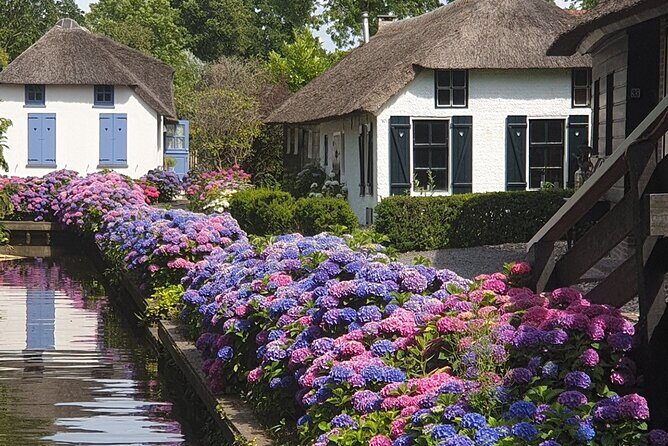
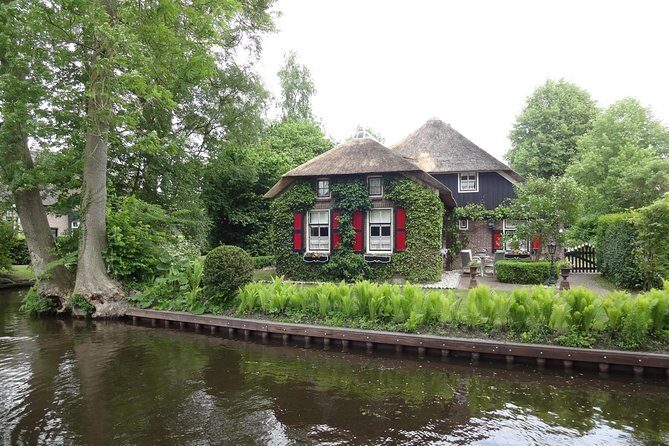
Giethoorn is the headline. The village is known for its canal network and thatched cottages, with no main roads and transportation that’s largely water-based.
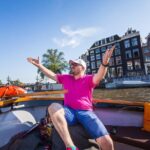
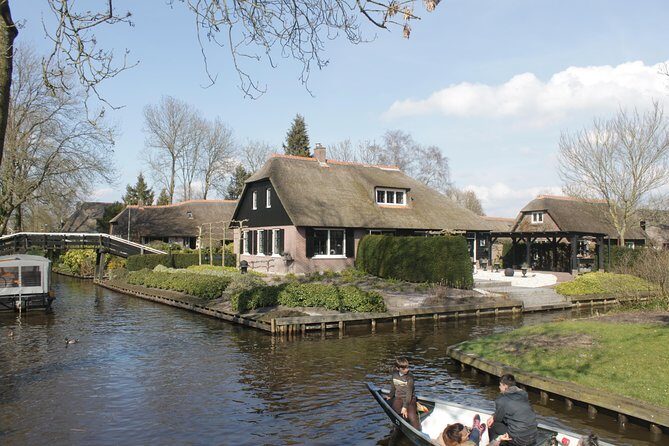
Your Giethoorn time is about 3.5 hours, and the main event is the 1-hour small electric boat cruise with a maximum of 9 people. It’s guided, and you can even drive the boat yourself. That alone changes the vibe. You’re not just sitting and holding your camera; you’re learning how to steer and move through narrow canals.
What the cruise actually feels like
Because it’s electric and small, the sound and movement are gentler than a big motor boat experience. You glide through a tight, intimate route. It’s the kind of setup that helps you see the details that large tours often miss, like the junctions of canals, the cottage fronts, and the way bridges shape the water routes.
Driving the boat: the local-life moment
This is why this tour is worth comparing. Many tours show you Giethoorn from land. This one adds a step that feels like participation.
When your turn comes to drive, slow down mentally. Don’t treat it like a ride at an amusement park. Treat it like a small craft you’re responsible for. You’ll get a better feel for the layout, and you’ll have more fun.
The thatch-roof and bridge “wow factor”
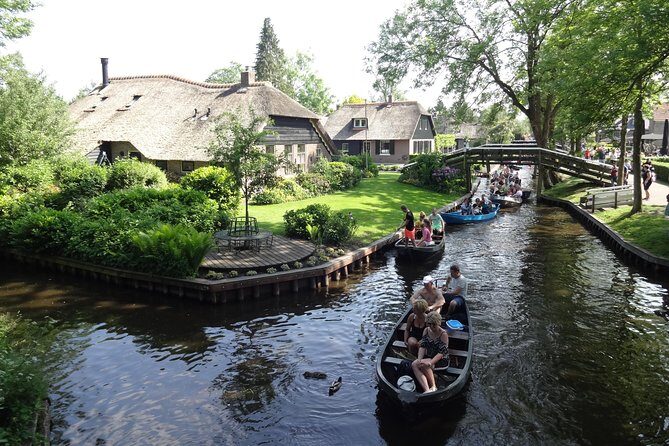
You’ll see the classic thatched-roof cottages connected by arch-shaped wooden bridges. The tour notes there are over 150 arch-shaped bridges in Giethoorn, and on the cruise you’ll start to notice patterns: bridges that frame the canals, bridges that act like connectors, and cottages that sit right up against water.
This is also where your camera matters, but you don’t need to sprint for every shot. Let the boat pace you. The best photos tend to come when you’re steady and aware of what direction the boat is turning.
Crowds can be loud in Giethoorn too
Even though the village looks calm, peak season can bring busy canals. If your day hits a traffic jam, you might find the experience feels less peaceful than the postcards.
The good news is that because it’s a small boat and you’re with a guide who manages timing, the disruption tends to be handled without turning the day into chaos.
How much time do you really have in each place?
The schedule is built for a “big hits” day, so don’t expect slow wandering across every corner.
Zaanse Schans is compact at about 1.5 hours with demonstrations. That’s enough time to:
- see the windmills properly,
- watch clog-making and fit shoes,
- do the cheese demo and tasting,
- and squeeze in the diamond factory visit.
Giethoorn is longer at about 3.5 hours, with the 1-hour boat ride being the core. That usually feels fair, and it gives you room for a bit of walking or just soaking up the canal views during free time.
If you love photos, do Giethoorn first or at least keep your mental energy there. Some tour-goers find the windmill area the more rushed part, while Giethoorn is the one that feels most like a reward at the end of a long day.
Guides and group size: what the best days have in common
A lot of the satisfaction comes from the guide. In the feedback, names like Mukti, Morgan, Veronica, and Aku show up with consistent themes: guides keep things organized, explain what you’re seeing, and handle questions smoothly.
For you, the actionable point is simple: bring real questions. If you ask about how cheese is made, how clogs are shaped, or why the Dutch rely on dikes, your guide can connect those dots in a way you won’t get from a brochure.
The tour runs with a maximum group size of 16, which helps. You’re not stuck waiting for a giant bus line where half the group wanders and the other half is searching for the restroom.
In Giethoorn, the boat limit of 9 people makes a real difference. You get less bumping, more shared space for photos, and a stronger sense that your boat time is “your” experience, not a conveyor belt.
Price and value: what about $166.96 feels fair
At about $166.96 per person for roughly 9 hours, this isn’t the cheapest day trip out of Amsterdam. But it also isn’t only “a bus and two stops.”
Your money is going toward:
- round-trip transport from central Amsterdam,
- a professional guide,
- guided time at Zaanse Schans including wooden shoe and cheese demonstrations,
- a diamond factory visit within the Zaanse Schans program,
- and a small guided electric boat ride in Giethoorn where you can drive.
The boat part is the value anchor. A small electric boat experience with steering time costs more than big-boat sightseeing, and most “Giethoorn tours” don’t give you the same level of participation.
So here’s my balanced take: if you want only scenery and you’re fine doing it independently, you might decide to DIY and skip demonstrations. But if you want a guided day with hands-on craft stops and a real Giethoorn boat moment, the price starts to make sense.
Also keep in mind that lunch isn’t included. You’ll want to budget for a meal on your own, which slightly changes the true day-trip cost.
Who should book this tour, and who should pass
This is a good fit if:
- you want two top Holland destinations in one day without transportation stress,
- you like short workshops like clogs and cheese rather than only shopping,
- you want a small electric boat moment where you can drive,
- you’re traveling solo or as a couple and prefer a group that stays manageable.
It may be less ideal if:
- you strongly dislike crowds in summer,
- you want deep, slow pacing at each stop (this is a “see a lot” day),
- you need accessibility accommodations, since it’s not recommended for travelers with reduced mobility.
If you can choose your timing, consider seasons carefully. The operators note that winter conditions can change how you experience Giethoorn, such as a winter alternative when canals freeze. That’s a good reminder that this area can offer different experiences depending on the calendar.
Should you book? My practical verdict
Book it if your goal is classic Dutch charm in a single day and you specifically care about doing Giethoorn by small electric boat with drive-your-own time. The combination of guided workshop stops at Zaanse Schans plus the hands-on boat experience is the reason this tour works.
Skip it or rethink it if you’re easily irritated by packed spaces and rushing. On peak days, Zaanse Schans can feel crowded, and a long travel day means you’ll want to go in with realistic expectations.
If you do book, set yourself up for a better day: prioritize the windmill photos, plan to enjoy the cheese tasting, and treat the boat like the main event. Do that, and you’ll leave with the kind of Holland memory that sticks beyond the photos.
FAQ
What is the duration of the tour?
The tour runs for about 9 hours.
Where does the tour start?
The meeting point is DoubleTree by Hilton Amsterdam Centraal Station, Oosterdoksstraat 4, 1011 DK Amsterdam.
Is lunch included in the price?
No, lunch is not included.
Is the boat trip guided, and can I drive the boat?
Yes. The Giethoorn boat ride is guided, and you can drive the boat yourself during the experience.
How many people are on the Giethoorn boat?
The electric boat is described as small, with a maximum of 9 people.
What will I see at Zaanse Schans?
You’ll see traditional wooden windmills and green wooden houses, plus guided demonstrations related to wooden clogs and cheese, and a visit to a diamond factory.
What language is the tour offered in?
The tour is offered in English.
Can I cancel for a full refund?
You can cancel up to 24 hours in advance of the experience’s start time for a full refund.