REVIEW · AMSTERDAM
Amsterdam Treasure Hunt: The Mystery of a Secret Sender
Book on Viator →Operated by Mystery City Games · Bookable on Viator
Amsterdam does mysteries well.
This interactive treasure hunt plus walking tour turns Golden Age streets into a puzzle board. You’re chasing the Order of the Rosy Cross for new members, and you’ll work to uncover the identity of A Secret Sender as you search the city’s history and architecture for clues. It’s also self-paced, so you can pause, look closer, and move at your own speed.
Two things I really like: the challenge feels social without being chaotic, and the route is built around real places, not fake photo stops. I also appreciate that it’s structured for different party types and time windows, since you can choose a start time and the game runs on a mobile ticket format. Even better, the format is clearly designed to get teens and adults engaged at the same time.
One thing to consider: you’ll be walking a city-center loop for about 2 hours (around 3 km), so you’ll want comfortable shoes and a realistic plan for pacing. And if your group is larger, it can be harder for everyone to stay aligned on clues—so think “team of puzzle partners,” not “wandering crowd.”
In This Review
- Key highlights worth getting excited about
- A Secret Sender storyline you can actually follow
- Price and timing: a 2-hour mystery that fits an afternoon
- How the self-guided game flows (and why that’s useful)
- Oude Kerk to Amsterdam Museum: the full 3 km route
- Stop 1: Oude Kerk
- Stop 2: Nieuwmarkt
- Stop 3: Westerkerk
- Stop 4: Torensluis
- Stop 5: Amsterdam Museum
- Clue style: fun challenge that works for teens
- Languages and group setup you can plan around
- Who should book this Secret Sender hunt (and who might not)
- Should you book Amsterdam Treasure Hunt: The Mystery of a Secret Sender?
- FAQ
- How long does the Amsterdam Treasure Hunt last?
- How far do we walk?
- Where does the hunt start, and where does it end?
- Is this a private tour?
- Is the experience self-guided?
- What languages is the game available in?
- Can I get a refund if I cancel?
Key highlights worth getting excited about
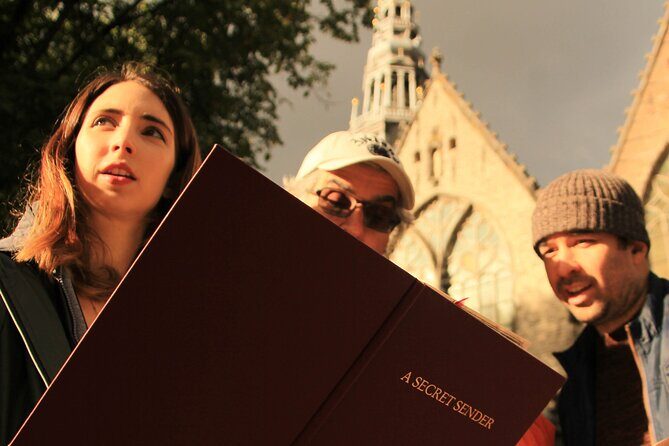
- A Secret Sender storyline tied to the Order of the Rosy Cross
- Self-guided scavenger hunt with a walking tour feel
- 3 km route / ~2 hours play time through the city center
- Golden Age architecture clues that keep you looking up and around
- Multiple languages including English, Dutch, French, German, Spanish, and Italian
- High satisfaction: 4.9 rating and 97% recommended
A Secret Sender storyline you can actually follow
This isn’t a big-lecture “history tour.” The whole point is to make you notice details while you walk. The mystery is simple to understand: the secretive Order of the Rosy Cross wants new members, and you have to prove you’re worth the title by solving ancient puzzles in time. Your job is to discover the identity of A Secret Sender, with the city acting like your clue book.
What makes this work in Amsterdam is the way the game is tied to the places you see. You’re not just moving from one landmark to the next. You’re actively hunting for small signals in buildings and monuments as you go. The payoff is that you end up with stories you can remember, not facts you forget ten minutes later.
There’s also a nice “choose your moment” flexibility. You pick a start time that fits your day, which matters in a city where plans often shift.
You can also read our reviews of more tours and experiences in Amsterdam.



Price and timing: a 2-hour mystery that fits an afternoon
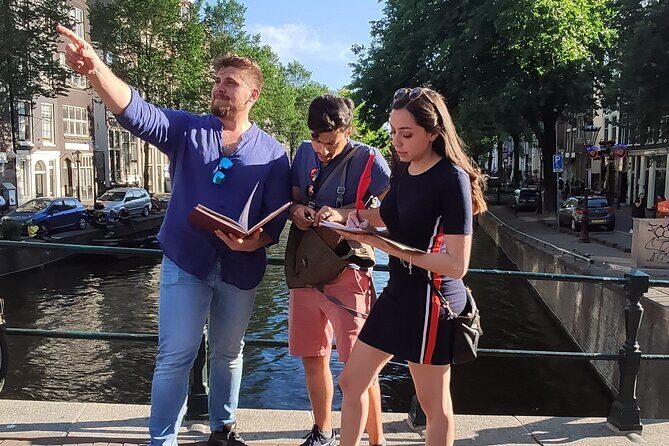
At $30.25 per person for about 2 hours (with roughly a 3 km walking route), you’re paying for three things: guided structure, puzzle design, and a built-in reason to explore. It’s not trying to replace a museum ticket or a full-on canal cruise.
Here’s the value math I’d use: if you have limited time—first day in town, a short layover, or an afternoon you want to make productive—you get “doing” instead of just “looking.” You’re also not stuck waiting for a strict group schedule every minute. Since it’s self-guided, the timing works better if your crew moves at different speeds.
Also, the format is set up for language variety (English plus several others), which can be a big deal when you’re traveling with mixed groups. Everyone plays the same story, just in their own language.
How the self-guided game flows (and why that’s useful)
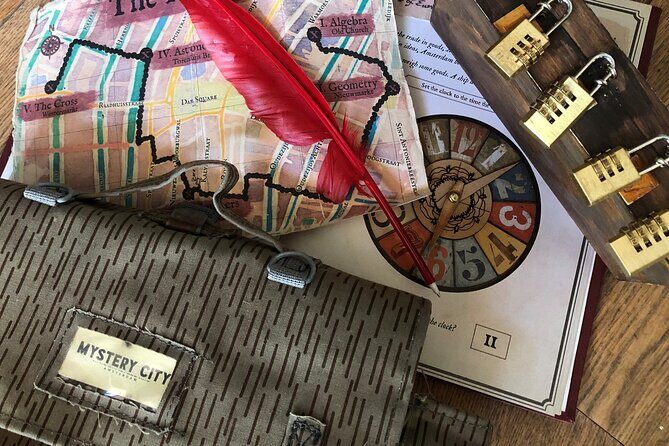
You start at Zwanenburgwal 178, 1011 JH Amsterdam, and you finish back at the same point. During the hunt, you’ll solve puzzles as you explore on foot, with the whole experience running around 2 hours play time.
The “self-guided” part is more than a marketing label. It means you’re not required to keep pace with a guide’s narration every step. You get to slow down when you spot something that could be a clue. You get to re-read, argue gently with friends, and try again.
And because you have a mobile ticket, you’ll want to have your phone ready at the start. This is the kind of activity where being prepared helps. If your battery is low, charge it before you head out.
One more practical note: it’s near public transportation, which helps if you need to reach the start point quickly. The route is city-center, so plan on walking as your main mode.
Oude Kerk to Amsterdam Museum: the full 3 km route
This hunt is built around five clue stops, moving through the city center. Think of it as a walking “loop” where each location hands you puzzle fuel for the next section. The exact order matters, because each stop is part of the bigger identity puzzle.
Stop 1: Oude Kerk
You kick off at the Oude Kerk area. This start is important: early clues set your rhythm. I like that the game begins with a recognizable Amsterdam landmark name, because it helps you get oriented fast—mentally and physically.
Potential drawback: if your group expects everything to be solved instantly, the first puzzles can feel like an on-ramp. Give yourself a minute. The game works better when you settle in and start scanning details rather than rushing.



Stop 2: Nieuwmarkt
Next up is Nieuwmarkt, which is a great mid-game reset. By now you’re warmed up, so you’ll likely spend more time checking surroundings and less time trying to figure out how the game works.
This is where the “walking tour” side shows up. You’re not just doing puzzle-solving in a vacuum—you’re using the city itself as the clue context, so streets and monuments become part of the story you’re trying to decode.
Stop 3: Westerkerk
Then comes Westerkerk. At this point, the clues should start to click because you’ve already learned what kind of details the game wants you to look for. Expect you’ll be more strategic: quick scan, pick a likely clue spot, then verify.
Another consideration: at about the halfway mark, everyone in the group may have a different preferred pace. If you want the smoothest experience, assign roles informally—one person reads puzzles, others scan the surroundings. It keeps you from doing the same overlap twice.
Stop 4: Torensluis
Torensluis is where the route keeps your attention moving. The puzzles here help you connect what you saw earlier with what you’re seeing now. I find this kind of “connection” game most fun when you treat it like teamwork, not competition.
If you’re on a strict schedule, this is also a good place to manage time. Don’t let one stubborn clue freeze the entire group. If you’re stuck, keep going and come back later if the game logic allows.
Stop 5: Amsterdam Museum
You finish at the Amsterdam Museum area and wrap up the hunt back where you started. By the end, you should feel that satisfying shift from random searching to purposeful solving.
This last stretch is ideal for cementing what you learned. Even if you’re not a museum person, the finale gives the story a sense of structure, so the “mystery” doesn’t fizzle into a vague finish.
Clue style: fun challenge that works for teens
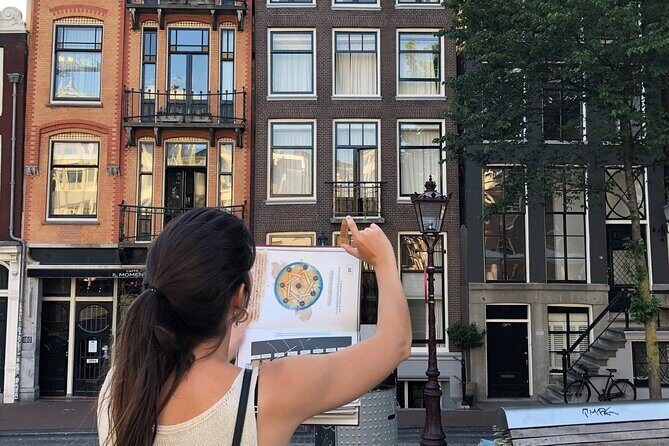
What makes this kind of scavenger hunt succeed is not just the puzzle existence—it’s difficulty balance. The clues are built to be engaging, not frustrating. They’re designed so a teen can participate without the adults taking over, and adults don’t feel like they’re doing a kiddie activity.
In practice, it’s a nice match if you’ve got a teenage traveler in the group. One family even fit it into a short Amsterdam window (a 7-hour layover) and still found time to add lunch nearby, because the walk naturally pulls you into areas where you can grab food without needing a big detour.
A couple practical tips to keep the energy up:
- Start earlier in the afternoon if you can. The walk adds up, and starting sooner keeps you from feeling rushed.
- If your group is split in interests, lean into the puzzle roles. One person reads, one person checks details, and someone else keeps time.
And yes—friendly hosts matter. In at least one experience, the host Ben was singled out for being welcoming and helpful, which makes the start feel less awkward.
Languages and group setup you can plan around
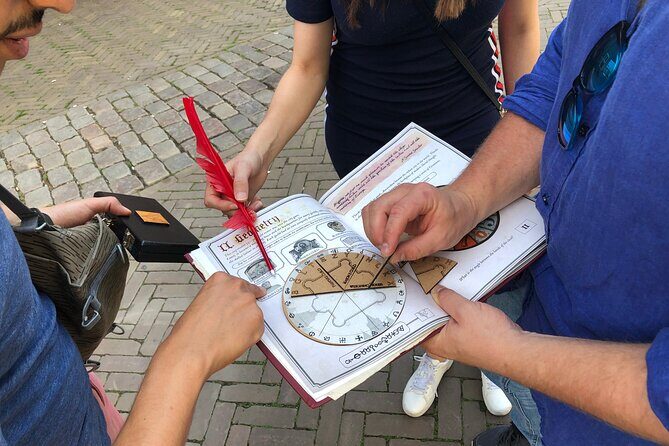
This experience is offered in English, Dutch, French, German, Spanish, and Italian, so it’s easier to keep everyone on the same story. Language coverage also helps if you’re traveling with someone who doesn’t want to rely on their basic English skills to solve puzzles.
It’s also private for your group, which is a big plus for puzzle activities. You’re not constantly stopping for strangers, and the game flow tends to feel calmer. That said, puzzle games still work best when your group can stay close and communicate. If you’re bringing a bigger team, plan for that reality: you may need to keep everyone aligned at each stop.
Service animals are allowed, and the meeting point is near public transportation, which adds practical flexibility in a city with lots of transit options.
Who should book this Secret Sender hunt (and who might not)
Book it if you want:
- A light-to-moderate walking plan that still feels like an adventure
- Something interactive that includes both history and problem-solving
- A way to explore Amsterdam in a low-pressure format where you can go at your own pace
- A first-day activity that helps you learn streets and neighborhoods fast
It may not be the best fit if:
- You want a purely sit-and-listen museum-style tour
- Your group includes people who can’t comfortably do about 3 km of walking
- You’re looking for zero puzzle effort. This is a mystery game first, sightseeing second
Should you book Amsterdam Treasure Hunt: The Mystery of a Secret Sender?
I’d book it if your ideal Amsterdam day includes one or two “active” hours where everyone has something to do. The price is reasonable for the time and structure, the game format is built for real participation, and the route makes you look at Golden Age Amsterdam through a puzzle lens.
If you’re traveling with teens, this is especially appealing. It gives them a reason to engage with the city instead of treating landmarks like checkboxes. And even if you’re an adult who’s tired of generic tours, the puzzle design keeps the experience moving and gives you that small thrill of figuring things out together.
Just be honest about the walking, start with a full battery and comfortable shoes, and you’ll have a far easier time turning Amsterdam into a solvable mystery.
FAQ
How long does the Amsterdam Treasure Hunt last?
The experience is about 2 hours (approx.), with around 2 hours of play time.
How far do we walk?
The route is about 3 km through Amsterdam’s city center.
Where does the hunt start, and where does it end?
You start at Zwanenburgwal 178, 1011 JH Amsterdam. It ends back at the same meeting point.
Is this a private tour?
Yes. It’s a private tour/activity, and only your group participates.
Is the experience self-guided?
Yes. It’s self-guided, and you explore at your own pace.
What languages is the game available in?
It’s offered in English, Dutch, French, German, Spanish, and Italian.
Can I get a refund if I cancel?
Yes. You can cancel for a full refund up to 24 hours before the experience’s start time. If you cancel less than 24 hours before, the amount paid is not refunded.