REVIEW · AMSTERDAM
Amsterdam: Red Light District guided tour (TOP RATED)
Book on Viator →Operated by Trigger Tours · Bookable on Viator
Red lights, old streets, and smart context. This guided walk through Amsterdam’s Red Light District (De Wallen) isn’t just sightseeing. It’s built for first-timers who want the full picture: history, today’s rules, and a local way of thinking about the area without the awkward guesswork. I especially love the small-group pace (you can actually ask questions) and the way the route blends adult-district reality with proper city history. One watch-out: it’s still an adult neighborhood, and it’s not recommended if you have limited mobility because you’ll be walking a lot.
Even the details feel grounded. Guides like Ben and Robin set a respectful tone toward the workers, and they’re quick to steer the conversation back to Amsterdam itself. On top of that, you’ll get practical city context—like how bicycle traffic can move fast in this part of town—so you feel comfortable moving along.
You meet at Damrak (1012 Amsterdam) and you’re done back there about two hours later. This tour also runs with a mobile ticket, and it works best in good weather, so check the forecast before you commit.
In This Review
- Key highlights worth planning for
- Why this Red Light District tour feels different
- The 2-hour flow: what the walk actually includes
- Stop 1: De Wallen, the Red Light District streets
- Damrak stop: the city built on wooden poles
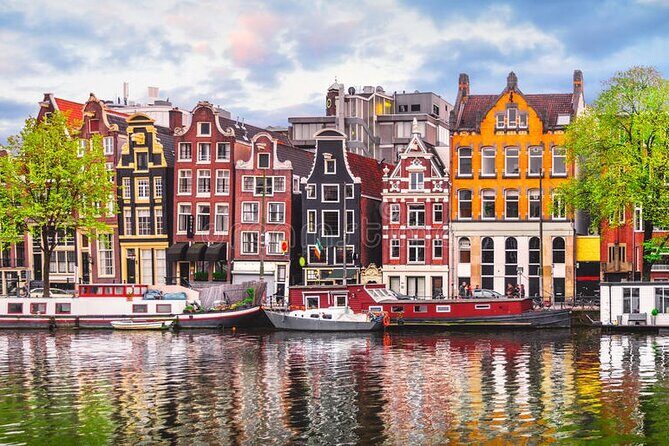
- Old Town context: why this area has deep roots
- Pub The Ape (Int Aepjen): a wooden building survivor
- Waag: the former city gate from the 1400s
- The smallest house: from VOC storage to long-term living
- The condom shop stop since 1987
- Guide style: what makes the experience feel comfortable
- Price and value: is $34.17 worth it?
- Timing tips: day vs evening
- What to wear and bring
- A respectful way to enjoy De Wallen
- Who should book this tour
- Should you book the Amsterdam Red Light District guided tour?
- FAQ
- FAQ
- How much does the Amsterdam Red Light District guided tour cost?
- How long is the tour?
- What group size should I expect?
- Where do I meet for the tour?
- What language is the tour offered in?
- Is food or drinks included?
- Is there an admission ticket included?
- Is the tour suitable for limited mobility?
- Are service animals allowed?
- What happens if the weather is bad or I need to cancel?
Key highlights worth planning for
- Small-group size (max 15) that keeps the pace relaxed and questions possible
- De Wallen on a local’s terms, with history and current rules explained clearly
- Street stops that connect the district to Amsterdam’s older city core
- Wooden building survivor Pub The Ape (Int Aepjen), dating to around 1540
- Waag, a defensive city-gate building from around the 1400s, reused over time
- A surprisingly specific stop: Amsterdam’s first condom shop concept, in place since 1987
Why this Red Light District tour feels different

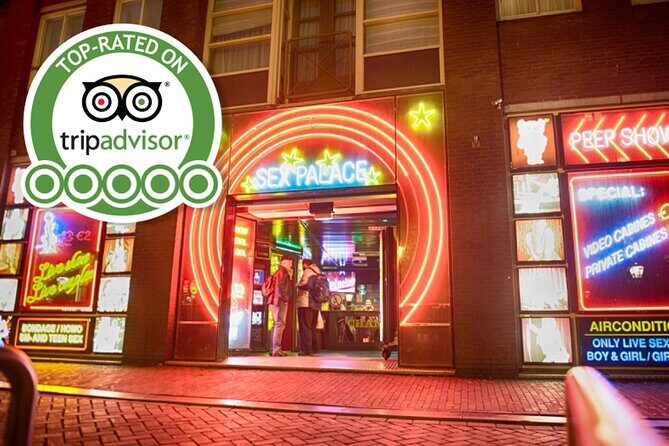
The Red Light District can be a jolt for visitors. You see the windows, the nightlife energy, and the obvious tourism. What you might not get on your own is the structure behind it: why the area looks the way it does, how Amsterdam deals with it, and what laws and regulations do in day-to-day life.
This tour is designed to give you the missing context fast. Instead of wandering randomly, you walk a set route that links De Wallen with older landmarks and city details. It’s also not a long lecture. The format stays on your feet, moving neighborhood to neighborhood, with a local guide keeping the pace steady.
I like that the tone is set for respect. More than once, guides focus on dignity for the workers and keep the conversation thoughtful. That matters here, because the setting can easily turn into gawking if nobody is guiding the flow.
You can also read our reviews of more guided tours in Amsterdam



The 2-hour flow: what the walk actually includes
You’re looking at about two hours of walking with no food stop built in. The main experience is the guided route through De Wallen, with a handful of historic city stops woven along the way.
The itinerary is basically two threads tied together:
1) What De Wallen is and how it works now
2) Why this part of Amsterdam developed the way it did
That blend is the reason this tour is a hit with first-timers. You’re not only seeing what’s in front of you. You’re learning how the city’s past shaped the present.
Stop 1: De Wallen, the Red Light District streets
This is the core of the tour. You walk the narrow streets and get a guided look at the district’s sights. The guide explains both history and the current situation, with an emphasis on the rules and regulations that surround the area.
If you’ve never visited Amsterdam before, this stop helps you orient quickly. Afterward, you understand what you’re looking at when you pass it on your own—especially the difference between window-viewing as a tourist activity and the reality of how the city governs the area.
Practical note: De Wallen can feel busy and slightly chaotic. The value here is that your guide keeps you on track and helps you read what you’re seeing.
Damrak stop: the city built on wooden poles
Then the tour zooms out from De Wallen to Amsterdam’s foundation logic at Damrak. You learn Amsterdam’s famous “city built on trees” idea—because the ground is soft.
The key detail: Amsterdam sits on a thick layer of fen and clay. To make buildings stable, older structures were driven on wooden foundation piles down through the clay and water until they reach a sandy layer roughly 11 meters deep. It’s the kind of fact that turns the city from scenery into engineering.
This stop isn’t random. It’s a reminder that Amsterdam grew in tough conditions, and that the city’s planning choices shaped everything from housing to streets. It also helps you see why the old center feels the way it does—packed, historic, and built for the ground they had.
Old Town context: why this area has deep roots
You also get a quick grounding in the fact that this is part of the Old Town—the oldest core of the city. That’s the point: De Wallen isn’t floating in time. It sits inside an area with layers of older development.
If you’re the type who likes to connect dots, this helps. You stop seeing the district as just a nightlife zone and start seeing it as a part of a living city with continuity.




Pub The Ape (Int Aepjen): a wooden building survivor
One of the most memorable stops is Pub The Ape, known in Dutch as Int Aepjen. It’s said to date to around 1540 and is one of only two remaining wooden buildings in Amsterdam.
Why that matters: there was a major fire in 1452, after which the government decided buildings should have brick facades. That shift changed what could survive in the long run. So when you stand near Int Aepjen, you’re not just seeing a pub—you’re seeing a rare remnant of what older Amsterdam looked like.
This is the kind of stop you’ll feel glad you didn’t skip. It adds texture to the walk and gives you something tangible to anchor the conversation to.
Waag: the former city gate from the 1400s
Next up is the Waag. Historically, it used to be one of Amsterdam’s city gates as part of the defensive wall. The building dates to around the 1400s and is described as the city’s second oldest building.
Later, it was used by guilds and craftsman organizations—places where craftspeople set up and worked within the Waag area and around the square.
That’s a useful link for travelers. When you learn that a building began as a gate for defense and later became a guild hub, you understand how Amsterdam shifted roles over time. Walls turn into workspaces. Boundaries turn into institutions.
The smallest house: from VOC storage to long-term living
You’ll also pass the smallest house of Amsterdam, built around the 1700s. It was originally used as storage for the VOC trading company—the Dutch East India Company—and later people lived in the house for a long time.
This stop is good for two reasons:
- It gives you a clear picture of Amsterdam’s trade-driven wealth story.
- It shows the practical reality of city life: space was tight, and people adapted.
Even if you don’t love architecture, you’ll probably find this one sticks in your mind because the concept is so specific.
The condom shop stop since 1987
The tour includes a modern, very literal Amsterdam detail: the world’s first condom shop dedicated to condoms, in place since 1987. You can also get custom sizes there, according to the tour information.
It sounds like a quirky detour, but it fits the theme. Amsterdam treats sex-related commerce and public policy as part of city management, not taboo silence. This stop makes that point in a way that’s concrete and easy to remember.
Guide style: what makes the experience feel comfortable
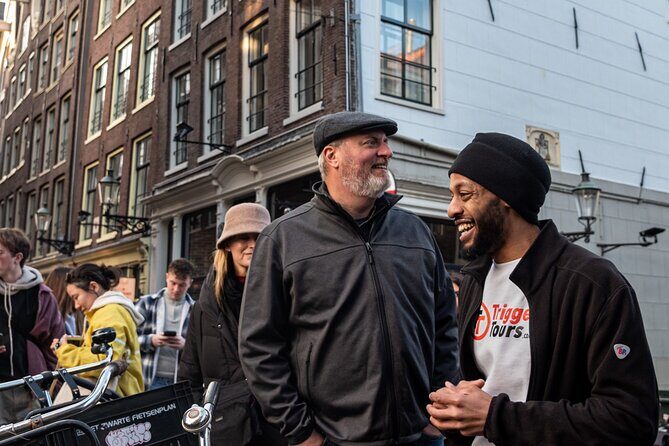
A big part of why this tour earns strong ratings is the guide’s approach. Different guides are named, and they all seem to share the same core method:
- factual context
- a respectful tone toward workers
- room for questions
- city-wide tips, not just district talk
You’ll hear a range of guides featured by name, including Ben, Robin, Andrea, Aarre, and Catherine. People highlight their pacing, their sense of humor, and the way they handle sensitive topics with care.
One practical safety detail also shows up in the guidance: reminders about Amsterdam’s fast bicycle traffic. It’s a small thing, but it improves how confidently you move through the street grid.
Price and value: is $34.17 worth it?
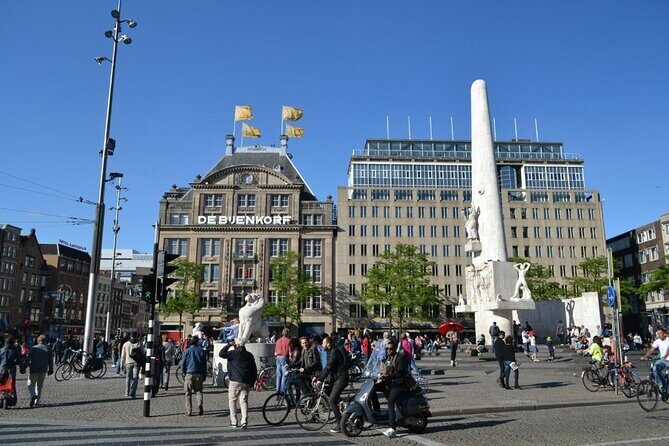
At about $34.17 per person for around two hours, this is priced like a budget-friendly walking tour—especially for a small group capped at 15.
The value isn’t just the price tag. It’s what you’re buying:
- a local guide to explain the district’s current reality and rules
- guided interpretation of historic landmarks (Waag, Int Aepjen, and more)
- a structured route that helps you avoid wandering aimlessly
If you’re the type who likes to understand why places exist (not just what they look like), the history stops and the rules talk are what justify the cost. If you’re only chasing quick photos and window viewing, you might feel a bit more than you need from a guided format. But the tour is built for meaning, not just motion.
Timing tips: day vs evening
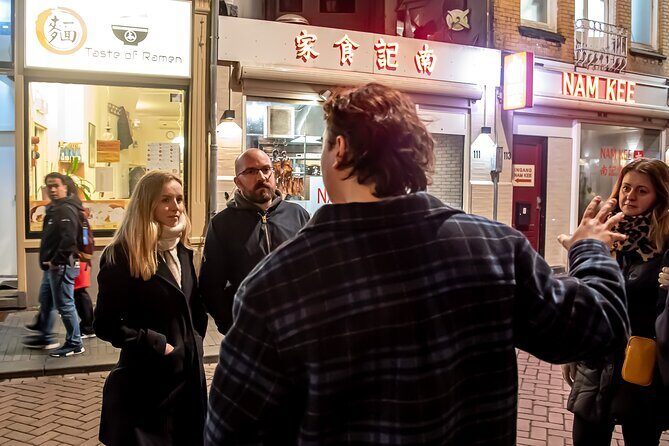
If you can choose a time slot, consider going in the evening. One highlight from guidance you can act on: an 8pm-style evening tour can feel more active, which can make the walk more interesting overall.
That doesn’t mean daytime is bad. Daytime can be calmer. Still, if your goal is the full atmosphere of the district, an evening run often fits better with that idea.
What to wear and bring
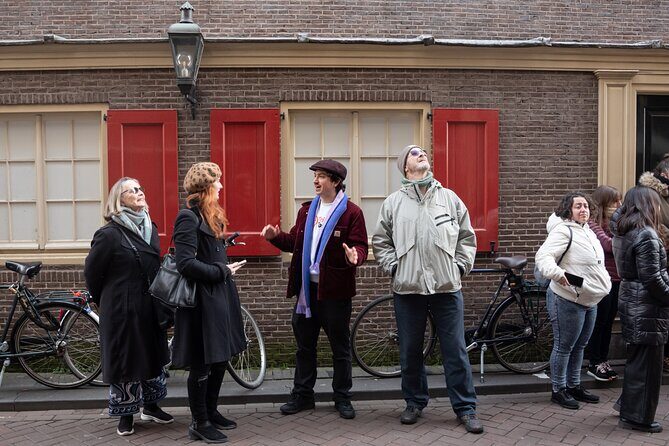
This is a walking tour, and the information given stresses it requires good weather. So plan for whatever conditions you’ll actually face.
I’d bring:
- a warm layer (even in mild seasons, canals and evenings can feel colder)
- a rain layer if forecast shifts, since “good weather” is part of the deal
- comfortable shoes with grip
- water, since food and drinks aren’t included
Also, you’ll be in an area with plenty of bicycles. Keep your head up and don’t let signage or windows pull you into the bike lanes.
A respectful way to enjoy De Wallen
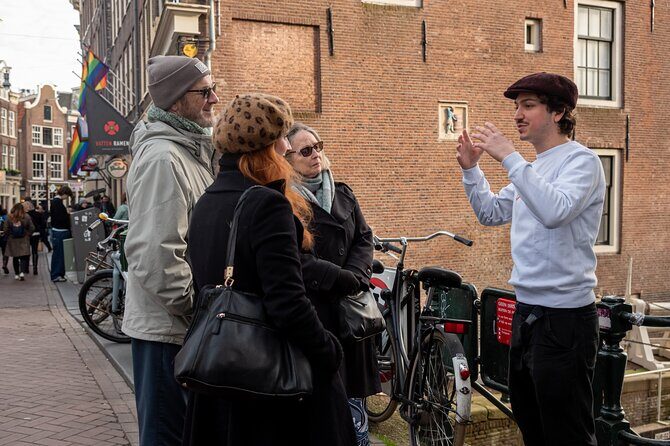
This tour isn’t about shock. It’s about understanding. The tone set by guides is usually the same: you learn the rules and history, you look when appropriate, and you treat the workers like people, not props.
If you’re going with a partner or friends, you’ll likely enjoy the way the guide keeps the group together and focused. A small group helps with that—less noise, less pushing, and more chances to ask the questions that are hard to ask on your own.
Who should book this tour
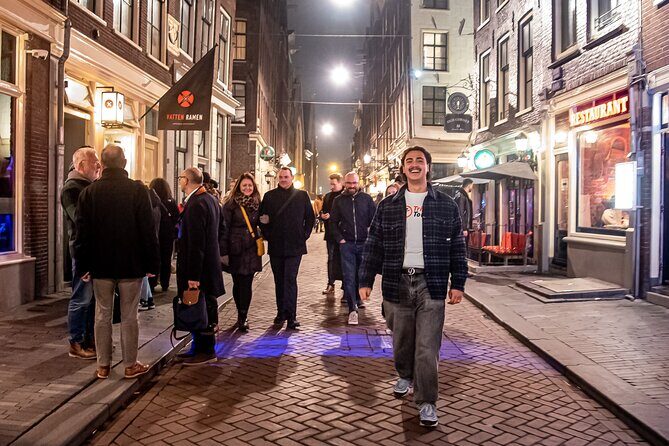
I think you should book if:
- you’re visiting Amsterdam for the first time and want context fast
- you want history stops that actually connect to the area you’re walking through
- you prefer small groups where you can ask questions
- you’d rather learn the city’s approach to this topic than guess from guidebooks
You might skip it if:
- you want a short, purely visual photo walk
- walking a lot in the area doesn’t work for your mobility needs (it’s not recommended for limited mobility)
- you’re sensitive to adult-entertainment surroundings and prefer a different neighborhood focus
Should you book the Amsterdam Red Light District guided tour?
If you’re asking me to make the call: I’d book it if you want to understand this part of Amsterdam with clarity and respect.
The biggest reasons to choose this option are the small-group size and the way the route connects De Wallen to specific historic landmarks like the Waag and the wooden Pub The Ape (Int Aepjen). For many travelers, that’s the difference between a “walk past some windows” experience and a real sense of place.
If your schedule is tight, know that it’s commonly booked well ahead—so pick a date you can commit to, and choose a time that matches your comfort level (evening can be more active). If the forecast turns bad, plan to flex, since this one depends on good weather.
FAQ
FAQ
How much does the Amsterdam Red Light District guided tour cost?
It costs $34.17 per person.
How long is the tour?
The duration is about 2 hours.
What group size should I expect?
The tour has a maximum of 15 travelers.
Where do I meet for the tour?
The meeting point is Damrak, 1012 Amsterdam, Netherlands, and the tour ends at the same location.
What language is the tour offered in?
The tour is offered in English.
Is food or drinks included?
No. Food and drinks are not included.
Is there an admission ticket included?
The tour lists admission ticket free for the Red Light District stop.
Is the tour suitable for limited mobility?
It is not recommended for travelers with limited mobility.
Are service animals allowed?
Yes, service animals are allowed.
What happens if the weather is bad or I need to cancel?
The experience requires good weather. If it is canceled due to poor weather, you’ll be offered a different date or a full refund. You can cancel for free up to 24 hours in advance for a full refund.