REVIEW · AMSTERDAM
Amsterdam Red Light District & Coffee Shop Tour
Book on GetYourGuide →Operated by Trigger Tours · Bookable on GetYourGuide
Amsterdam’s Red Light District has layers.
This tour walks you through the area with a local voice, mixing the well-known storefronts with the city’s political and cultural background. You’ll also get a coffee shop visit (and real context for Amsterdam’s relaxed laws around drugs and sex work), plus stops in nearby neighborhoods like Chinatown and along some of the city’s tightest streets. Ben and Robin are just a couple of guide names that show up again and again in strong feedback.
I like that the experience stays practical and respectful, even when the subject matter is tough. Seeing the district through a local perspective is the big win for me, and the coffee shop culture stop turns a curiosity into something you can actually understand. A possible drawback: it’s not suitable for people with mobility impairments, and the coffee shop visit has a strict 18+ minimum.
In This Review
- Key highlights worth your attention
- A 2-hour Red Light District reality check you can actually use
- Price and value: $29 for a focused walk-and-talk
- Where you’ll start and how the pace feels on foot
- Nieuwmarkt and Warmoesstraat: the tight streets that shape the mood
- Café the Schreiertower, Oude Kerk, and the quieter landmarks in between
- Chinatown: He Hua Tempel and Zeedijk Street shift the pace
- Coffeeshop The Jolly Joker and how coffee shops fit Amsterdam culture
- Sex work, legalization, and what your guide will (and won’t) do
- Narrowest House in Europe, Casa Rosso, and odd landmarks that teach you something
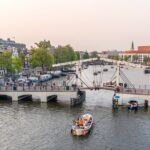
- Canals and Dutch culture: the part people forget
- Who this tour is best for (and who should skip it)
- Should you book the Amsterdam Red Light District & Coffee Shop Tour?
- FAQ
- FAQ
- How long is the Amsterdam Red Light District & Coffee Shop Tour?
- How much does the tour cost?
- Are there age limits for the coffee shop part?
- What languages are the live guides available in?
- Is it private or small-group?
- Is the tour suitable for people with mobility impairments?
- Can I cancel for a refund?
Key highlights worth your attention
- Local storytelling that explains how Amsterdam’s policies and culture shaped the district
- Coffeeshop The Jolly Joker plus learning how coffee shops work in the city
- Chinatown stops (including He Hua Tempel and Zeedijk Street) with a calmer change of pace
- Iconic canal-area viewpoints tied to Dutch everyday culture, not just postcard photos
- Odd-but-fun landmarks like the Narrowest House in Europe and Condomerie
- Must-do orientation for first-timers who want facts, not gawking
A 2-hour Red Light District reality check you can actually use
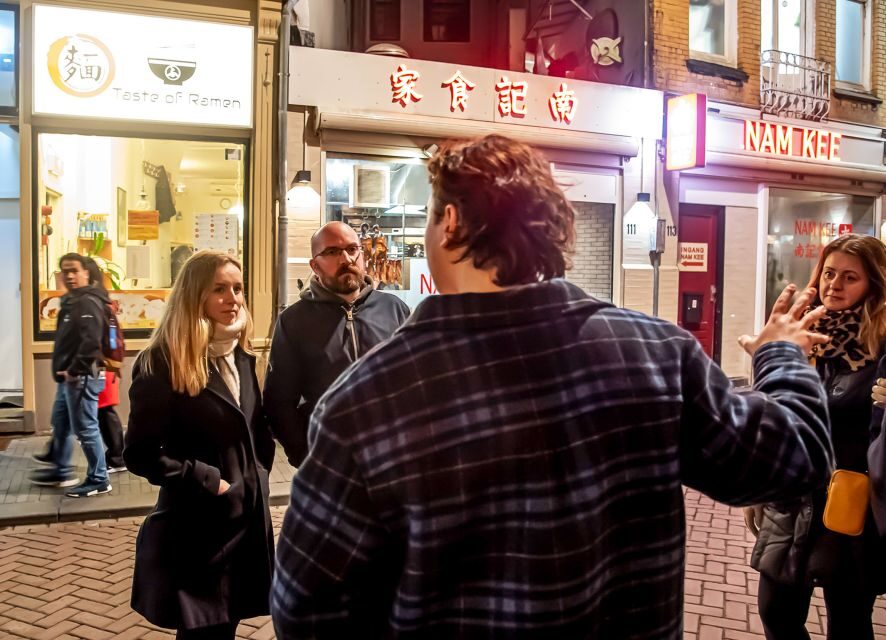
Amsterdam isn’t shy about sex, drugs, or public debate. That’s exactly why this tour works: you don’t just see the Red Light District. You learn why it looks the way it does, and what the city says it’s trying to balance.
This is built around a local guide’s commentary while you walk. You start near the heart of the district—right where the iconic red-lit windows line the streets—and then you move through a mix of landmarks and side streets. Along the way, you’ll hear about the canals and how they’re tied to Dutch culture, so the area doesn’t feel like a single-topic theme park.
You also get the coffee-shop side of Amsterdam. Coffee shop culture is a big part of the city’s international reputation, and this tour treats it as a system with rules and history—not just a stop for a photo.
You can also read our reviews of more tours and experiences in Amsterdam

Price and value: $29 for a focused walk-and-talk
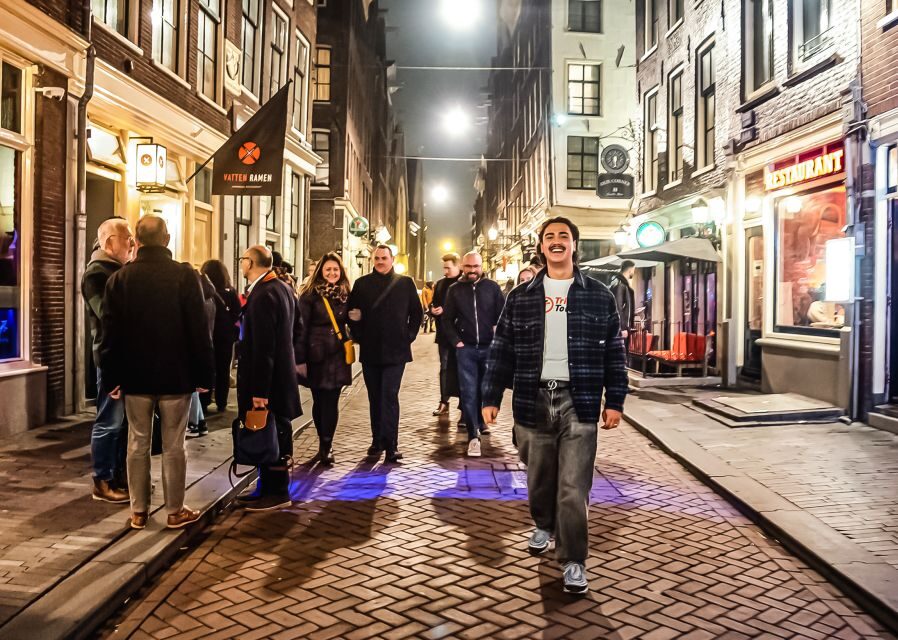
For $29 per person and about 2 hours, you’re paying mostly for interpretation: someone to turn the confusing layout (alleyways, canals, tiny storefronts) into a story you can follow. Amsterdam can be easy to wander through on your own, but the district has context you won’t naturally pick up just by passing windows.
That value shows up in the recurring theme from guide praise: guides stay engaged, answer questions, and keep it fun without losing the facts. Names like Ben and Robin come up often, along with comments about guides being funny, friendly, and approachable while still covering serious topics. For the price, the biggest value is that you leave with clear mental maps—what you saw, why it matters, and what’s changed over time.
Where you’ll start and how the pace feels on foot
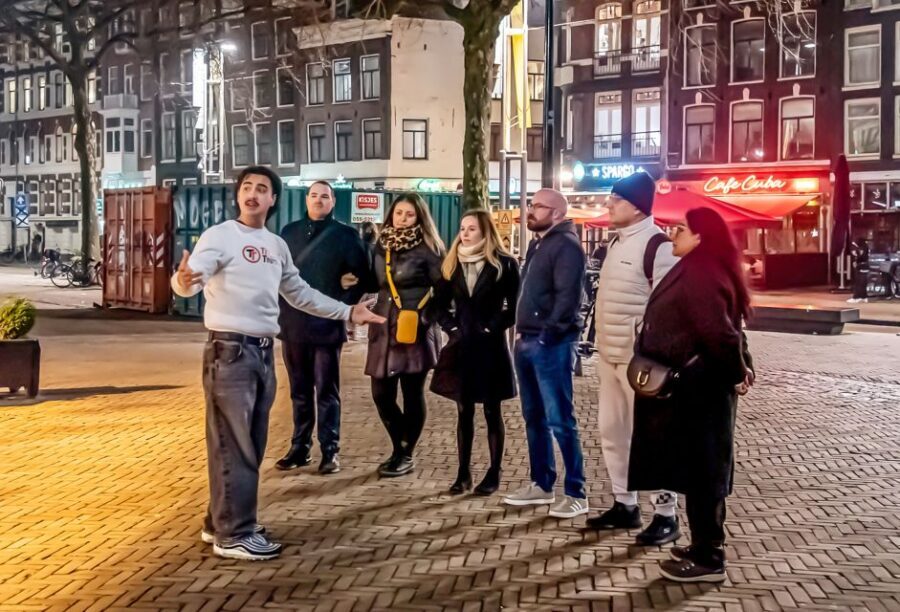
Your meeting point can vary depending on which starting option you book. Common starting areas include hotels near the center and major landmarks such as Basilica of Saint Nicholas, plus locations tied to the ParkBee NH Collection Amsterdam Barbizon Palace and Voyager Hotel Amsterdam area.
Once you’re together, the format stays simple: walk, stop, listen, and then walk again. The tour includes multiple short segments, usually about 10 minutes each, which keeps you from getting stuck in one street too long. That matters in this area. The Red Light District is visually intense, and your brain needs quick resets—especially when the tour shifts to Chinatown and the calmer rhythm of canal-side streets.
One more practical note: this is not suitable for mobility impairments. The area is walk-heavy, and Amsterdam’s streets can be uneven and narrow. If that’s you, it’s worth choosing a different Amsterdam tour format.
Nieuwmarkt and Warmoesstraat: the tight streets that shape the mood
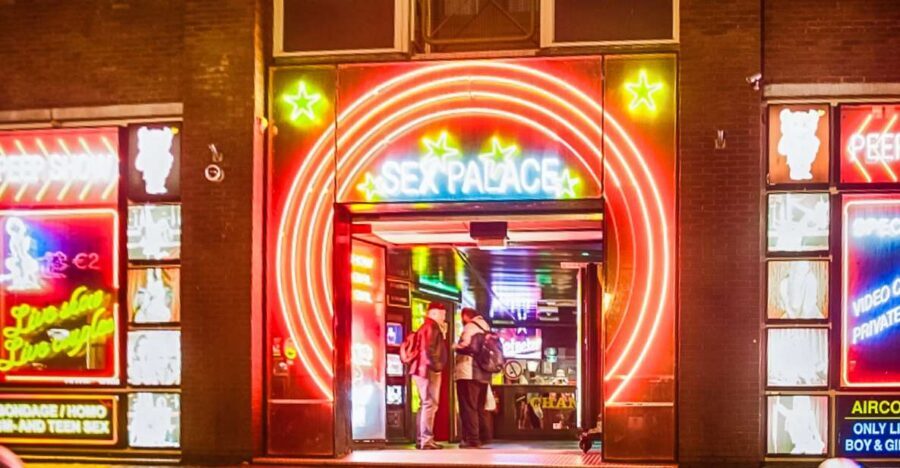
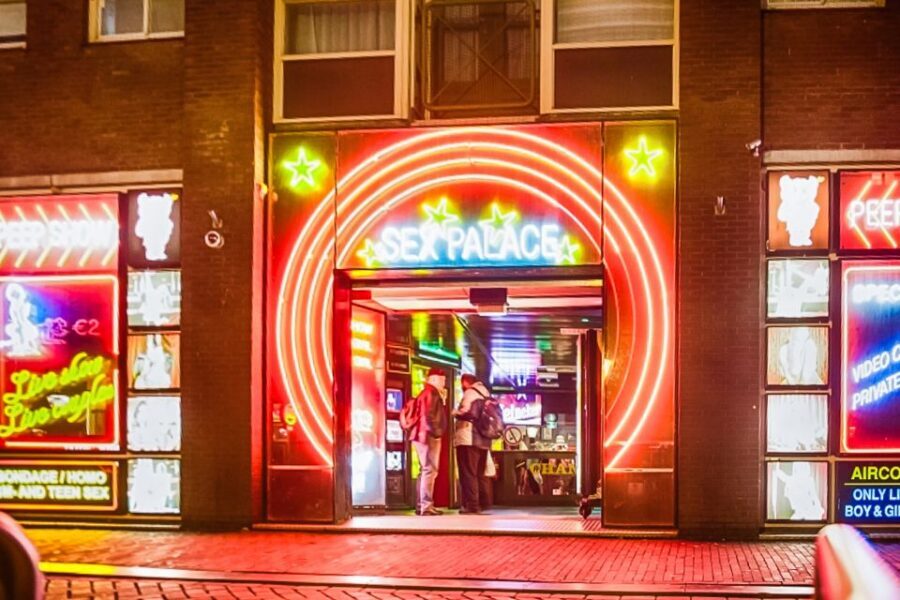
The route brings you into the Red Light District’s orbit through areas like Nieuwmarkt Square and Warmoesstraat. These are the kinds of streets where Amsterdam’s famous narrow geometry becomes part of the story. Buildings crowd close. Sides of canals feel tucked-in rather than open.
This is also where your guide’s framing matters most. The tour doesn’t treat the district as just nightlife. Instead, you’ll get explanations about politics, history, and the daily reality of the area—why the district became what it is and how the city tries to manage it.
You’ll also see the mix of traditional architecture and modern street life. Even if you’ve already seen photos online, being on the street makes it real. The windows, the alleys, and the way pedestrian traffic moves through the blocks are very hard to understand from a distance.
Café the Schreiertower, Oude Kerk, and the quieter landmarks in between
A good city walk uses contrast, and this one does. You won’t only bounce between the most famous streets. You also pass landmarks that remind you Amsterdam isn’t just one neighborhood.
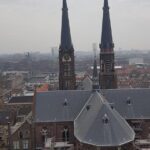
Stops like Café the Schreiertower add atmosphere, and Oude Kerk gives you a break from the Red Light District’s visual intensity. Oude Kerk is a clear signal that you’re still in a historic city with layers going far beyond the district’s modern reputation.
What makes these stops useful is how your guide links them back to Amsterdam’s bigger story. You’ll hear how canals and civic culture shaped life here, then come back to the district with a fuller sense of place. That shift is one reason the tour feels more like a guided city lesson than a one-note walk.




Chinatown: He Hua Tempel and Zeedijk Street shift the pace
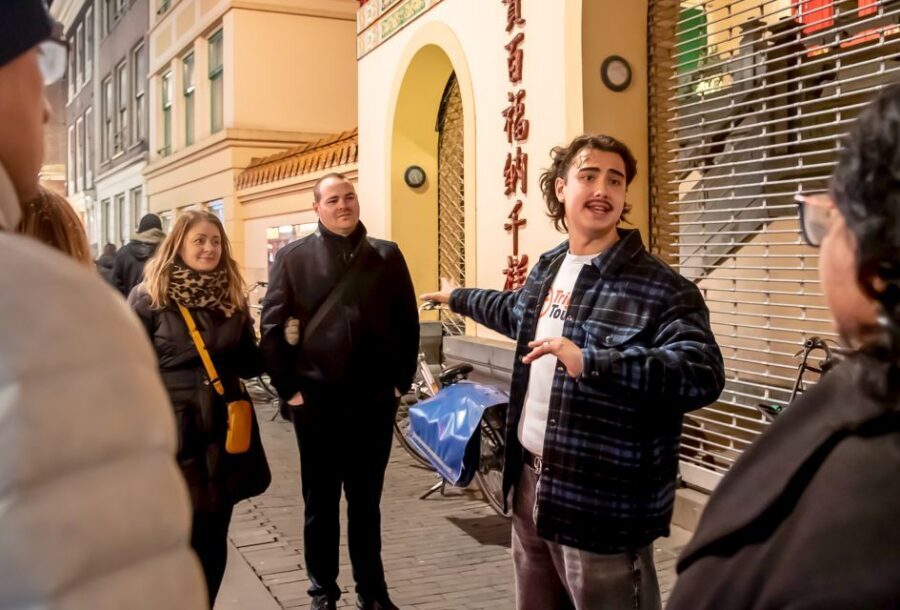
A highlight of this tour is how it blends in Amsterdam Chinatown, including stops such as He Hua Tempel, Zeedijk Street, and nearby Chinatown streets around Nieuwmarkt Square.
This section does two helpful things for your trip:
- It gives your eyes a reset after the Red Light District
- It shows how Amsterdam’s neighborhoods overlap in real life
He Hua Tempel and Zeedijk Street bring a different energy. You’ll see the smaller shops and restaurants that characterize Chinatown, and your guide will connect the area back to the city’s broader patterns—immigration, community life, and how Amsterdam treats different cultures as part of the same urban fabric.
If you’re visiting in a short time window and want one tour that covers more than the Red Light District alone, this Chinatown detour is a smart choice.
Coffeeshop The Jolly Joker and how coffee shops fit Amsterdam culture
The tour includes a stop at Coffeeshop The Jolly Joker, and you’ll learn about coffee shop culture in Amsterdam as part of the same conversation as sex work and drugs. The key point here is that the tour treats coffee shops as a cultural and legal phenomenon, not just a place to sit.
Important for planning: the tour notes a minimum age of 18 if you want to visit a coffee shop. If you’re under 18, you can still join the walk for the history and street viewing parts, but you won’t be able to go into the coffee shop area.
I also like that this tour doesn’t oversell the stop as a single big moment. It’s one piece of a wider explanation, including the idea that Amsterdam developed its reputation through a mix of laws, pragmatism, and cultural attitudes. That makes the coffee shop part feel connected, instead of random.
Sex work, legalization, and what your guide will (and won’t) do
The most sensitive part of the experience is also the one that can make or break your tour: how it talks about prostitution today.
This tour is designed to explain the legalization of prostitution and the challenges that sex workers face today, all through a local perspective. You’ll be walking through the streets while this context is discussed, including the iconic red-lit windows that define the district visually.
Your guide’s job is to keep the tone informational rather than exploitative. The repeated theme in guide feedback is that the tour is a learning experience and focuses on history and context, with a respectful approach that helps you feel comfortable on the street.
Practical advice: if you’re easily uncomfortable with visual reminders, or if you want a romance/nightlife vibe, this probably won’t be your favorite Amsterdam walk. But if you want to understand why Amsterdam treats these issues differently than many other cities, it’s exactly the right tone.
Narrowest House in Europe, Casa Rosso, and odd landmarks that teach you something
This tour includes several punchy stops that are fun to see and also useful for orientation:
- Narrowest House in Europe: Amsterdam’s street geometry isn’t an abstract fact. You’ll stand next to it and see how narrow the city’s built forms can be. It’s a quick way to understand why you feel so close to everything when you walk here.
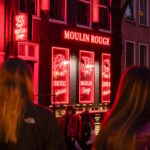
- Casa Rosso: Another well-known point in the district. Seeing it while your guide is explaining policy and district history makes it more than just a landmark—it becomes part of the story.
- Condomerie: A store stop that signals how Amsterdam normalizes certain topics in public retail. Even if you’re not shopping, it’s a useful snapshot of the city’s attitude toward sex in everyday life.
These moments work because they break up the walk. They also stop the whole district from feeling like one long block of similar storefronts.
Canals and Dutch culture: the part people forget
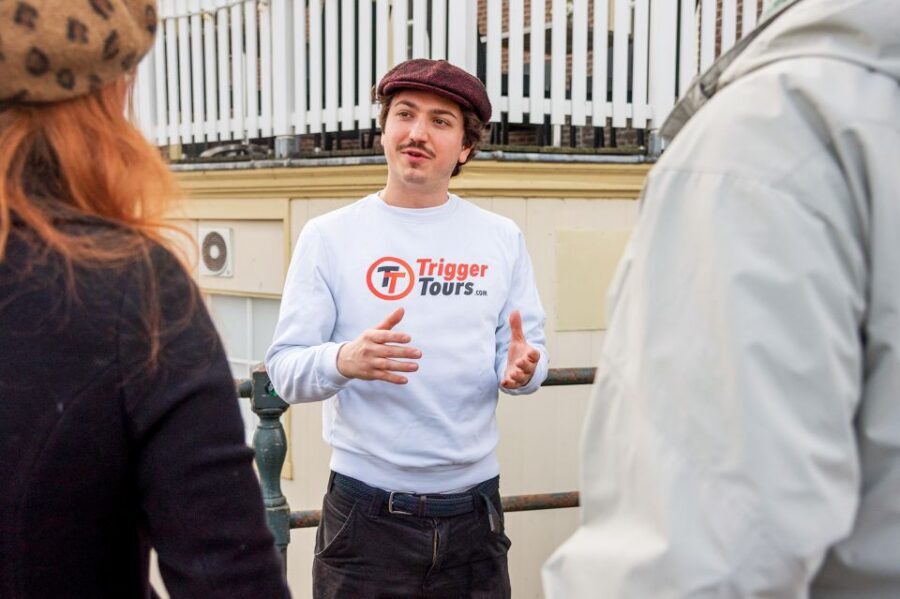
It’s easy to focus only on the Red Light District visuals. This tour brings you back to Amsterdam basics by talking about canals and how they fit into Dutch culture.
Even if your main reason for booking is the district and coffee shops, this canal context helps you understand what makes Amsterdam feel like itself. The city’s waterway layout affects neighborhoods, movement, and daily life. Once you notice that, the district’s “location in the city” starts to make sense.
Who this tour is best for (and who should skip it)
This experience fits best if you:
- Want a 2-hour walk with clear context rather than self-guided wandering
- Are curious about Amsterdam’s policies and cultural attitudes toward sex and drugs
- Like tours where the guide chats, answers questions, and keeps the pace moving
It’s also a good option for solo travelers who want structure. Multiple guide praises mention comfort, approachability, and making the group feel at ease.
You might want to skip it if:
- You have mobility limitations, because it’s not suitable for people with mobility impairments
- You’re sensitive to discussions and visuals related to prostitution and drugs
- You want a purely entertainment-focused night outing (this is framed as learning and history, not a party script)
Should you book the Amsterdam Red Light District & Coffee Shop Tour?
If you’re visiting Amsterdam for a short time and want one guided walk that connects the district to the city’s wider attitudes, I’d book it. The best part isn’t the storefronts. It’s the explanations—how Amsterdam’s reputation formed, what legalization changed, and what modern challenges look like on the ground.
I’d especially recommend it if you like guides who are funny, friendly, and strong on facts. Names like Ben, Robin, Katy, Kevin, and Ari show up repeatedly in praise for making the tour engaging while staying respectful. At $29 for about two hours, you’re buying time, clarity, and a local lens.
FAQ
FAQ
How long is the Amsterdam Red Light District & Coffee Shop Tour?
It lasts about 2 hours.
How much does the tour cost?
The price listed is $29 per person.
Are there age limits for the coffee shop part?
Yes. The minimum age to visit a coffee shop on this tour is 18.
What languages are the live guides available in?
The live tour guide languages listed are German, English, Dutch, and Spanish.
Is it private or small-group?
The tour is offered as private or in small groups.
Is the tour suitable for people with mobility impairments?
No. It is not suitable for people with mobility impairments.
Can I cancel for a refund?
Yes. You can cancel up to 24 hours in advance for a full refund.