REVIEW · AMSTERDAM
Amsterdam: Cultural Highlights in English/German/Italian
Book on Viator →Operated by Amsterdamliebe · Bookable on Viator
Amsterdam can feel like a puzzle at first.
This short walk gives you the pieces in the right order, from the city’s official heart at Dam to the stories tucked into churches, trading-era buildings, and monuments. I like that it’s led by a German- and English-speaking guide, so you get clear context instead of just standing near statues.
What I love most is the small-group pace and the guide’s habit of explaining the why behind each stop. I also love the practical value: most sights are visitable for free, and you finish with tailored recommendations for the rest of your Amsterdam days.
One thing to think about: you’re covering about 3 to 4 kilometers on foot in roughly 2 hours, so comfy shoes matter. Also, the tour only passes the red-light district on the southern side and does not visit a coffee shop, so it won’t match every kind of Amsterdam mood.
In This Review
- Key takeaways before you walk
- A 2-Hour Walk That Gives You Amsterdam’s Story Fast
- Language and group size: what 15 people changes
- Starting at the National Monument: the city’s public center
- Dam Square: the origin story you’ll keep using later
- Beurs van Berlage: where money history meets architecture
- Nieuwe Kerk: why a church matters for city development
- Multatuli statue: colonial era, literature, and memory
- Magna Plaza: the former post office that still has a role
- Westerkerk and the Jordaan connection: big church energy
- Anne Frank statue and Jewish Amsterdam: a place to stand with context
- Gay Monument: LGBTQ+ history you can point to
- The Nine Streets (Negen Straatjes): shop like a local, not like a tourist
- Spui and the Begijnhof: reformation, and the church you might miss
- Practical stuff: shoes, weather, and what you won’t see
- Price and value: $33.88 for context, walking, and free stops
- Should you book this Amsterdam Cultural Highlights walk?
- FAQ
- How long is the Amsterdam Cultural Highlights walking tour?
- How far do we walk during the tour?
- What languages are available, and is this tour in English or German?
- Is admission free for the sights on the route?
- Does the tour include the red-light district or a coffee shop?
- What’s the cancellation policy if weather is bad or I change plans?
Key takeaways before you walk
- German or English (and sometimes Italian), so check the language in your confirmation before you go
- Max 15 people means more Q&A and a pace that won’t leave anyone behind
- Free access at the stops you visit during the tour (no admission surprises)
- A route that mixes landmarks with social history: colonial links, Jewish history, and LGBTQ+ memory
- Church stops include both major buildings and smaller “you have to look for it” moments like a hidden church at the Begijnhof
- You’ll get shopping and food tips for after the walk, especially around the Nine Streets
A 2-Hour Walk That Gives You Amsterdam’s Story Fast
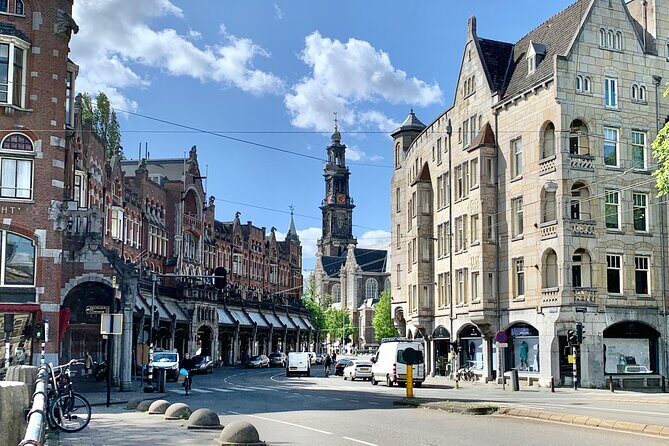
This tour is built for orientation. In a couple of hours, you get to see how Amsterdam formed around power, money, faith, and community—and you learn what to look for when you come back later on your own. It’s not a long, stop-and-go slog. It’s a steady walk with short lessons at each landmark.
I also like that the whole thing is on foot. In Amsterdam, that’s the smart choice. You avoid the hassle of traffic and parking, and you can actually notice the details that make the city feel human instead of just historic.
And since the route is only a few kilometers, it’s a good first-day activity. You’ll leave with context that helps the rest of your trip make sense.
You can also read our reviews of more tours and experiences in Amsterdam.



Language and group size: what 15 people changes

This experience runs as a walking tour with a small group (up to 15). That size is big enough to feel social, but small enough for the guide to answer questions without turning your day into a lecture hall.
The tour is offered in German or English or Italian, but the specific departure you book may be German. Always confirm the language on your ticket or booking message. Past groups also praise the guide’s clear, detailed explanations and their ability to keep things entertaining—not dry facts read at speed.
You’ll also want to know the pace runs at “the slowest person” level. That sounds like a small detail, but it makes a big difference when you’re trying to take photos and actually listen.
Starting at the National Monument: the city’s public center
You begin at the National Monument on Dam, right where Amsterdam likes to put its big statements. Even if you’ve passed it before, starting here gives you a framework: Amsterdam isn’t just canals and bicycles. It’s a city with civic rituals and a long timeline.
From there, you transition into the older core of town. The guide frames what you’re seeing with the kind of background that helps later when you’re looking at similar-looking buildings and wondering what matters.
Dam Square: the origin story you’ll keep using later
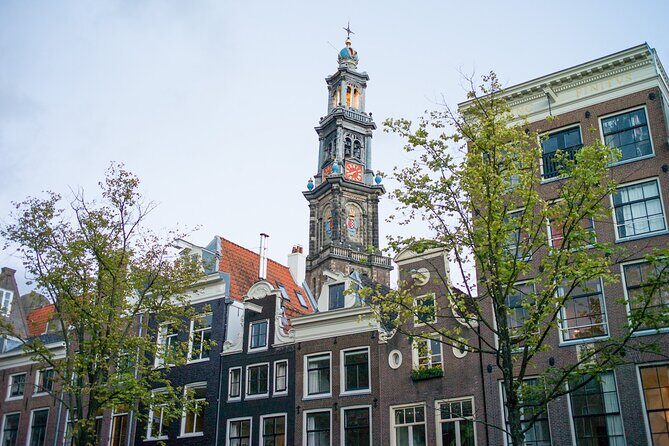
Dam Square is the obvious place to stand, but the good part is what you learn while you’re there. The guide connects the city’s early establishment to what the square represents today. You also spend time near the history of the old town house and the royal palace.
Here’s the practical value: once you know what this space used to be for, you’ll interpret the rest of the walk differently. You start seeing power structures and shifting roles—not just pretty architecture.
If you’re the kind of person who likes to understand why a city layout looks the way it does, you’ll appreciate how this stop sets the tone.
Beurs van Berlage: where money history meets architecture
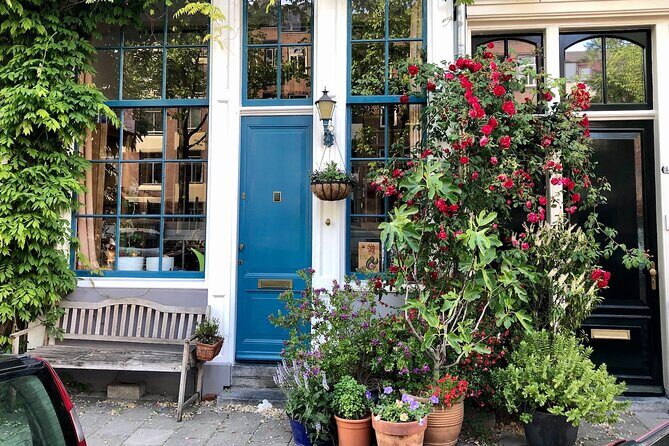
Next up is the Beurs van Berlage. This stop is all about how Amsterdam became one of the wealthiest cities during its Golden Era. The guide points you toward what to notice, so the building feels like a story, not a postcard.
This is a great moment to slow down, because it’s easy to treat “historic trading buildings” as generic. With the context you get here, you’ll start recognizing the theme that runs through other parts of the route: Amsterdam’s economy shaped its identity.
And because the tour is on foot, you see the surrounding streetscape, not just the one façade.


Nieuwe Kerk: why a church matters for city development
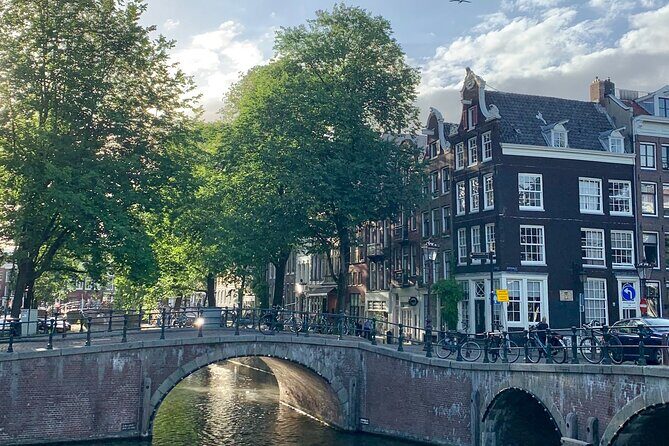
You’ll then stop at the Nieuwe Kerk. The guide explains its history and why it mattered for Amsterdam’s development. This is the type of stop that helps you understand the city’s rhythm over time, because churches here weren’t only religious spaces—they were also social and political landmarks.
You only spend a short window here, so don’t expect a museum-style experience. Instead, think of it as an orientation checkpoint: you learn what the building represents, and then you can decide later if you want to go deeper on your own.
Multatuli statue: colonial era, literature, and memory
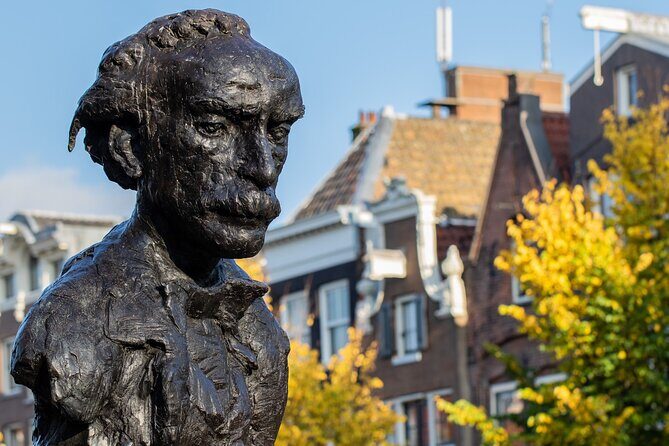
The Statue of Multatuli is a quick stop, but it’s meaningful. You learn how colonial-era Amsterdam connects to one of the most important books of the country.
This is where the tour gets more thought-provoking. Amsterdam often gets marketed as cozy and calm, but this stop reminds you that the city was shaped by wider systems—and that those systems show up in its cultural memory.
If you’re the kind of visitor who wants more than surface-level “what this building is,” you’ll appreciate this shift in tone.
Magna Plaza: the former post office that still has a role

At Magna Plaza, you learn about the importance of the former post office. The angle is simple: a building can keep serving the city even when its original purpose changes.
This is one of those stops that makes you look twice. You start thinking about how infrastructure supports daily life—and how cities keep repurposing space instead of discarding it.
Westerkerk and the Jordaan connection: big church energy
Westerkerk is next, and it comes with a clear description: the biggest church of Amsterdam and its historic connection with the Jordaan area. The guide helps you connect geography and community—where people lived, what places they trusted, and how a major landmark ties into the neighborhoods around it.
This stop also works well for photos. You’re not just catching a church silhouette. You’re getting the “why this spot matters” behind it.
Anne Frank statue and Jewish Amsterdam: a place to stand with context
Then you move to the Statue of Anne Frank. The guide focuses on Jewish history in Amsterdam and how Anne Frank and her family experienced their time in the city.
This is emotionally heavy territory, so the short duration here is understandable—but it still gives you a foundation. It’s also why you might want to leave time later in your trip for further study if this subject matters to you.
One more consideration: if part of your goal is an Anne Frank House visit, keep some flexibility. There have been cases where the house visit didn’t happen as expected, with no replacement offered. So treat the statue stop as the guaranteed piece, not the behind-the-scenes add-on.
Gay Monument: LGBTQ+ history you can point to
The Gay Monument stop brings in the history of Amsterdam’s LGBTQ+ scene. You learn how this community’s presence has left visible marks in the city.
This kind of stop is valuable because it anchors social history in real street-level locations. You’re not learning about a topic in the abstract—you’re connecting it to a specific place you can return to later.
The Nine Streets (Negen Straatjes): shop like a local, not like a tourist
After the formal landmark sequence, you get a more relaxed moment around the 9 Little Streets, also known as Negen Straatjes. This is where your guide’s recommendations start paying off.
You’ll get shopping tips that help you avoid spending your time wandering without a plan. If you’re into browsing small shops, independent brands, or just taking your time with a pleasant neighborhood stroll, this is a smart payoff after the history-heavy stops.
Spui and the Begijnhof: reformation, and the church you might miss
The tour finishes with Spui, including the Begijnhof. You learn about the reformation in Amsterdam, and you even get guidance on trying to spot a hidden church inside the complex.
This is a great “look closely” moment. The Begijnhof can feel like a small world tucked away from the street noise, and the guide’s pointers help you notice what you’d otherwise skip.
You also get tips for hidden gems to explore after the walk—useful if you want to keep the momentum going once the tour ends.
Practical stuff: shoes, weather, and what you won’t see
This is a walking tour of about 3 to 4 kilometers in roughly 2 hours. Wear comfortable shoes. The route is mostly outside, so bring water and a hat if it’s hot.
Weather matters here. The experience requires good weather, and if it’s canceled due to poor conditions, you’re offered a different date or a full refund.
A couple of limits are worth knowing so you don’t arrive with mismatched expectations:
- The tour does not include the red-light district. It only passes it on the southern side.
- A coffee shop will not be visited.
So this is more “culture and city story” than “guided nightlife route.”
Also, you’ll use a mobile ticket, and the meeting point is by public transportation.
Price and value: $33.88 for context, walking, and free stops
At $33.88 per person for about two hours, the price is less about one big attraction and more about buying your way into smarter interpretation.
Here’s the value math that matters:
- You get a small-group walking tour with a guide
- You cover a compact route through central Amsterdam
- Admission fees at the sights on the walk are not something you pay for
- You walk away with tailored recommendations for the rest of your trip
If you’re planning multiple paid museum hours anyway, this tour can work like a “set the map and understand the city” layer. It helps you decide what to do next with less guesswork.
And since it’s kid-friendly and manageable in distance, it’s also a good family entry point to Amsterdam’s center without needing to commit to a longer day.
Should you book this Amsterdam Cultural Highlights walk?
Book it if you want to:
- get your bearings fast in central Amsterdam
- learn social and cultural context, not just names of buildings
- enjoy a short, well-paced walk (and you’re fine with a few monuments and church stops)
- end with ideas for what to do next, especially around the Nine Streets
Consider skipping or pairing it differently if:
- you want a full deep dive into the red-light district or a coffee shop stop (this tour won’t do that)
- you specifically need the Anne Frank House itself as a must-hit on the same day, because the tour’s reliable part here is the statue, and house visits have not always gone as planned
If you’re choosing one early orientation activity that balances landmarks with real context, this is a solid pick.
FAQ
How long is the Amsterdam Cultural Highlights walking tour?
It runs for about 2 hours.
How far do we walk during the tour?
The walk is roughly 3 to 4 kilometers, so comfortable shoes are a must.
What languages are available, and is this tour in English or German?
The experience is offered in English, German, and Italian, but the specific departure you book may be in German. Check your confirmation for the exact language.
Is admission free for the sights on the route?
Yes. You won’t have to pay admission fees during the tour, and all the sights you visit can be visited for free.
Does the tour include the red-light district or a coffee shop?
No. It does not include the red-light district and only passes it on the southern side. A coffee shop will not be visited.
What’s the cancellation policy if weather is bad or I change plans?
You can cancel up to 24 hours in advance for a full refund. If the tour is canceled due to poor weather, you’ll be offered a different date or a full refund.