REVIEW · NORTH HOLLAND
Private Sushi Workshop in Hilversum
Book on Viator →Operated by Nigel van der Weerd · Bookable on Viator
Four sushi rolls, no mystery.
This private sushi workshop in Hilversum turns you from spectator into maker. In about 2 hours 30 minutes, you learn four styles—maki, nigiri, uramaki, and temaki—with hands-on coaching from Nigel van der Weerd, a sushi chef and former sushi restaurant owner.
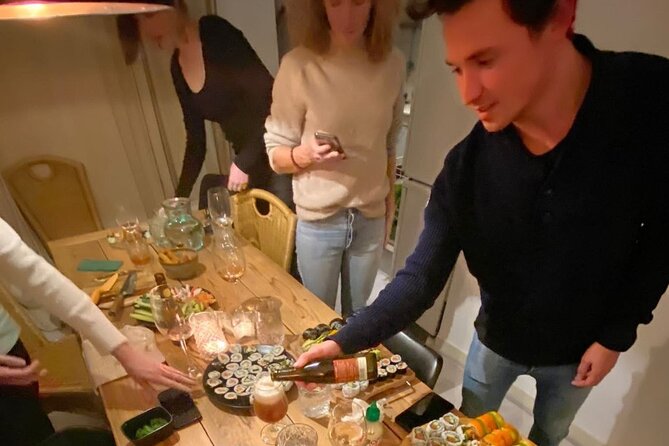
I especially like the practical chef guidance you get while you’re working, not just listening. I also like that you’ll eat what you make, with snacks plus wine, beer, or non-alcohol drinks included, so the class doubles as your dinner.
One thing to consider: it’s set up for groups, and it’s best when you can bring at least a minimum of 4 people (the host also notes a preferred small group). If your group is just you or two, it may be harder to make the timing work.
In This Review
- Key highlights to know before you book
- What you’ll actually make: maki, nigiri, uramaki, temaki
- Meeting your chef: Nigel van der Weerd in a real home-kitchen format
- The 5:00 pm flow in Hilversum: how the workshop turns into dinner
- Where it takes place: Hilversum meeting point and optional rental hosting
- Price and value: what $108.45 buys you
- Can you do this vegetarian? Yes, with menu adaptation
- Group size and who this is best for
- Logistics that actually matter: tickets, transport, and timing
- What makes this experience feel different (in a good way)
- Should you book this private sushi workshop in Hilversum?
- FAQ
- FAQ
- What time does the private sushi workshop start?
- How long is the workshop?
- Where is the meeting point?
- Does the activity end back at the meeting point?
- What kinds of sushi will we learn to make?
- Are snacks and drinks included?
- Can the workshop be adapted for vegetarians?
- Can this workshop be held at my vacation rental or Airbnb?
- Is there a minimum or maximum group size?
- What is the cancellation policy?
Key highlights to know before you book
- Chef Nigel van der Weerd teaches you directly, with real restaurant know-how
- Four sushi types in one session: maki, nigiri, uramaki, temaki
- You eat the results right after the workshop as a full dinner
- Snacks and drinks included, with alcohol optional through wine/beer
- Vegetarian-friendly menu options if you prefer no fish
- You can host it at your rental if you have a kitchen available
What you’ll actually make: maki, nigiri, uramaki, temaki
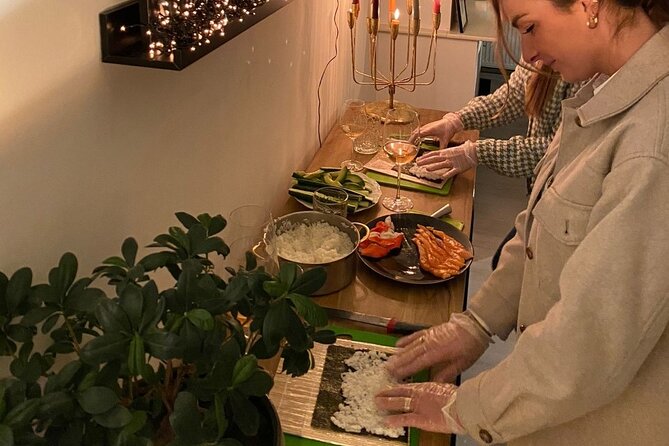
This workshop is built around variety, and that matters. Instead of one technique, you’ll get four different sushi forms, each teaching a different kind of skill.
- Maki (rolled sushi) focuses on shaping and rolling so it holds together cleanly.
- Nigiri (hand-pressed sushi) teaches balance—how rice and topping work together.
- Uramaki (inside-out rolls) flips the usual look and adds a different texture challenge.
- Temaki (hand roll) is the easiest shape to enjoy fast, because you build it by hand and learn the right way to fill and roll.
The most useful part is that you’re not just repeating one step. You’ll go from rice basics to toppings, then into rolling or shaping, so by the end you should understand how sushi becomes sushi in more than one way.
And because you’ll eat what you make, the lesson sticks. When you can compare textures in real time—rice, nori, filling, topping—you start to understand what “good” means without needing fancy jargon.
You can also read our reviews of more private tours in North Holland


Meeting your chef: Nigel van der Weerd in a real home-kitchen format
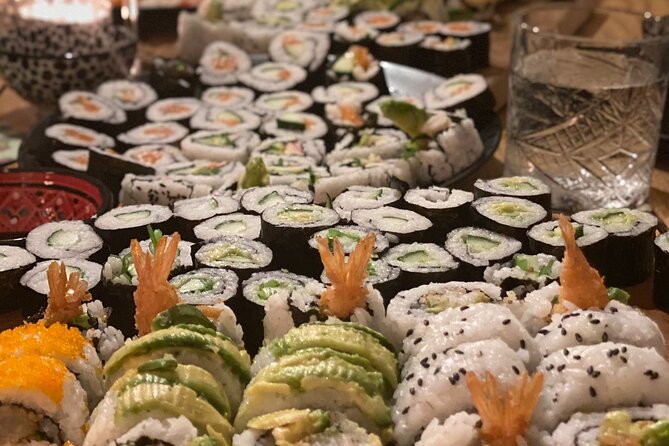
The experience is led by Nigel van der Weerd, who comes with restaurant experience, including time as a sushi restaurant owner and chef. That background matters for two reasons.
First, you get instruction that’s built for outcomes. The goal isn’t theoretical sushi talk—it’s making pieces that look right and taste right. Second, you get coaching that tends to be patient and step-by-step, which is especially helpful for something fiddly like rolling and placing toppings.
One added detail that comes up from the vibe of the host is that the workshop feels warm and welcoming, not stiff. In the short snippets I saw, Nigel and Chantal were described as a friendly, encouraging team with plenty of patience and passion, including guidance from rice through toppings. That’s a big deal if you’re nervous about messing something up.
The 5:00 pm flow in Hilversum: how the workshop turns into dinner
The session starts at 5:00 pm and runs about 2 hours 30 minutes. It also ends back at the meeting point, so you don’t have to worry about how to “finish” the evening after you cook.
Here’s the practical way to think about the timing: you’ll use the early part of the class to build skills and confidence. As you work through the four sushi types, you’re likely to start with basics (like rice) and move into toppings, then shaping and rolling. The reviews emphasize learning from the rice to the toppings, so that’s clearly part of the teaching focus.
Then comes the best payoff: once everything is made, the workshop ends with eating your sushi as your dinner. That’s a smart design choice. It prevents the common cooking-class problem where you leave hungry or unsure what you made should taste like.
Drinks and snacks are included, so you can settle into the meal without extra stops. If you like wine or beer, it’s a built-in way to make the evening feel like a proper occasion rather than just a lesson.
Where it takes place: Hilversum meeting point and optional rental hosting
Your start point is Kometenstraat, 1223 Hilversum, Netherlands. The workshop ends back at the meeting point, so it’s a simple loop.
Now for the flexibility: there’s an option to run the workshop in your own kitchen, meaning it can happen at your vacation rental or Airbnb if you have a kitchen available. This is a great advantage if you’re traveling as a group and you’d rather keep the experience private inside your own space.
Two practical considerations come with the “at-home” option:
- You’ll want to confirm you truly have the right setup in advance (the host says the kitchen matters).
- It works best with a small group—the experience notes a preferred minimum group size of 4 people, and also sets a cap of 10 travelers.
If you’re looking for maximum privacy and minimal logistics, hosting it at your rental can feel like the perfect way to treat your stay like a real Dutch home experience.
Price and value: what $108.45 buys you
At $108.45 per person, you’re paying for more than a cooking demo. You’re paying for:
- a private format (the class is positioned as private)
- direct instruction from a sushi chef with restaurant experience
- making four different sushi styles in one go
- snacks during the session
- wine, beer, or non-alcohol drinks included
- the fact that you eat what you make as dinner
A lot of “cheap cooking classes” stop at tastings, and you end up paying extra for dinner. Here, the structure already includes the meal component. That makes the overall value feel more realistic, especially if you’d otherwise spend money on a sushi dinner plus drinks.
It’s also not a group-size lottery in the way some activities feel. The experience notes an upper limit of 10 travelers, and it works best with at least 4. In other words, you’re not aiming for “crowd cooking” where attention gets thin.
If you love hands-on learning and you want a meal that feels earned, this price sits in a reasonable zone for the amount you get.




Can you do this vegetarian? Yes, with menu adaptation
The workshop can be adjusted. The menu can include meat and fish, and it can also be adapted for vegetarians.
That’s important because sushi can feel automatically fish-based to newcomers. With vegetarian adaptation on the table, you can still learn the same sushi forms—just with different toppings.
If your group includes mixed dietary needs, this is the kind of class that’s more likely to handle it smoothly, since the format allows for menu choices rather than forcing everyone to follow one set assumption.
Group size and who this is best for
This experience is described as private and works best with a minimum of 4 (preferred). There’s also a maximum of 10 travelers, so it stays small enough for real hands-on coaching.
It’s a great fit for:
- couples who can bring friends along to reach the minimum
- small groups who want a shared activity that ends with dinner
- travelers who like learning a skill they can repeat later
- anyone who wants an experience at home in Hilversum, not just another walking tour
If you’re a solo traveler, don’t assume it will never work—but you should expect to check whether the minimum can be met for your date. In short: plan for a group.
Logistics that actually matter: tickets, transport, and timing
You’ll receive a mobile ticket, which is convenient if you’re already living off your phone while traveling. The meeting point is also described as near public transportation, which helps if you don’t want to plan parking.
The start time—5:00 pm—is ideal for people who don’t want to fight the midday crowd. You’ll be doing an evening activity that naturally becomes your meal.
And because the experience ends back at the meeting point, your night doesn’t get complicated afterward. You’re not forced into an awkward “what now” moment right after you finish eating.
What makes this experience feel different (in a good way)
Plenty of cooking classes teach “how,” but not all of them teach “why.” Here, the sushi forms act like a map. Each one forces you to understand a different relationship: rice-to-topping, roll tightness, filling balance, and how hand rolls should be built.
I also like that it’s taught by someone with actual restaurant ownership experience. That background often shows up as practical tips like how to keep pieces from falling apart or how to think about proportions. You’ll likely spend more time producing than “watching,” and that’s where learning sticks fastest.
Finally, the tone matters. When a workshop is described as warm and patient, it tells you they expect beginners. That’s not always true with cooking workshops, especially for something as detail-heavy as sushi.
Should you book this private sushi workshop in Hilversum?
Yes, if you want a small, skill-based class where you make real sushi shapes and then eat your work as dinner. I’d especially recommend it when:
- your group can reach at least 4 people
- you want hands-on guidance from Nigel van der Weerd
- you like the idea of snacks and drinks included
- you want vegetarian adaptation if needed
- you’d rather do an experience near Amsterdam without the hassle of bigger crowds
Hold off if you’re traveling as just one or two people and the minimum group size might be a problem. Also consider the practicality if you’re hoping to host at your rental—you’ll need a kitchen.
FAQ
FAQ
What time does the private sushi workshop start?
It starts at 5:00 pm.
How long is the workshop?
The duration is about 2 hours 30 minutes.
Where is the meeting point?
The meeting point is Kometenstraat, 1223 Hilversum, Netherlands.
Does the activity end back at the meeting point?
Yes, the workshop ends back at the meeting point.
What kinds of sushi will we learn to make?
You’ll learn to make maki, nigiri, uramaki, and temaki.
Are snacks and drinks included?
Yes. Snacks and alcoholic beverages are included, with options like wine, beer, or non-alcohol drinks.
Can the workshop be adapted for vegetarians?
Yes, the menu can include fish or meat, but it can also be adapted for vegetarians.
Can this workshop be held at my vacation rental or Airbnb?
Yes, it can be organized at your guest/Airbnb location if you have a kitchen available.
Is there a minimum or maximum group size?
The experience is preferably with a minimal group of 4 persons, and it has a maximum of 10 travelers.
What is the cancellation policy?
You can cancel for a full refund up to 24 hours before the experience’s start time. If you cancel less than 24 hours before, the amount paid is not refunded.