REVIEW · LEIDEN
Leiden: Hortus Botanicus Entry Ticket
Book on GetYourGuide →Operated by Hortus botanicus Leiden · Bookable on GetYourGuide
Leiden Hortus Botanicus makes plant-lovers grin fast. This ticket gets you into one of the Netherlands’ oldest botanical gardens, founded in 1590, where you can wander through collections from around the world at your own pace. I love that the garden mixes big-picture world botany with very specific showpieces, like rare flowers and long-lived trees.
Two things I like a lot: the chance to see plants that are endangered worldwide and the way the garden blends tropical, carnivorous, and seasonal highlights in the same visit. It’s not just pretty landscaping; it’s a working-style collection you can observe slowly.
One drawback to think about: you only get about 1.5 hours worth of comfortable touring time if you want to keep it efficient. If you’re the type who reads every plant label and lingers with photos, plan extra time.
In This Review
- Key things to know before you go
- Hortus Botanicus Leiden: a world of plants, not a quick walk-through
- Getting in smoothly and planning your 1.5-hour self-paced visit
- Front Garden first: bulbs, monumentality, and the garden’s old-school layout
- Clusius Garden and the glasshouse: where plant variety becomes a visual story
- Japanese Garden: a plant exchange you can actually walk through
- Southeast Asia collections: orchids, tropical atmosphere, and careful detail
- Carnivorous plants: for when you want science with a little weirdness
- Seasonal wow: Jadevine, Victoria amazonica, and Chinese Lotus
- Old trees and the autumn walking feel
- Price and value: is $13 worth it?
- Food isn’t included, but the café can save your pacing
- Who this ticket fits best (and who might want a different plan)
- Should you book Hortus Botanicus Leiden?
- FAQ
- How long is the Hortus Botanicus Leiden entry ticket experience?
- Where is Hortus Botanicus Leiden located?
- What does the ticket include?
- Is food or drinks included?
- How much does it cost?
- Is the ticket valid for more than one day?
- Is the garden wheelchair accessible?
- Which languages are available at the garden?
Key things to know before you go
- Founded in 1590: you’re stepping into a garden with serious botanical roots.
- Global collections, mainly South-East Asia: you’ll see orchids and tropical-style plant displays that feel like another climate.
- Endangered trees and plants: some specimens are threatened worldwide, so the garden feels purposeful.
- Carnivorous + tropical + seasonal: this ticket hits different plant categories in one walk.
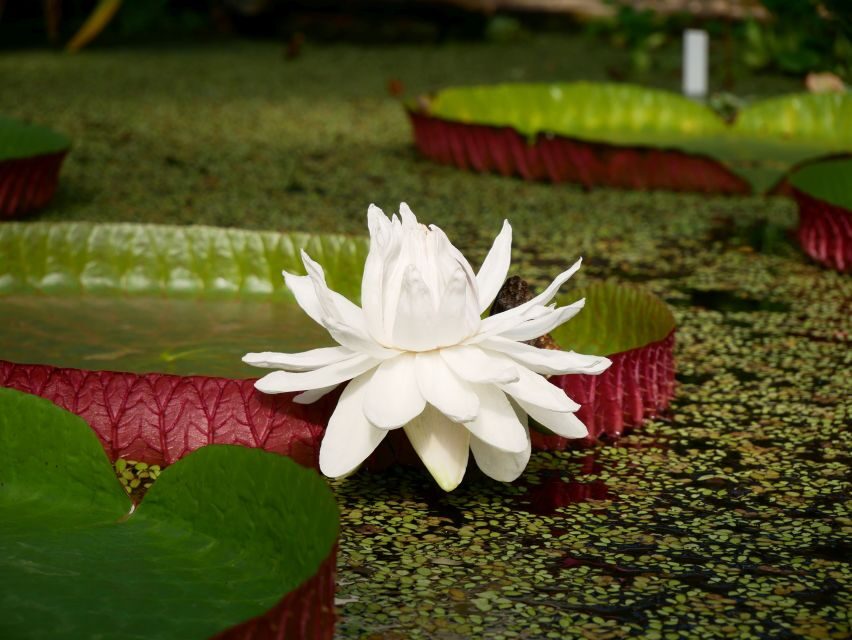
- Plant “seasons” to aim for: Jadevine (Mar–Apr), Victoria amazonica (Jun–Sep), and Chinese Lotus (July).
Hortus Botanicus Leiden: a world of plants, not a quick walk-through
If you’ve ever wanted a botanical garden that feels like a mini world tour, Hortus Botanicus Leiden is the type of place that makes it easy. Your ticket is simple: you enter, swap it at the front gate, and explore on your own. There’s no pressure to keep up with a group, which matters here, because the best moments are the small ones—watching how different plants share space, and seeing how the garden’s layouts guide you.
What makes this garden especially interesting is the blend of eras and categories. The Hortus Botanicus Leiden is not only old; it’s built around themed sections and living collections. You start with heritage spaces tied to the garden’s founding, then move into glasshouse-style displays and specialized areas like the Japanese Garden. Along the way, you’ll find plants that bring you from everyday European bulb season into Southeast Asian-style tropicals—and even into the strange, compelling world of carnivorous plants.
And yes, there’s a strong tree component. You’re walking among a collection of almost thirty trees, and some of them are over a century old. That changes how the garden feels. Instead of sprinting from flower to flower, you slow down and let the canopy do its job—especially on the calmer autumn days when the colors and shapes of old trunks take center stage.
You can also read our reviews of more tours and experiences in Leiden.



Getting in smoothly and planning your 1.5-hour self-paced visit
Your admission is valid for one day, and you can check available starting times. Once you have your entry sorted at the front gate, you can move through at your own pace. The garden experience is designed around about an hour and a half, which is a good target if you want to see the main highlights without feeling rushed.
Here’s how I’d plan it so you don’t miss anything important:
- Give yourself time up front to orient in the Front Garden, because it sets up what you’ll see next.
- Spend a chunk in the glasshouse-related area and themed gardens (the Clusius and Japanese sections are key).
- Save time in the middle for the tropical and carnivorous displays, since those can take you longer once you start noticing label details.
- Finish with the older trees and seasonal bloom areas, because the atmosphere is part of the point.
You don’t need fancy pacing tools. Just build in a little slack. Gardens reward patience. Even if you’re not the kind of person who reads plant Latin for fun, you’ll still enjoy how the collection is organized and how the spaces change as you move.
Front Garden first: bulbs, monumentality, and the garden’s old-school layout
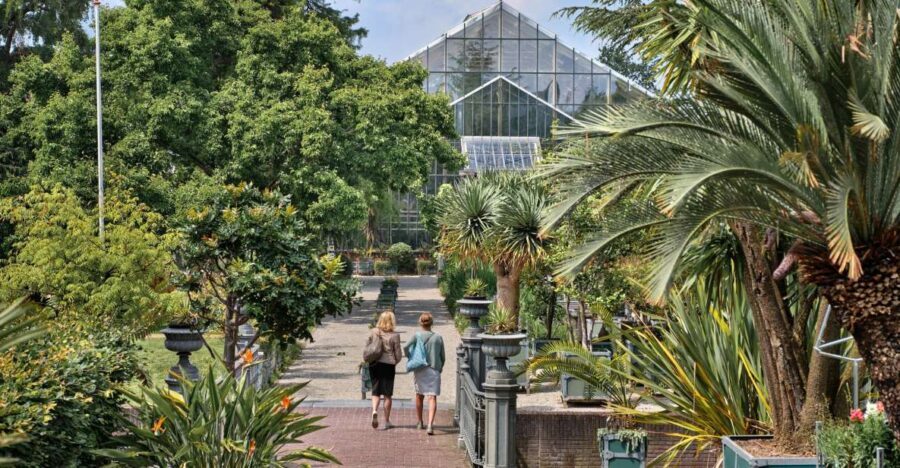
When you exchange your ticket at the Hortus Botanicus Leiden front gate, the Front Garden is your first “lesson.” This area gives you the garden’s basics in a very visual way: paths, open views, and the sense that you’re in a place with structure, not just random planting.
It’s also where the garden’s early European importance becomes more than trivia. The garden was founded in 1590, and it’s tied to the early cultivation story of tulips in Europe. That matters because you’re not just looking at flowers; you’re seeing a living continuation of a long botanical tradition.
If you’re visiting in spring, you’ll likely catch flowering bulbs as part of the seasonal cycle. If you’re visiting in autumn, the experience shifts. The garden becomes more about the walk, the color, and the shapes of trees—especially the older, monumental specimens that make the whole space feel calmer and more grounded.
Either way, I’d treat the Front Garden like your warm-up. Once you understand how the paths flow, you’ll make the rest of the visit feel natural instead of aimless.
Clusius Garden and the glasshouse: where plant variety becomes a visual story
After the Front Garden, you’ll want to head toward the Clusius Garden and its recently built glasshouse. This is one of those sections where the garden’s design choices start to make sense quickly. Glasshouse spaces naturally change lighting, humidity feel, and how you experience delicate plants.
In practical terms, it’s a good area to visit when you want variety in compact form. You may see different tropical-style plants grouped in a way that’s easier to compare than if they were scattered across open grounds. If you like the moment when a garden stops being about lawns and starts being about collections, the Clusius area is where that shift happens.
Even if you’re not chasing exact species, the glasshouse concept helps you understand the Hortus Botanicus approach: they’re maintaining and presenting plants that don’t thrive in the local climate without extra help. That’s a big part of why this place feels like “world botany,” not just local gardening.
Japanese Garden: a plant exchange you can actually walk through
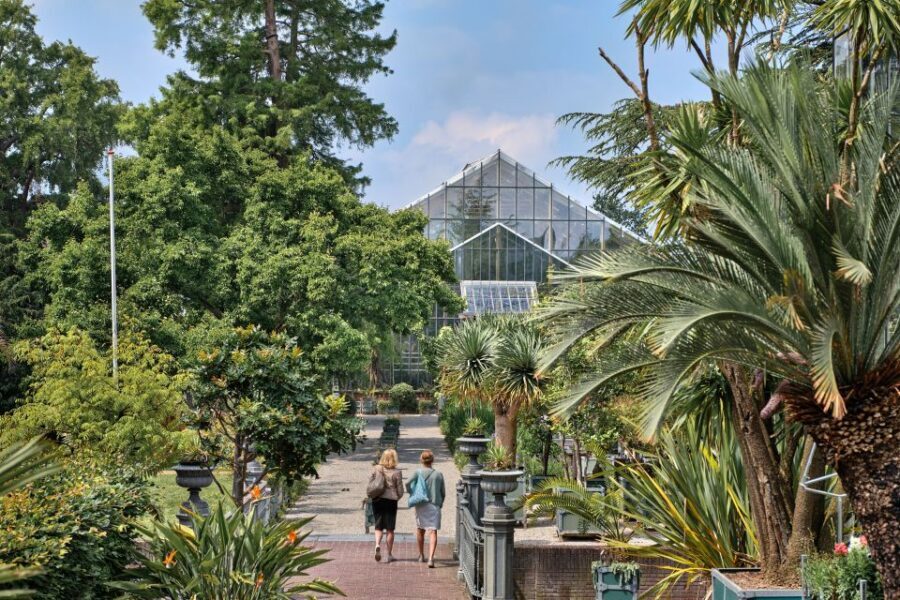
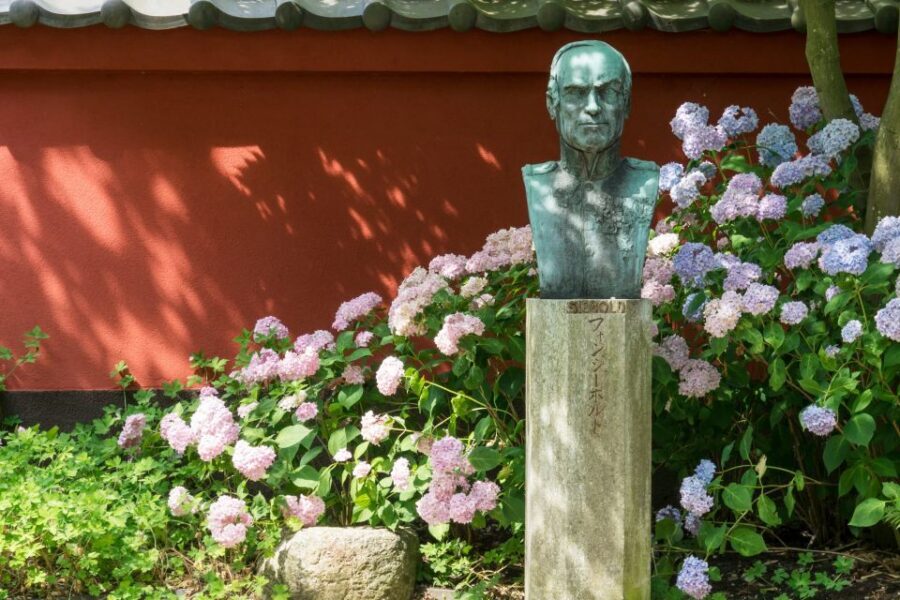
Next comes the Japanese Garden, and it adds a different kind of meaning to the visit. This section highlights the historical exchange of plants between Japan and the Netherlands, which turns the garden into more than a display—it becomes a reminder that botanical culture traveled by people, not just by seeds.
What you’ll feel here is a change in mood. Japanese Garden spaces often work best when you slow your pace and notice structure: how plant choices support the “garden as composition” idea. You’re still in Hortus Botanicus, so you’ll also benefit from the broader global-collection context. But the Japanese section gives you a more thematic layer to attach to what you see.
If you enjoy cultural connections as much as plant details, this is one of the strongest parts of the garden. It’s a place where you can look at living plants and connect them to the idea of exchange and influence over time.



Southeast Asia collections: orchids, tropical atmosphere, and careful detail
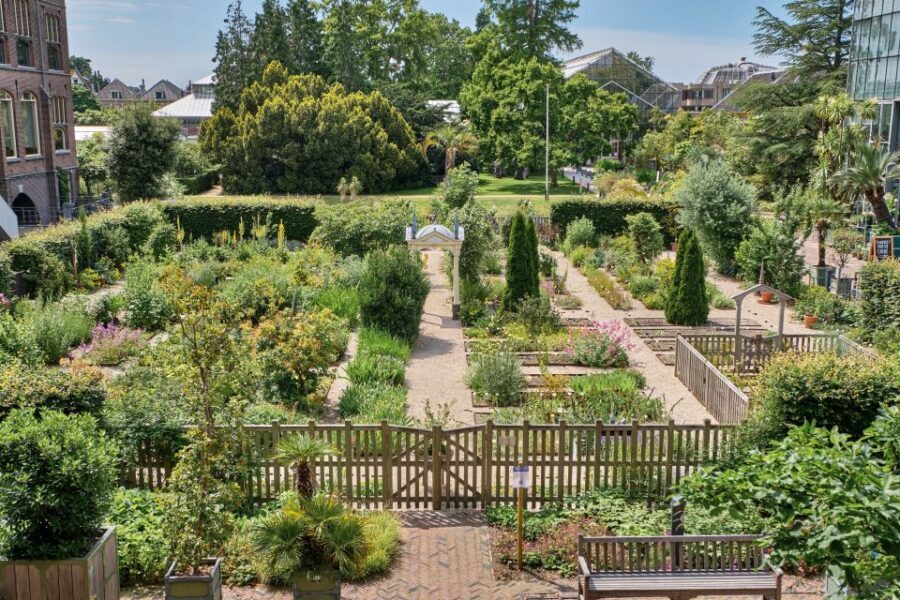
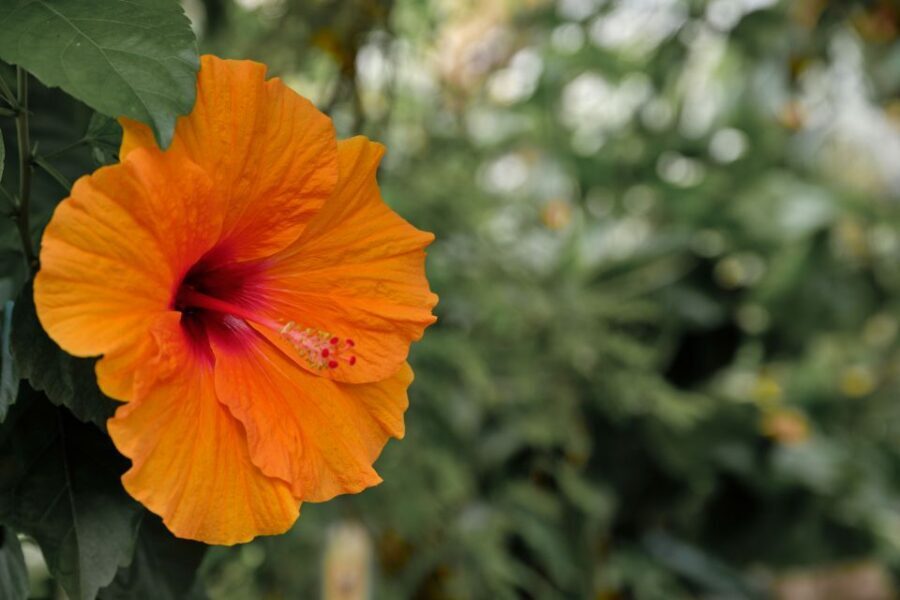
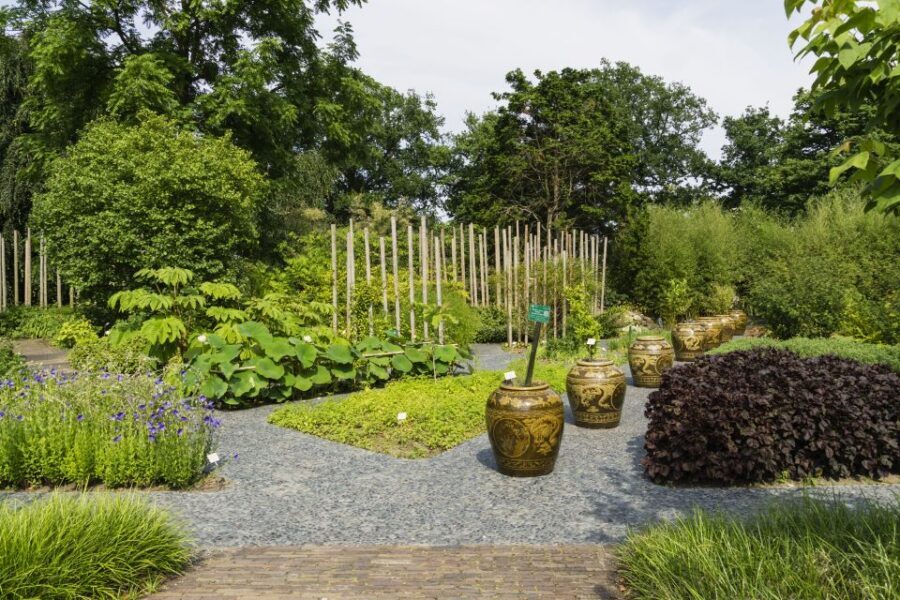
One of the headline themes of Hortus Botanicus Leiden is the focus on plants from around the world, mainly South-East Asia. As you continue through the garden, you’ll run into displays that make you feel like you stepped into a different ecosystem.
The tropical-orchid component is the big draw here. Orchids can be visually dazzling, but the value is also in how they demonstrate collection thinking. In a botanical garden, orchids aren’t just decoration; they’re part of a maintained living set.
And because the highlight list specifically calls out endangered trees and plants, you’ll also get the sense that the garden is doing more than showing beauty. Seeing threatened species in a garden setting connects the cute photo moments to a bigger ecological purpose—especially when you’re looking at long-lived trees and rare plants rather than only quick bloom displays.
Carnivorous plants: for when you want science with a little weirdness
If you want a twist inside the garden, don’t skip the carnivorous plant collection. This is one of those sections that feels like a break from the typical garden rhythm. Instead of flowers designed to charm pollinators, you get plants with a completely different strategy.
In a garden like this, carnivorous plants are also a great way to pay attention. You’ll likely notice how the plants are arranged and how the garden’s conditions make the whole thing possible. Even when you don’t know a species name, the concept is easy to get: these plants are surviving through specialized feeding behaviors.
For me, this is one of the best “mixing points” in the garden. It makes the visit feel more like a real botanical collection and less like a themed walk where everything looks similar.
Seasonal wow: Jadevine, Victoria amazonica, and Chinese Lotus
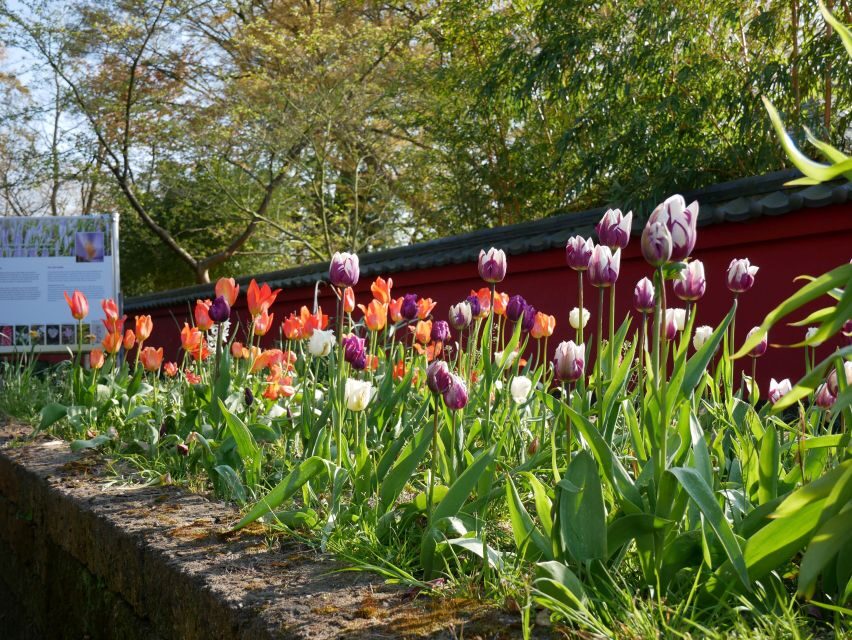
What I like about Hortus Botanicus Leiden is that it doesn’t rely only on constant displays. It offers a seasonal rhythm, so the garden can feel different across the year.
Here are three seasonal anchors you can plan around:
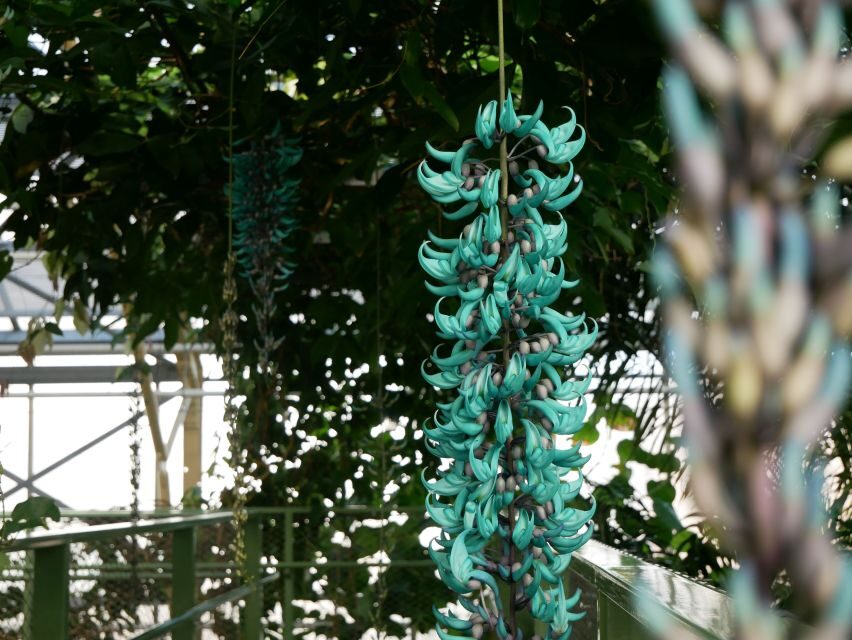
- Jadevine (March–April): a specific flowering window that gives you a reason to visit in early spring.
- Victoria amazonica (June–September): a long run tied to the flowering season of this famous water-plant.
- Chinese Lotus (July): a single-month target if you’re traveling mid-summer.
You don’t have to arrive during peak flowering to enjoy the garden. But if you time your visit near one of these windows, you’ll likely get a stronger “wow” moment. It also makes it easier to prioritize where you spend your attention once you’re on site, since you can connect what you’re seeing to a seasonal expectation.
Old trees and the autumn walking feel
The garden’s tree collection is a major part of the experience. The highlight list notes almost thirty trees, and some are over a century old. That’s not a small detail. Old trees change your viewpoint. They make the paths feel softer, and they give the garden more depth than a typical seasonal planting scheme.
Autumn is where I think this really pays off. The garden is described as a relaxing walk under colorful ancient monumental trees. In plain terms: fewer “must-see” flowers, more atmosphere, and a calmer pace that suits wandering.
Even outside autumn, old trees make the garden feel established. You can look up, not just sideways at plants. It’s a good reminder that botanical gardens aren’t only collections of individual specimens—they’re also living architecture.
Price and value: is $13 worth it?
At about $13 per person, this ticket can be excellent value—especially if you like plants beyond the basics. You’re paying for access to an entire botanical garden experience, including themed sections and living collections that cover different plant worlds: Southeast Asian plants, tropical orchids, carnivorous plants, seasonal bloom highlights, and ancient trees.
Whether it’s a great deal depends on your travel style:
- If you enjoy plant labels, seasonal flowers, and slow wandering, this feels like a bargain. One ticket covers a lot of variety in one place.
- If you only like gardens for quick photos, you may feel satisfied in less time than the typical 1.5-hour target, and you might need to be picky about what you choose to focus on.
A smart way to judge value: treat the visit as a flexible “reset.” This is the kind of stop you can enjoy even if your day is otherwise packed, because the environment naturally slows you down.
Food isn’t included, but the café can save your pacing
Your ticket covers entry to the gardens. Food and drinks aren’t included, so plan to buy something separately if you want a meal or a break.
The good news is that there’s a Grand Café on site, plus a souvenir shop. That means you can still end your visit comfortably without immediately needing to find a place elsewhere. If you’re visiting in a season when the garden encourages slow walking—spring bulbs or autumn tree time—you’ll be glad you have a place to sit once you’ve seen the main collection areas.
Who this ticket fits best (and who might want a different plan)
This ticket fits best if you like:
- Gardens that focus on collections, not just landscaping
- A mix of global plants and special categories like carnivorous plants
- Seasonal flowers with named windows like Jadevine, Victoria amazonica, and Chinese Lotus
- A walk where old trees and atmosphere matter as much as blooms
You might not love it as much if:
- You’re looking for a fast, guided, “see everything in 30 minutes” format
- You want a food-focused attraction (since drinks and meals aren’t included)
- You prefer only one narrow type of garden experience (this one is intentionally broad)
Should you book Hortus Botanicus Leiden?
If you’re visiting Leiden and you want a calm, high-value stop that mixes world plants with old-tree atmosphere, I’d book this ticket. The collection variety is the main reason, and the fact that you can go at your own pace makes it easier to enjoy whether you’re on a tight schedule or not.
Even better: it’s a garden you can time around seasonal moments if you want more than a generic visit. I’d especially recommend it if you enjoy orchids, carnivorous plants, or you just want a beautiful place to slow down under ancient trees.
FAQ
How long is the Hortus Botanicus Leiden entry ticket experience?
The garden visit is designed for about 1 hour and a half at your own pace.
Where is Hortus Botanicus Leiden located?
It’s in South Holland, Netherlands, in Leiden.
What does the ticket include?
The ticket includes entry to the botanical gardens.
Is food or drinks included?
No. Food and drinks aren’t included.
How much does it cost?
The price is listed as $13 per person.
Is the ticket valid for more than one day?
No. It’s valid for 1 day.
Is the garden wheelchair accessible?
Yes. The experience is wheelchair accessible.
Which languages are available at the garden?
The host or greeter offers Dutch and English.