REVIEW · LEIDEN
Historical Private Tour of Delft and Leiden including Transfer
Book on Viator →Operated by Discover Delft · Bookable on Viator
A day of two cities beats a one-city rush. This private route strings together Leiden’s medieval landmarks and Delft’s famous squares, all with a short transfer so you can cover real highlights without juggling buses.
I like how direct the sightseeing is: you start at Beestenmarkt in Leiden and end in Delft’s Beestenmarkt, so the day feels like a clean loop. I also love that the itinerary is built around stops that are listed as admission ticket free, which helps keep your spending predictable.
One watch-out: the schedule is tight. With 15-minute windows at most stops and a train ride in the middle, this is best for people who enjoy walking and listening more than going deep inside buildings.
In This Review
- Key highlights you’ll actually feel in the day
- Leiden and Delft in one day: why this combo works
- Meeting at Beestenmarkt: a fast start near Leiden Centraal
- Leiden’s old gate and windmill stop you’ll remember
- Rembrandt’s footprint: Rembrandtplaats and Stadsgehoorzaal
- Pieterskerk and the old town hall: big buildings, clear context
- Burcht van Leiden and the defensive city idea
- Transfer to Delft by train: a calm break in the middle
- Delft Markt: Orange family final resting place and city-center views
- Old Church and Delft’s brewing quarter feel
- Gemeenlandshuis van Delfland: the facade that signals power
- Prinsenhof and the assassination story around the Father of the Fatherland
- Armamentarium and the Vermeer painting spot
- Beestenmarkt in Delft: an ending square with a past
- Price and value: what $260.36 per person buys you
- Guide impact (English, flexibility) and how to get the most
- Practical tips for your Leiden + Delft day
- Should you book this Leiden and Delft private tour?
- FAQ
- Where do I meet the guide in Leiden?
- How long is the tour?
- Is the tour private?
- Will I travel between Leiden and Delft by train?
- Is the tour offered in English?
- Does the tour include hotel pick-up and drop-off?
- Are there admission tickets I need to buy?
- Where does the tour end?
- Can I cancel for a full refund?
Key highlights you’ll actually feel in the day
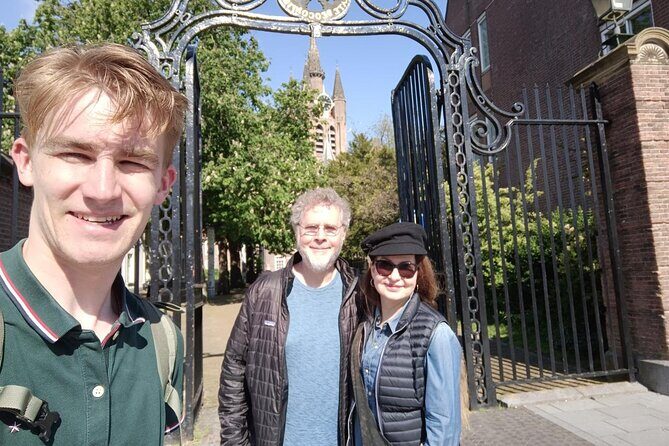
- Private guide, English-speaking: you get a real conversation, not a headset lecture.
- Ticket-free stops everywhere: you can focus on stories and photos without entry fees (per the tour listing).
- Leiden’s signature sights in order: gates, churches, the old town hall, and the hilltop castle area.
- A simple transfer by train: you swap cities without losing half the day to transit.
- Delft’s canals and key squares: Markt views, the Old Church brewing area, and historic facades along Oude Delft.
- Art connections: Rembrandt’s Leiden and a specific Vermeer-related spot in Delft.
Leiden and Delft in one day: why this combo works
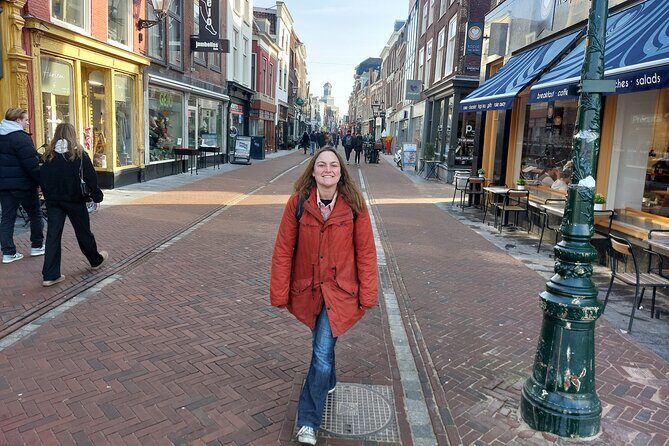
Leiden and Delft sit close enough that they share ideas, not just geography. Leiden is the city of universities, old gates, and Rembrandt’s long shadow. Delft leans harder into Dutch Republic power—guilds, trade, and the artists and patrons who turned daily life into culture.
What makes this tour a good value is the structure. You don’t bounce around randomly. You move in a logical line: start in Leiden, walk through its core, take a ~20-minute train to Delft, then finish on Delft’s central streets near the end point.
Also, because it’s private, you can match the pace to your group. If your knees need a slower rhythm, your guide can usually adjust within the overall timing.
You can also read our reviews of more private tours in Leiden

Meeting at Beestenmarkt: a fast start near Leiden Centraal
You meet in the middle of Beestenmarkt, and it’s only about a 5-minute walk from Leiden Central Station. That matters because it makes the day feel easy from the first minute. If you’re arriving by train, you’re not stressed about getting across town before the tour starts.
Beestenmarkt is a classic “place to understand the city.” It has that open-square feel that helps you orient quickly: where the streets flow, where the foot traffic concentrates, and where key buildings cluster. In other words, it’s a great launchpad for a tour that aims to connect the dots across two cities.
Timing note: you’ll spend about 10 minutes here right at the beginning, so treat this as your warm-up—get comfortable, then let the guide take the story from the streets into the landmarks.
Leiden’s old gate and windmill stop you’ll remember
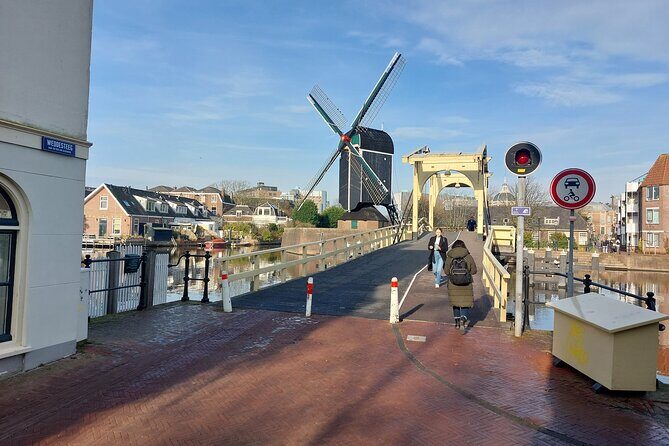
After Beestenmarkt, the walk takes you to Morspoort, one of Leiden’s oldest entrances. City gates in the Netherlands do more than look historic—they hint at where people were allowed in, where trade funneled, and how cities defended themselves.
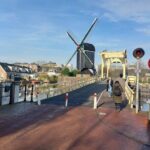
Next up is Molen de Put, the iconic 17th-century windmill. The tour links it to a famous artistic family connection: the same type of mill the parents of Rembrandt owned. Even if you don’t care much about mills, this stop gives you a useful mental picture of how water management and daily labor shaped city life. Windmills weren’t just scenery; they were infrastructure with a job.
These two stops work well back-to-back: gate (how a city guarded itself) then windmill (how a city powered survival). It’s a neat lesson in how Dutch history often blends defense, water, and industry.
Rembrandt’s footprint: Rembrandtplaats and Stadsgehoorzaal
You’ll hit Rembrandtplaats, the square named for Rembrandt van Rijn, who lived in Leiden. This isn’t only name recognition. A good guide uses the square to explain why Leiden mattered to Rembrandt’s era and how the city fed the conditions artists needed—patrons, culture, and the demand for portrait work and storytelling.
Then you’ll walk along the Breestraat to Stadsgehoorzaal, a concert hall that’s still in use. This is one of those stops that helps you avoid the trap of thinking history is only about ruins. Leiden keeps functioning. The buildings you see today often carry on the purpose they had long ago, just with updated schedules and audiences.
If your group enjoys mixing art and architecture, these stops are a strong middle section of the day.
Pieterskerk and the old town hall: big buildings, clear context
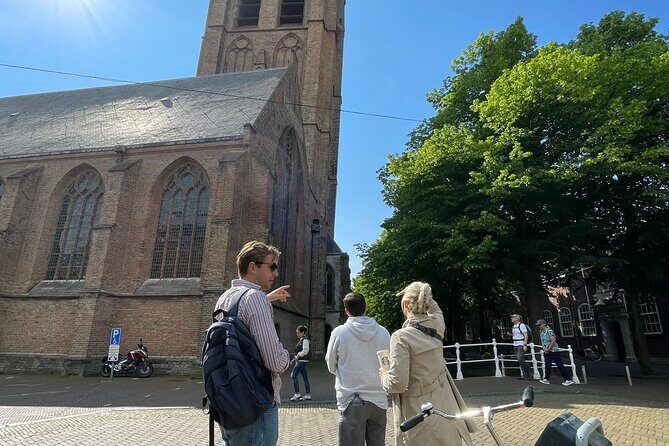
The tour doesn’t skip Leiden’s major church: Pieterskerk Leiden. It’s described as the most famous church in Leiden, with history going back to the 12th century and continued current use. Even without a long interior visit, a guide can usually help you read what you’re looking at—why this church became central, how its age shapes the city’s identity, and what it means that it’s still active.
From there, you’ll see the Stadhuis van Leiden uit 1596, the old town hall. Town halls are where money, law, and civic pride meet. This one is iconic, and it’s easy to spot how a city like Leiden expressed authority in stone and detail.
If you’re trying to understand Dutch history without needing a textbook, these two stops do that job fast: church (spiritual and community power) then town hall (civic power and governance).
You can also read our reviews of more historical tours in Leiden
Burcht van Leiden and the defensive city idea
You’ll visit the exterior of Burcht van Leiden, a defensive castle area up on a hill. The value here is perspective. From a higher point, cities make sense. You start to see how defense, flood management, and dense streets connect.
Even though you’re not likely spending hours on a hill, the tour’s timing (around 15 minutes) is enough to get the story and then keep moving. This stop also breaks up the “flat street” feeling of the city center, which is a nice pacing trick when you’re on a single day sprint.
Transfer to Delft by train: a calm break in the middle
After finishing Leiden highlights, you head to Leiden Centraal Station and board a train ride of about 20 minutes to Delft.
This is one of the smartest design choices in the tour. Train transfers between these cities are straightforward, and you’re not stuck on the road in traffic. It also gives you a mental reset. You go from church towers and old gates to canals and Delft’s famous square without the usual travel fatigue.
The tour also states you’ll have an air-conditioned vehicle for the short transfer option (either by train or by car). In practice, it means you’re covered for different routing choices depending on timing.
Delft Markt: Orange family final resting place and city-center views
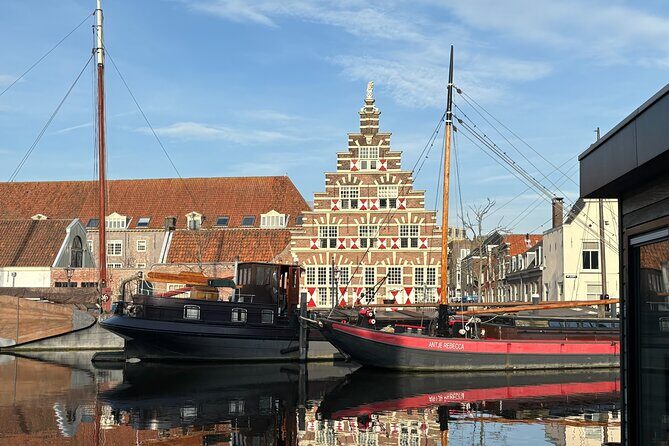
In Delft, your first major anchor is Markt, the central square. Here you’ll see several big hitters at once: the second-tallest church tower in the country, the final resting place of the Orange family, and Delft’s 17th-century town hall.
This is one of the best squares to understand Delft quickly because it concentrates meaning. Square + tower + civic building + royal connections. It’s a fast way to read how Delft saw itself: religious, royal-adjacent, and officially important.
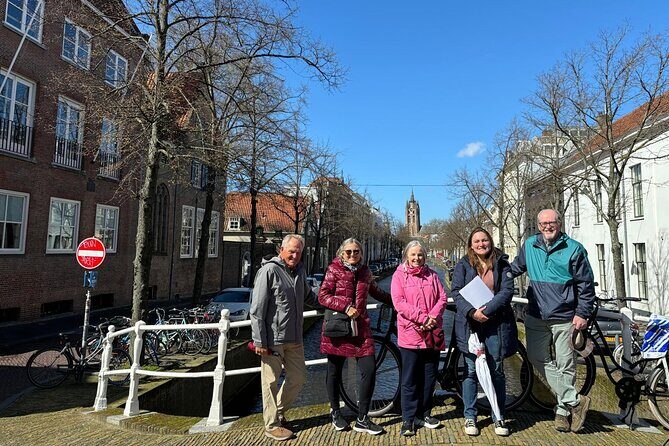
Along the way, you’ll cross Delft’s oldest and second-oldest canals. That’s a subtle but powerful way to frame what the city looks like and why: canals weren’t decorative; they were the city’s roads.
Expect about 25 minutes here, which is plenty of time to look up, look down, and ask your guide why these features matter.
Old Church and Delft’s brewing quarter feel
Next you walk into the Old Church area and the old beer brewing quarter of Delft. This is where you can feel the city’s everyday past. Brewing was economic muscle, and the district’s clues connect ordinary work to long-term architecture.
The tour also notes something practical and visual: you’ll see why the Old Church is leaning and how old it is. A leaning church sounds like a party trick, but it usually ties back to soil, water, and weight—exactly the kind of Dutch “environment meets building” story you can’t get from a museum wall.
If your group likes photo stops, this area is strong. If your group hates walking, you’ll still get enough time to see the main sights without the day turning into a marathon.
Gemeenlandshuis van Delfland: the facade that signals power
On the way down the Oude Delft canal, you pass the Gemeenlandshuis van Delfland, a heavily decorated facade.
The practical value of this stop is what it represents. A guide can explain why a building like this mattered, and you’ll likely leave understanding that water management and governance were tangled together. In the Netherlands, controlling water isn’t just technical. It’s political and social.
This is also one of those “look closer” stops. Even if you only have 15 minutes, that facade gives you something to study without needing to buy tickets.
Prinsenhof and the assassination story around the Father of the Fatherland
You’ll spend time at Museum Prinsenhof Delft. The tour’s key hook is dramatic and specific: it played a deciding role in Dutch history, and the Father of the Fatherland was assassinated here.
That’s a loaded sentence, but what you should take from it is how quickly a Dutch political story can connect to a single site. A good guide will help you understand why this place is central and how the events link to the broader struggle shaping the Dutch Republic.
Because the stop is around 15 minutes, think of it as a guided orientation to the site’s importance. You won’t get a full museum experience in this tour length—but you will get enough context to make an optional return later worthwhile if you want to go deeper.
Armamentarium and the Vermeer painting spot
South of the city, you’ll pass by the Armamentarium, described as a former weapons armory of the V.O.C. You’ll also hear about Delft’s role in the Golden Age of the Dutch Republic.
What makes this stop memorable is the art connection. The tour mentions the exact spot where Vermeer was standing when he made his painting View of Delft. Even if you’re not a hardcore art person, this detail turns a normal street walk into something specific: you can look where a painter stood and connect the viewpoint to the city’s structure.
This is the kind of stop that makes the tour feel “designed,” not just a list of famous names.
Beestenmarkt in Delft: an ending square with a past
You finish by heading back to Beestenmarkt. This is described as picturesque and often crowded, and it used to host animal markets. The tour also points out nearby historical layers: former Delft Blue pottery manufacturers, an old synagogue, and the oldest hospital of the Netherlands.
This ending matters because it gives you a last hit of local character rather than a sterile monument. It’s also a good place to keep exploring on your own—walk around, grab a drink, and connect what you just learned about civic life, trade, and religion.
Because the activity ends in a different location than where it started, it’s smart to plan your next stop nearby and not schedule something time-sensitive immediately after the tour.
Price and value: what $260.36 per person buys you
At $260.36 per person for about 4 hours 30 minutes, the big value question is what you get besides names and photos.
Here’s what justifies the price in plain terms:
- Private guide for a focused route, not a mixed-group shuffle.
- Transfer support between Leiden and Delft (by train or by car) so you don’t lose time figuring it out.
- All fees and taxes included, with the itinerary listing stops as admission ticket free.
- Option for hotel pick-up and drop-off by car if you book that option.
The “economy” angle: this price often makes sense when you have 3–5 people (splitting the guide time) or when you really want the art/history connections explained in context. If you’re a solo traveler who only wants a quick photo circuit, you might feel it’s pricey. But if you want a guided story you can actually understand in one sitting, this is a fair setup.
Guide impact (English, flexibility) and how to get the most
This tour is offered in English, and because it’s private, you can ask follow-up questions. In past experiences, guides like Niels have been noted for being flexible with start time and very knowledgeable about the route. Another guide, Jocelyn, has been praised for being extremely well informed and speaking English fluently.
You can’t bank on a specific guide, but you can control how you use the time:
- Ask your guide to explain one stop in a broader “why it mattered” way, not just the facts.
- If you care about art, point out you’re interested in Rembrandt and Vermeer connections so the guide can connect those dots.
- If you’re traveling with someone older or less mobile, tell the guide early. The tour notes moderate physical fitness for this kind of walking route, so good pacing really helps.
Practical tips for your Leiden + Delft day
Plan for a walking-and-stops rhythm. Most stops are about 15 minutes, plus a bit longer on central squares and canal sections. Wear shoes you can walk in comfortably, and bring a light layer—church areas and canals can feel cooler than you expect.
If you’re using public transit, you’re in good shape. The main meeting point is near Leiden Central Station, and the train transfer is part of the plan.
Don’t forget the mobile side of things. The tour provides a mobile ticket, which is handy when you’re bouncing between cities.
And for comfort and stress control: keep your first meal simple. The schedule is designed to get you from Leiden to Delft without extra dead time, so you want energy without a heavy sit-down that throws off your timing.
Should you book this Leiden and Delft private tour?
Book it if:
- You want Leiden + Delft in one day without the hassle of organizing transit.
- You like history that links places to people—Rembrandt, Vermeer, the Orange family, and key national turning points.
- You value a private guide who can keep English explanations flowing and adjust pacing.
Skip it or consider something lighter if:
- You hate tight schedules and prefer slow museum time.
- Your group needs lots of long indoor visits. This tour is built around short stops and outdoor city reading.
- You mainly want Delft Blue shopping or canal boat time. This tour focuses more on landmark context than activities.
Overall, this is a smart “starter day” for the region. You’ll come away with a clearer map of how Leiden’s civic and religious power shaped minds, and how Delft turned canals and trade into art and political legacy.
FAQ
Where do I meet the guide in Leiden?
You’ll meet your guide in the middle of Beestenmarkt in Leiden. It’s about a 5-minute walk from Leiden Central Station.
How long is the tour?
The tour is about 4 hours 30 minutes.
Is the tour private?
Yes. It’s a private tour/activity, and only your group participates.
Will I travel between Leiden and Delft by train?
You’ll board a train for about 20 minutes between Leiden and Delft as part of the route.
Is the tour offered in English?
Yes, the tour is offered in English.
Does the tour include hotel pick-up and drop-off?
Pick-up and drop-off are included if you book the option that adds it, and you’ll be picked up from the location you select up to 1 hour before the tour starts. You’re dropped off afterwards.
Are there admission tickets I need to buy?
The stops are listed as admission ticket free, so you should not need to pay separate entry fees for the sights on this itinerary.
Where does the tour end?
The tour ends in a different location. The itinerary finishes at Beestenmarkt in Delft.
Can I cancel for a full refund?
Yes. You can cancel for a full refund up to 24 hours in advance.