Amsterdam was built on secrets.
What makes this walk so fun is the way 750 years of change gets told like one continuous story, not a lecture. You’ll follow Antonis as he threads together early settlement, the city’s water struggles, major turning points, and the strange-but-true details you usually miss when you just rush through the center. The tone is warm and funny, with a bit of obsession, which makes the facts stick instead of sliding off.
Two things I especially like: the tour is small (max 12), so you can actually hear the guide and ask questions, and you don’t have to fight crowds for attention. Second, you get a thoughtful keepsake: a handwritten postcard from historic A’Dam with a Dutch stamp, like a tiny piece of history you can send or save.
One consideration: at 2 hours, the pace is quick. You’ll cover a lot of centuries and themes, so if you want slow, deep museum-level detail on one era, this walk may feel like it’s giving you highlights rather than everything.
In This Review
- Key highlights worth planning for
- A two-hour Amsterdam story with real explanations
- Starting at the Bull: getting your bearings fast
- How the city’s “mud problem” becomes its superpower
- Dams, dikes, and floods: the lessons that keep repeating
- From trade to the Golden Age: why money changed the city
- Religions, liberal revolutions, and the human side of politics
- World War II: moments that reframe the whole city
- Why you’ll remember the details (houses, marks, and the logic)
- The A’Dam handwritten postcard: a small souvenir with a story
- Price and value: what $28 gets you in real terms
- Who this tour suits best
- Practical tips so you enjoy every minute
- Should you book this Amsterdam secrets walk?
- FAQ
- How long is the Amsterdam walking tour?
- Where does the tour start?
- What’s the group size?
- What languages is the tour offered in?
- What’s included in the price?
- Is video recording allowed?
- Can I cancel, and can I pay later?
Key highlights worth planning for
- 750 years, stitched into one walk so the city’s changes make sense as you go.
- Antonis-led storytelling that mixes warmth, humor, and lots of specific facts.
- Small group size (12 max) for a more personal, easy-to-follow experience.
- Lean-house and mud-on-the-city type facts that explain why Amsterdam looks the way it does.
- Golden Age + WWII + revolutions covered in a way that keeps the timeline readable.
- Handwritten A’Dam postcard with stamp as a simple, memorable take-home.
A two-hour Amsterdam story with real explanations
This tour works because it doesn’t treat Amsterdam like a bunch of disconnected sights. Instead, it frames the city as something built under pressure: water, politics, trade, faith, and reinvention. You’ll hear why the city formed where it did, how people managed the land, and how big historical events shaped everyday life.
You also get the advantage of a guide who clearly enjoys the material. Antonis turns facts into narrative. The goal is not to make you memorize dates. The goal is to leave with a head full of strange-but-true details that you’ll recognize later when you’re wandering on your own.
And yes, you’ll learn plenty of “wait, what?” things along the way. The tour description leans into questions like why houses lean, why there are lots of repeated markings (that famous XXX idea), and why Amsterdam is literally built on mud. Those topics matter because they’re not trivia for trivia’s sake—they’re clues to how the city functions.
You can also read our reviews of more tours and experiences in Amsterdam.



Starting at the Bull: getting your bearings fast
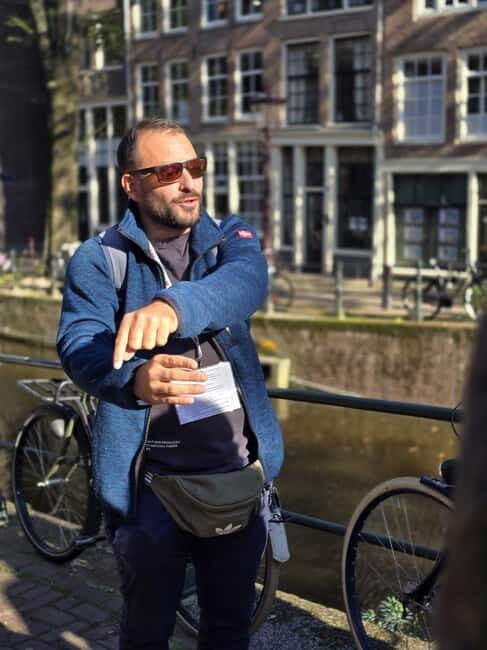
The meeting point is in front of the Bull !!, and the tour ends back there. That setup is practical. You don’t lose time hunting for a new place to gather, and it makes it easier to fold into a half-day plan.
Since the tour is a walking format, your first job is simple: wear comfortable shoes and be ready for a brisk pace. A camera and water are also a good idea, especially if you like capturing the faces and signs you’ll later link to the stories you just heard.
I like that the whole thing runs in English and Greek (with a live guide). So if you’re traveling with someone who prefers Greek, you have an option without getting stuck with a group language problem.
How the city’s “mud problem” becomes its superpower
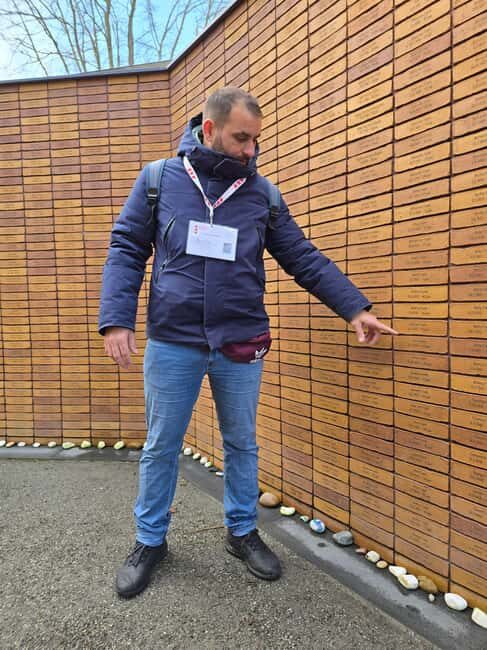
A big theme you’ll hear early is how Amsterdam started and survived in a watery place. Dams and dikes are not just background. They’re the reason Amsterdam exists as a city at all. The tour explains the idea of the first dam and the dikes, then connects that to how the city’s infrastructure and survival shaped what came next.
Here’s the value for you: once you understand that Amsterdam’s foundations were solved through engineering and collective effort, you start seeing the city differently. You stop treating it like a postcard and start treating it like a project that people had to keep maintaining.
You’ll also get the “why houses lean” style of explanation, which is exactly the kind of detail that makes you look twice at ordinary buildings. And when the guide ties it back to the ground—mud, settlement, and the realities of building on unstable land—the city stops being mysterious in a vague way and becomes understandable in a very concrete way.
Dams, dikes, and floods: the lessons that keep repeating
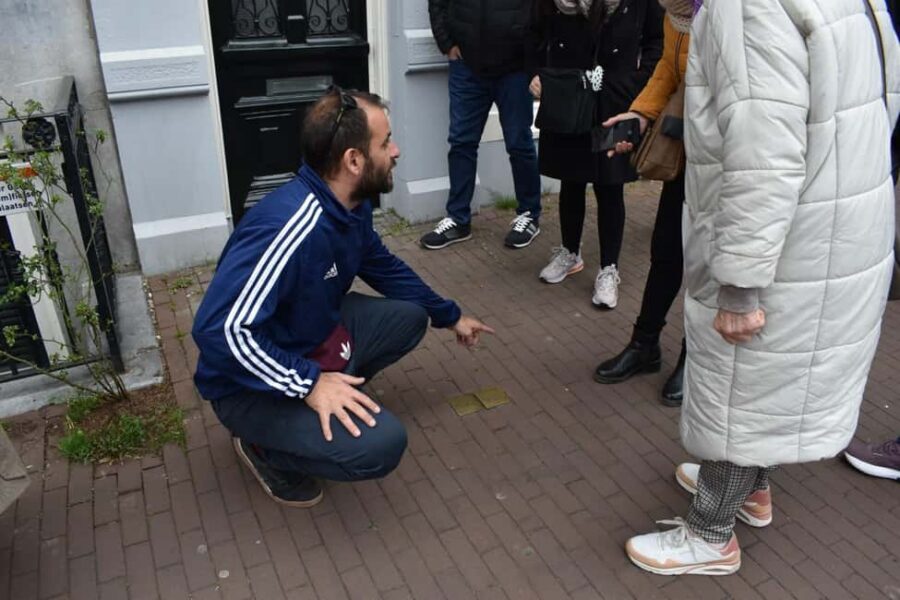
Amsterdam’s water story is ongoing, not one-and-done. This is where the tour shines because it doesn’t just mention floods as dramatic events. It talks about systems that saved a city. That’s a key difference between hearing about history and understanding it.
If you’ve visited Amsterdam before and wondered why so much looks engineered or planned, this is the missing layer. The tour’s focus on resilience makes sense of why practical thinking is baked into the city’s identity.
You’ll likely hear the timeline bend back and forth: early settlement and water control, then later historical moments where politics and society influenced how water management worked. Even without an official diagram, the walk keeps the cause-and-effect feeling intact.
And because the guide is actively telling stories, you’ll probably find yourself mentally building connections. For example: how trade growth and wealth affected the ability to invest in city systems, and how major upheavals changed what people could prioritize.
From trade to the Golden Age: why money changed the city
The Golden Age gets covered, but the tour doesn’t treat it like a shiny layer on top of everything else. It’s positioned as part of the city’s longer development: trade, expansion, and the rise of Amsterdam as a powerful place.
This matters for readers who want more than captions. If you only see the architecture and canal views, you get beauty but not context. When you understand how trade and prosperity were connected to the city’s growth, you start to read Amsterdam like a map of motivations.
This is also where the tour helps your future self. After you’ve walked this story line, you’ll spot patterns when you move around the city later—where commerce likely mattered, what kinds of social change followed prosperity, and why certain ideas took hold.



Religions, liberal revolutions, and the human side of politics
One of the most interesting parts of the experience is how it handles ideology. The walk covers both old religions and liberal revolutions, and it frames them as part of the city’s evolution rather than as abstract textbook topics.
That’s a big plus for you. Amsterdam is famous for tolerance today, but you don’t get that from a slogan. You get it from knowing how people argued, adapted, and built a society where disagreement could exist without destroying the whole system.
The guide’s tone helps here. When history is told as personal stakes, it’s easier to follow—like you’re watching a series of turning points rather than skimming a timeline.
If you’re the kind of traveler who likes the “why” behind famous reputations, you’ll appreciate this section. It gives you a lens for understanding the city beyond canals and bikes.
World War II: moments that reframe the whole city
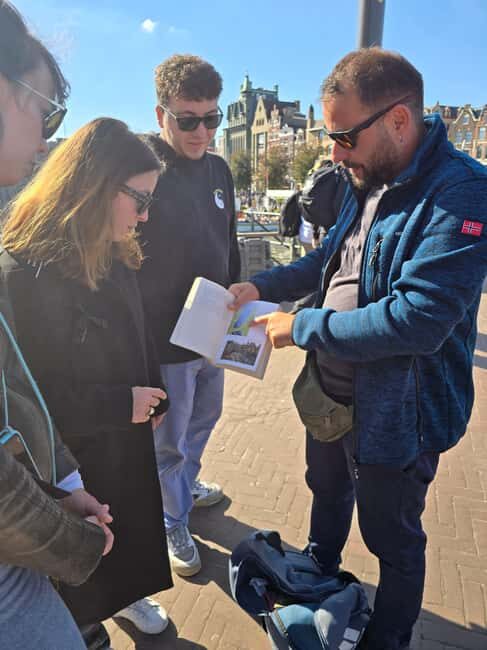
World War II is one of the defining moments included. The key is that the tour doesn’t isolate it as a standalone tragedy. It places WWII in the arc of how Amsterdam’s resilience and social systems were tested.
Again, you get value from the approach. When a guide connects big events to the city’s earlier foundation—water control, civic organization, and shifting ideas—you end up with a clearer sense of how Amsterdam held together under stress.
This part of the walk is also emotionally weighty, even when told with care. If you prefer history that’s more lighthearted, you may still appreciate the balance, but it’s worth knowing that WWII is not a trivia stop.
Why you’ll remember the details (houses, marks, and the logic)
A walking tour is only as good as its specifics, and this one leans into memorable questions:
- Why houses lean
- What’s with all the XXX
- Why Amsterdam is built on mud
These aren’t random facts dropped like candy. They act like clues. When you learn the foundation logic and the city’s water-related constraints, you stop viewing buildings as purely decorative. You start seeing them as solutions to real problems.
The guide’s warmth and humor also matter. The best facts aren’t just accurate—they’re easy to recall. Antonis’s style seems designed for that: explain, connect, then land on a detail you can repeat later.
The A’Dam handwritten postcard: a small souvenir with a story
At the end, you receive an archive-inspired, handwritten postcard from historic A’Dam, plus a Dutch stamp. You can send it or keep it, and either way it feels like part of the tour rather than a generic add-on.
This is the kind of souvenir I actually like. It doesn’t clutter your bag with a cheap magnet. It gives you something you can use right away, and it reminds you that the city’s story is still being written—especially if you send it to a friend and tell them one fact you just learned.
Also, handwritten details take time. That’s usually a sign someone cared about the experience beyond just talking.
Price and value: what $28 gets you in real terms
The price is $28 per person for a 2-hour walking tour. On paper, that seems simple. In practice, you’re paying for three things:
1) A live local guide (Antonis) who tells history as a story, with explanations you’ll remember.
2) A small group size that makes the tour feel doable, even if you’re traveling solo.
3) A handwritten postcard with a Dutch stamp, which adds a tangible memory of the walk.
The 2-hour format is also part of the value math. You get a focused dose of Amsterdam’s “how it works” history without needing a full day or museum ticket. If your schedule is tight, this is a good way to build context before you roam.
And the guide is listed as English, Greek, so you aren’t locked into one-language-only experiences.
Who this tour suits best
This tour is a great match if you:
- love facts that explain how a city functions
- prefer a guided walk with a story arc over a static museum experience
- enjoy hearing about major eras (Golden Age, WWII) with real-world meaning
- are traveling solo and want an experience that doesn’t feel awkward or canceled because of low numbers
It’s also a good choice if you’ve been to Amsterdam once already and want to understand the city behind the postcard scenes. The off-the-beaten-track feel helps here, because you get origins and expansion explained through less-obvious spots.
If you want a very quiet, reflective walk with minimal intensity, this may feel like too much. But if you like your history with humor and momentum, you’ll likely have a good time.
Practical tips so you enjoy every minute
The tour includes practical essentials, but you still control the comfort.
- Bring comfortable shoes. This is a 2-hour walk, and you’ll cover enough ground to matter.
- Bring water, especially in warmer weather.
- Bring a camera if you like documenting the street-level details that match the stories.
- Dress for the weather with the expectation that walking time is walking time.
One rule to note: video recording is not allowed. If you were planning to film segments for social media, set your expectation that you’ll be taking still photos instead.
Should you book this Amsterdam secrets walk?
Yes, if you want a fast, story-driven way to understand how Amsterdam became Amsterdam. The combination of small group energy, an attentive guide (Antonis), and the specific focus on foundations, political turning points, and defining moments makes it a strong use of a short window.
I’d say skip it only if you need one era to be explored at maximum depth and you’re willing to trade off breadth. This tour gives you the big arc and the memorable clues—especially the mud, dams, leaning houses, and the city’s political shifts—so you can carry that understanding with you while you explore on your own.
If that sounds like your kind of travel, book it.
FAQ
How long is the Amsterdam walking tour?
The tour lasts 2 hours.
Where does the tour start?
It starts in front of the Bull !!.
What’s the group size?
The group is small, with a maximum of 12 guests.
What languages is the tour offered in?
The live tour guide offers English and Greek.
What’s included in the price?
You get the 2-hour storytelling tour with a local guide and a handwritten postcard with a Dutch stamp.
Is video recording allowed?
No, video recording is not allowed.
Can I cancel, and can I pay later?
You can cancel up to 24 hours in advance for a full refund, and you can reserve now and pay later.