REVIEW · AMSTERDAM
Amsterdam: 1-Hour Canal Cruise in the Evening
Book on Viator →Operated by Voyage Amsterdam · Bookable on Viator
The canals look better at night, and this ride proves it. You glide through Amsterdam’s famous waterways with a live skipper telling you how the city grew, what the bridges mean, and why the canal belt is a big deal. It also helps that the boat is set up for comfort in colder months, with warm blankets and an onboard bar.
I love the small-group feel. Even on a 1-hour schedule, the guide can keep things lively, take questions, and connect landmarks to real stories. I also like that the tour focuses on variety in one loop: canal belt landmarks, drawbridges, and classic neighborhoods like the Jordaan and the negen straatjes.
One thing to consider: the view depends on conditions. At night in winter (and when windows fog up), photos can be harder, and you may still feel chilly if you sit near the window line for long stretches.
In This Review
- Key Things To Know Before You Go
- Why This One-Hour Amsterdam Night Cruise Works
- The Route Starts In The Jordaan, Near Prinsengracht 263
- Jordaan vs Canal Names: How The Tour Helps You Read Amsterdam
- Prinsengracht And The Houseboat Museum Side Of The Story
- Negen Straatjes: Why This Canal Stop Matters
- The Amstel Origin: From River To City
- Blue Bridge (Blauwbrug) And The Shape Of The City
- The UNESCO Canal Belt: What To Watch For
- Singel And The Medieval Moat Idea
- Magere Brug, The Skinny Bridge, And A Drawbridge Moment
- Munttoren And The Coin-Minting Connection
- The Flower Market From The Water: More Than A Photo Stop
- Museum Stops: Grachtenhuis And Canal House Life
- The On-Board Experience: Comfort, Pace, And The Bar
- When This Tour Is A Perfect Fit
- A Couple Of Real-World Considerations
- Should You Book This One-Hour Evening Canal Cruise?
- FAQ
- How long is the Amsterdam evening canal cruise?
- What language is the live narration offered in?
- Is there food or drinks included?
- Does the boat provide warm clothing for cold evenings?
- Where does the cruise depart?
- What happens if the weather is poor?
Key Things To Know Before You Go
- Live skipper narration keeps the route understandable and fun, not just a loop of water
- Warm blankets help a winter evening feel far more comfortable
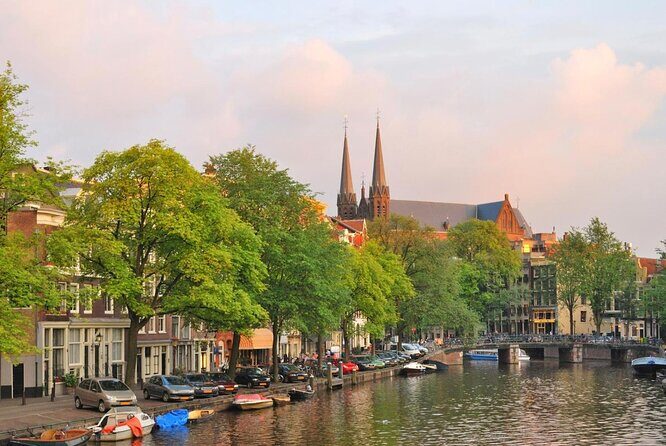
- UNESCO canal belt sights like Prinsengracht, Keizersgracht, and Herengracht come with context
- You cruise near major landmarks including the Anne Frank House area and the Flower Market zone
- An onboard bar is available for drinks you can buy during the cruise
- Fogged windows can limit photos on some boats or in cold weather
Why This One-Hour Amsterdam Night Cruise Works
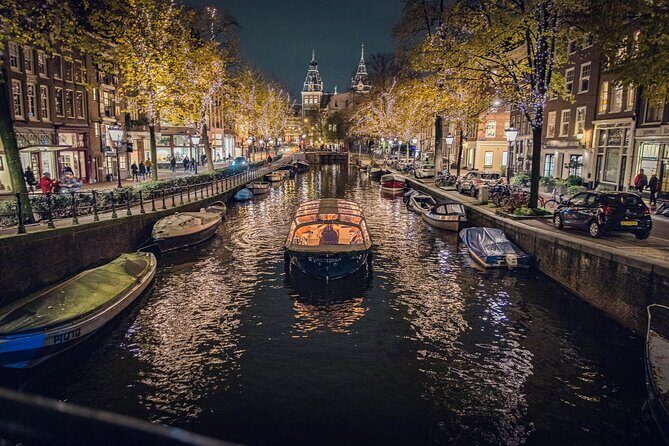
Amsterdam by night has a specific vibe: lights on water, quiet streets behind you, and the city suddenly feeling larger than it does in daytime. This 1-hour canal cruise is built for that moment. You get a guided introduction without spending half a day on logistics or long transfers.
The main value is the combination of timing and storytelling. With a tight duration, you’re not lost in “we’ll get to it later.” Instead, you get a fast route, then you can go back out walking and spot what you just learned. That is especially helpful if it’s your first night in town.
And the tone matters. A lot of people come to Amsterdam expecting canals and photos. This tour gives you more: it turns names like Jordaan, Singel, and Magere Brug into something you can picture.
You can also read our reviews of more boat tours in Amsterdam

The Route Starts In The Jordaan, Near Prinsengracht 263
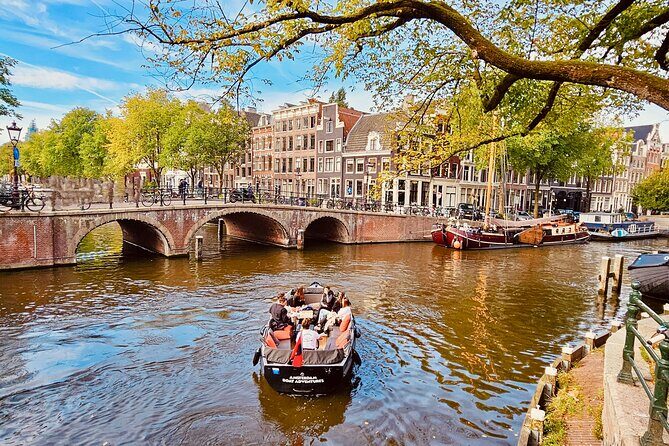
Your cruise is anchored in two classic areas: the Jordaan and the Prinsengracht corridor. The tour starts and ends in the Jordaan area, a neighborhood known for its grid of streets and that “Amsterdam postcard” feeling—canals, gables, and lots of character packed close together.
You also depart near the Anne Frank House at Prinsengracht 263. Even if you’re not there for a visit, this matters because it places you right in the thick of Amsterdam’s canal life. From the water, the city looks compact in the best way.
Look for the practical difference that this route creates. If you plan to visit the Anne Frank House later, your cruise timing can line up nicely as a pre- or post-dinner activity. The cruise becomes a way to orient yourself along the Prinsengracht area before you start exploring on foot.
Jordaan vs Canal Names: How The Tour Helps You Read Amsterdam
One of the smartest parts of this experience is how it uses canal names as story starters. For example, the tour shares theories on where Jordaan comes from—like a French link to jardin (garden)—and how street and canal names in the area connect to trees and flowers. It’s not trivia for trivia’s sake. It trains your eye.
Once you hear that kind of explanation, you’ll start noticing details quickly when you walk. You’ll see that Amsterdam isn’t random. The city’s geography, water routes, and naming patterns are tied together.
You’ll also get a clear sense of Amsterdam’s planning logic around canals. The big 17th-century canal belt—Grachtengordel—is explained as concentric belts built during the Dutch Golden Age. The UNESCO label may sound distant, but it’s basically a reminder that these canals aren’t just pretty: they are part of how the city was shaped and how wealth and life organized around waterways.
Prinsengracht And The Houseboat Museum Side Of The Story
As you cruise along the Prinsengracht area, you’re shown canal life beyond famous bridges. The itinerary points you toward the houseboat museum zone, which is a reminder that Amsterdam’s canal culture isn’t frozen in the past. People still live on or near the water, and the city still performs like a working canal city, not just a theme park.
This section is often where the cruise feels most “Amsterdam.” Buildings along the canal line up closely, and the water makes the city look like it’s been folded in on itself. If the light hits right, you’ll catch those classic reflections that make night cruises worth it.
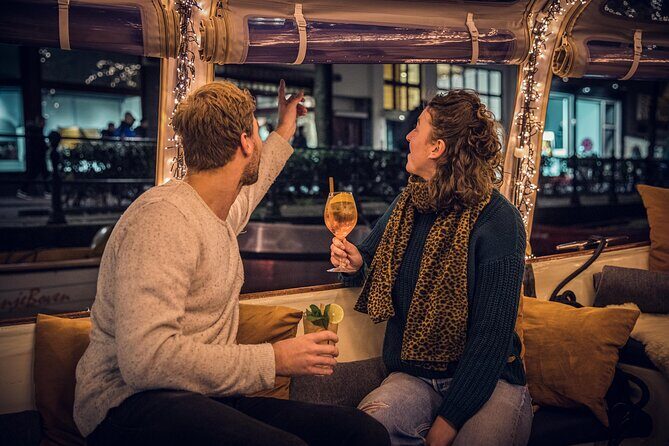
Tip for your camera: focus on landmarks and bridge spans rather than trying to shoot through foggy windows. If your boat’s windows steam, your best photos usually come when you can frame around open sections or hold your shot steady and let light do the work.
Negen Straatjes: Why This Canal Stop Matters
The cruise includes the negen straatjes area—one of those neighborhood names you hear nonstop in Amsterdam conversations. From the water, you don’t need to know every store to appreciate the structure: narrow streets, canal edges, and that “small blocks” feel that makes the area enjoyable to wander.
Even if you don’t shop, this stop helps you later. You’ll be able to say: I know where I am. I know what canal I’m near. That’s the real win. A canal cruise becomes a map with scenery.
If you’re the kind of traveler who likes wandering without committing to a tour every step of the way, this part gives you confidence for the next day.
You can also read our reviews of more evening experiences in Amsterdam



The Amstel Origin: From River To City
The route also turns to the Amstel. This is where you get a basic origin story that makes the whole city feel less abstract. The idea shared is that Amsterdam grew from the Amstel, originally a river, and that a fisherman built a dam that became the beginning point for what the city later became.
This section helps you connect water to power. Canals weren’t only for travel and trade; they were about controlling flooding and creating stable conditions for buildings and commerce. When you understand that, you look at the canal belt as infrastructure, not only scenery.
If you’re wondering why Amsterdam has so many bridges and bends, this kind of explanation gives you a reason.
Blue Bridge (Blauwbrug) And The Shape Of The City
You’ll pass the Blauwbrug, the Blue Bridge over the Amstel. It connects areas such as Rembrandtplein and Waterlooplein, and sits south of the Stopera.
It might sound like a small detail, but bridges are the city’s punctuation. They break long waterlines into readable chunks. When the guide points out what the bridge connects, you start to understand how Amsterdam neighborhoods link up like a web.
At night, bridges are also lighting opportunities. Even if the cruise is short, you get a few “pause-worthy” frames when bridges line up with the street glow.
The UNESCO Canal Belt: What To Watch For
One of the big story threads is the 17th-century canal ring that forms the UNESCO World Heritage site. You’ll hear about the three main canals: Herengracht, Prinsengracht, and Keizersgracht, plus their connection to neighborhoods such as the Jordaan.
What to watch for as you move through this zone:
- Building rows that feel uniform, because the city planned for wealth and status
- Canal edges that are tidy and controlled, not random
- Bridge spacing that helps you guess where streets and squares connect
The tour also mentions that along the main canals are many monumental buildings. You don’t need to memorize names while on board. Just notice the scale and the style consistency. Later, when you walk, those same buildings will look familiar.
Singel And The Medieval Moat Idea
The itinerary includes the Singel canal, described as the Middle Ages moat and an “inner-most” canal today. That framing is useful because it changes how you see the canal geometry. You start to interpret Amsterdam’s waterways as layers of defense, expansion, and later refinement.
Singel runs from near Central Station toward Muntplein, meeting the Amstel. If you plan to do a day with museums or a train day, Singel is one of those helpful “anchor canals” to know.
Even during a one-hour cruise, this kind of explanation makes you feel you’re seeing a city that evolved in stages, not one that simply appeared.
Magere Brug, The Skinny Bridge, And A Drawbridge Moment
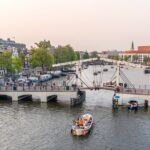
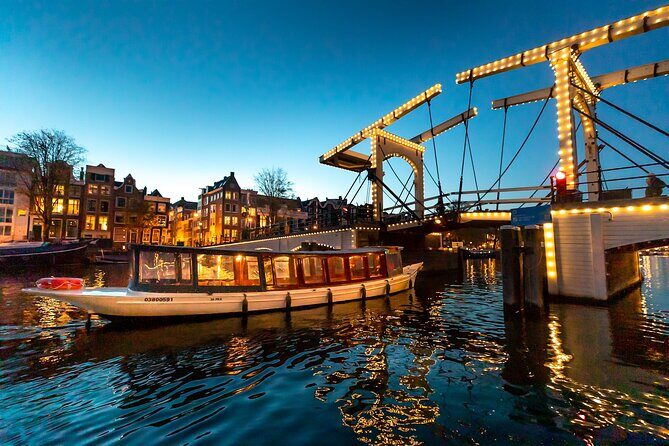
The Magere Brug—known in English as the Skinny Bridge—is a highlight for many people, and the itinerary explains why. It was once narrow enough that two pedestrians could struggle to pass each other, and later it was replaced with a wider version in 1871.
The practical takeaway: bridges here are not only scenic; they’re engineering solutions. A drawbridge also reminds you that waterways were not only for decoration. They were for movement of boats and goods.
Night helps because the bridge spans become silhouettes. If the lights reflect in the water, even a simple crossing view feels special.
Munttoren And The Coin-Minting Connection
The Munttoren (mint tower) is included as part of the medieval city wall story, built between 1480 and 1487, and later used to mint coins in the 17th century.
This is the kind of detail that often gets skipped in basic canal cruises. Here it matters because it links Amsterdam’s wealth to real production. It’s not just “merchants and art.” The city literally minted money here—meaning the economy had a physical footprint.
If you like understanding why certain buildings exist, this stop is a good payoff.
The Flower Market From The Water: More Than A Photo Stop
You’ll cruise past the Amsterdam Flower Market, described as the only floating flower market in the world, and existing since 1862. It’s also famous for being fragrant in all seasons.
From a canal cruise perspective, this is a smart inclusion because it adds a different kind of Amsterdam. It gives you variety beyond museums and bridges. Flowers also show how the city uses the water for commerce in a way that feels human and practical.
If you’re visiting in colder months, it’s a nice reminder that Amsterdam still has seasonal energy—even when canals are gray and dark.
Museum Stops: Grachtenhuis And Canal House Life
The route includes Grachtenhuis, a museum on Herengracht dedicated to 17th-century canal history, described as having interactive and multimedia exhibitions about the canal belt.
It also references the Willet-Holthuysen Museum on Herengracht 605, a canal house with furnished period rooms and a look at life in chic buildings on the canals in the 18th and 19th centuries.
You’re not “stuck inside” these places here. But hearing about them while you cruise is useful. Later, if you decide to go in, you’ll recognize the larger themes: how canal houses were organized, how wealth shaped domestic life, and how the canal belt worked as both transportation and status.
The On-Board Experience: Comfort, Pace, And The Bar
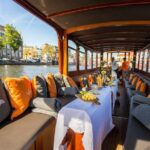
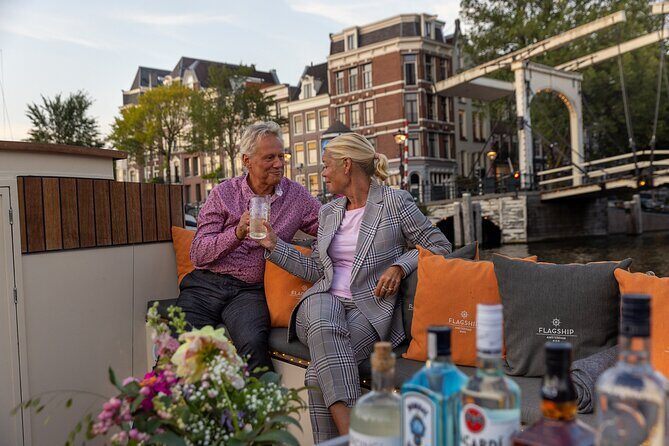
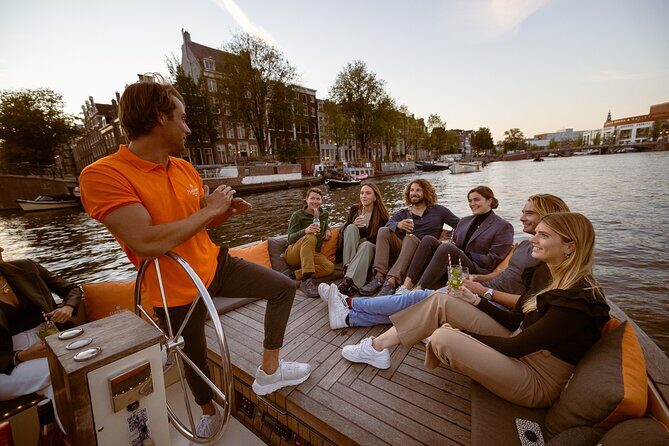
This cruise is designed for comfort. The itinerary notes warm blankets, which is a big deal for evening departures, especially in winter when the wind off the water can cut fast.
There’s also an onboard bar where drinks are available for purchase. That usually changes the mood in the best way. Even if you don’t plan to buy alcohol, a bar tends to keep people relaxed and social, which helps the guide keep the group engaged.
On pace: you’re on board about an hour. That’s long enough to cover a meaningful slice of the canal belt and short enough that you’re not stuck during the part of the evening where cold starts to feel like it’s taking over.
Also, the tour includes a live skipper and guide, with a friendly atmosphere and a maximum of 48 travelers. That size tends to feel social without turning into a loud cattle-car.
When This Tour Is A Perfect Fit
I think this is best for:
- First-timers who want an easy introduction to neighborhoods and canal names
- People doing Amsterdam at a quick pace and wanting one “anchor activity” at night
- Travelers who like guided context for things they’ll later see on foot
- Winter visitors who appreciate warm blankets and a planned evening option
It’s also a solid choice if you’re linking it with other sights. The departure near Prinsengracht 263 can work well when you have plans around that area.
A Couple Of Real-World Considerations
Here are the few practical downsides to keep in mind so you don’t get surprised:
- Foggy or steamed windows can make photos difficult. Plan to frame shots with landmarks, not rely on clear close-up views through glass.
- Meeting points can be confusing in a busy waterfront zone. I’d give yourself extra time and follow the mobile ticket instructions carefully so you’re not sprinting when the boat is already loading.
- It’s an evening cruise, so even with blankets, it can still feel cold if you don’t dress for wind and chill.
None of these ruin the idea. They just help you set expectations.
Should You Book This One-Hour Evening Canal Cruise?
If you want a simple way to understand Amsterdam fast, I’d book it. The route hits the canal belt themes, the bridges, and key neighborhood names in one hour. Add live narration, small-group energy, and warm blankets, and you get an evening plan that feels like it pays off later when you start walking.
I’d think twice if you’re a photo fanatic who needs crystal-clear window shots the whole time. In cold weather, visibility can be hit-or-miss. Also, if you dislike the idea of possible meeting-point confusion, arrive early and double-check your exact pick-up spot.
For most people, though, this is a good value use of an evening: you get context, comfort, and a classic Amsterdam night view without a long time commitment.
FAQ
How long is the Amsterdam evening canal cruise?
It runs for about 1 hour.
What language is the live narration offered in?
The tour is offered in English.
Is there food or drinks included?
Snacks are not included, and drinks are not included. There is an onboard bar where drinks are available for purchase.
Does the boat provide warm clothing for cold evenings?
Yes. Warm blankets are provided.
Where does the cruise depart?
The cruise departs at the Anne Frank House area, at Prinsengracht 263. It starts and ends in the Jordaan.
What happens if the weather is poor?
This experience requires good weather. If it’s canceled due to poor weather, you’ll be offered a different date or a full refund. Free cancellation is available up to 24 hours in advance for a full refund.