REVIEW · THE HAGUE
Vermeer Centrum Delft Museum Admission Ticket
Book on Viator →Bookable on Viator
Johannes Vermeer’s light is easier to grasp here. This Vermeer Centrum Delft admission ticket turns a quick museum stop into a story you can follow at your own pace, with a built-in audio guide and a sequence that walks you through Vermeer’s world and techniques.
You’ll spend time with reproductions arranged in chronological order, then connect the paintings to the city of Delft and to the artist’s methods. The experience also includes interactive-style moments, like stepping into one of his compositions and spotting the museum’s clues about Vermeer’s love messages.
One thing to consider before you go: this ticket experience focuses on reproductions, not Vermeer’s original paintings.
In This Review
- Key highlights you’ll care about
- Ticket Value: Why $14.42 Feels Fair for Art Lovers
- What You Actually Get: Self-Guided, Mobile, English-Friendly
- Enter Vermeer Centrum Delft: The 17th-Century Delft Story Starts Fast
- Chronological Reproductions: How Order Makes the Art Make Sense
- Vermeer’s Methods and the Art of Painting: You See the Why
- Step Into One of His Paintings: Light, Perspective, and Measurable Curiosity
- The Love-Message Angle: Why This Museum Gets Specific
- How Long It Takes: Build a 1–2 Hour Art Reset
- English Audio Guide: The Smoothest Way to Enjoy It
- Practical Planning: Getting There and Making It Effortless
- Who This Ticket Is Best For (And Who Should Skip It)
- Should You Book This Vermeer Centrum Delft Ticket?
- FAQ
- How long does the Vermeer Centrum Delft admission take?
- Is this visit self-guided?
- Is an audio guide included, and what language is it in?
- Will I see Vermeer’s original paintings?
- How do I receive my ticket for entry?
- What is the cancellation policy?
Key highlights you’ll care about

- English audio guide included so you can follow the story without reading a wall of text
- Chronological painting order that helps you see how Vermeer developed over time
- Step-into-the-painting moments that explain light, composition, and point of view
- Delft and 17th-century context woven into the art experience, not tacked on
- Self-guided pacing with enough time to look again when a scene clicks
- A calmer visit than you’d expect from a day trip in the region
Ticket Value: Why $14.42 Feels Fair for Art Lovers
At $14.42 per person, this ticket can be good value if you want a focused Vermeer experience without committing an entire half day. The visit is about 1–2 hours, and you get an audio guide built in, so you’re not paying extra just to understand what you’re looking at.
What makes it feel worth it is the structure. Instead of a random walk past artwork, the museum organizes the experience around Vermeer’s life, the city of Delft, and how his painting methods connect to what you see on screen. If you’re the kind of person who likes to leave a museum knowing why the work matters, this is aimed right at you.
The other value play is time. You can linger as long as you want, and you’re not stuck with a rigid tour schedule, which helps on days when your energy runs hot or low.
What You Actually Get: Self-Guided, Mobile, English-Friendly

This is a self-guided museum admission experience, and that changes how you’ll enjoy it. You can slow down where the lighting, detail, or atmosphere catches your eye, then move on when you’ve got what you need.
Entry is handled through a mobile ticket, and the audio guide is offered in English. That’s a practical setup if you want an easy arrival and you travel light—no extra paper to manage.
Also, the experience is designed for most visitors. Service animals are allowed, and the museum is near public transportation, which matters if you’re trying to build a simple day plan.
Enter Vermeer Centrum Delft: The 17th-Century Delft Story Starts Fast
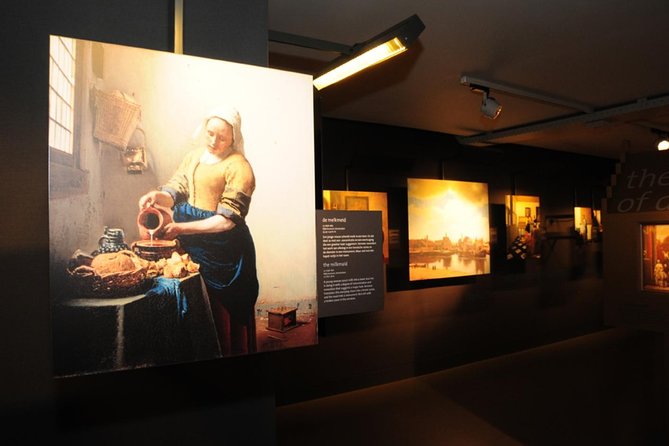
The museum experience is framed around Johannes Vermeer (1632–1675), with Delft treated as more than just a backdrop. You’re guided through the artist’s life and work, and the building blocks arrive in a logical order so the paintings don’t feel disconnected.
Right away, you’ll see reproductions of Vermeer’s works arranged chronologically. That order matters because Vermeer’s style isn’t static. Seeing the sequence helps you notice changes over time—how his choices in light and subject develop rather than repeating the same idea forever.
A tip worth using: pay attention early to the museum’s explanation of painting technique. One review mentioned starting with the level that focuses on the artist’s technique, and that’s smart. Once you understand how he worked, you can look at the later reproductions with sharper eyes.
Chronological Reproductions: How Order Makes the Art Make Sense
Looking at art is partly about taste, and partly about pattern recognition. The museum’s chronological approach gives you patterns to catch, which is why it works so well for people who want to “get” Vermeer in a short visit.
Instead of treating each scene like a standalone postcard, you connect them to time, habit, and method. You’ll learn about the context around the paintings—Delft and the 17th-century world that shaped what Vermeer could observe and paint.
If you’re the type who usually walks through galleries feeling impressed but slightly lost, this is a fix. The museum’s storytelling keeps you oriented, and it gives you a reason to keep going even if one reproduction doesn’t grab you instantly.
Vermeer’s Methods and the Art of Painting: You See the Why
One of the strongest parts of the experience is the attention to how Vermeer painted. The museum doesn’t just show images; it explains the artist’s work methods and how that relates to the look and feel of his scenes.
This is where many visitors get their biggest shift in understanding. Once you know what to look for—light handling, how a scene is built, and why details appear the way they do—you tend to enjoy the art more, not less. It becomes a puzzle with clues, and the audio guide is there to point out what you might otherwise miss.
You can also expect the experience to help you “step into” his imagery. That matters because Vermeer’s work is strongly tied to viewpoint. If you can relate the painting’s composition to real space, the scenes start to feel less abstract and more intentional.
Step Into One of His Paintings: Light, Perspective, and Measurable Curiosity
The museum includes a moment where you can step into one of Vermeer’s paintings. Even if you’re not chasing a photo, this kind of interaction helps your brain connect composition with lived perspective.
Vermeer’s famous reputation is tied to light, and this is one way the museum makes that idea physical. The goal isn’t to turn the art into a theme park; it’s to help you notice how light guides your eye and shapes emotion.
If you’re traveling with a friend who gets impatient in museums, this is a rare point where you get a shared “try this” moment. Then you can return to the reproductions with a clearer idea of what you’re looking at.
The Love-Message Angle: Why This Museum Gets Specific
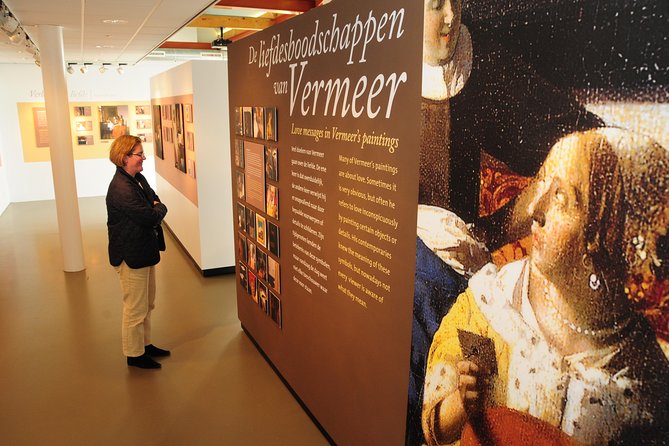
Another standout theme in the museum experience is the idea of secret love messages. The museum uses clues through the artwork to encourage you to look for personal meaning inside scenes that might otherwise read as simply quiet or ordinary.
This isn’t just “here’s a fun fact” energy. It changes your viewing behavior. You start to wonder what symbols might mean and how Vermeer could communicate without being obvious—especially when his work feels restrained on the surface.
One review praised the way the museum explains Vermeer’s messages through the canvases, and that matches what this experience is designed to do. If you like interpretation and symbolism, you’ll probably find yourself spending extra time on the details.
How Long It Takes: Build a 1–2 Hour Art Reset
Plan on about 1–2 hours. For a Vermeer-focused visit, that’s a comfortable window: long enough to follow the chronological story, but short enough to fit into a day without turning the day into museum fatigue.
If you tend to skim, you can get through faster. If you slow down to re-check lighting and technique, you may stretch closer to the full time. Either way, the self-guided setup means you’re not punished for taking your time.
This also helps on days when the main streets around famous art stops are crowded. The museum visit can feel like a calm pocket—especially if you’re grateful for a break from high-energy sightseeing.
English Audio Guide: The Smoothest Way to Enjoy It
The included audio guide is offered in English, and that’s a big deal for a museum that’s telling a story. When you’re not translating on the fly, you stay focused on the art instead of getting pulled into reading every label.
The audio approach also helps you keep moving through the experience. You’ll learn about Vermeer’s life, Delft, technique, and the interpretation themes as you go, so it feels like a guided narrative even though you’re steering your own path.
If you prefer quiet reading over listening, you might choose a lighter audio schedule. But if you want the museum to do the teaching for you, the audio guide is the heart of the experience.
Practical Planning: Getting There and Making It Effortless
The museum is near public transportation, which makes it easier to pair with other stops in your day. That’s helpful if you’re moving around the area and don’t want to spend your time hunting for parking.
Entry uses a mobile ticket, which is typically easy, but do a quick check before you arrive that your phone can display the ticket clearly at the door. Since this is a mobile entry style, your best move is to keep battery power and screen brightness in mind—simple stuff that prevents stress.
One more practical note: service animals are allowed. If you’re traveling with one, this is a place you can visit without having to guess about policies.
Who This Ticket Is Best For (And Who Should Skip It)
This experience is a strong match for:
- Art and culture lovers who want a focused Vermeer story without a big time commitment
- People curious about how artists work, not just what they painted
- Anyone who likes learning technique and then immediately using that knowledge while looking
It might be less ideal if:
- You’re specifically chasing original Vermeer paintings. This experience centers on reproductions, so manage expectations.
Also, if you enjoy “quiet museum time,” you’re likely to like the pacing. The museum doesn’t force you to race, and the chance to pause and re-look is part of the design.
Should You Book This Vermeer Centrum Delft Ticket?
I’d book this if you want a clean, manageable way to understand Vermeer—his relationship to Delft, his painting approach, and the meaning the museum points to in his images. The price fits the time, and the included English audio guide makes it easy to learn without extra effort.
Skip it only if original paintings are your non-negotiable goal. If you’re okay with reproductions and you’d rather leave with a clearer understanding of light, technique, and symbolism, this ticket is a smart use of a couple hours.
FAQ
How long does the Vermeer Centrum Delft admission take?
Plan for about 1 to 2 hours.
Is this visit self-guided?
Yes. It’s a self-guided tour.
Is an audio guide included, and what language is it in?
An audio guide is included, and it’s offered in English.
Will I see Vermeer’s original paintings?
The experience includes reproductions of Vermeer’s original paintings.
How do I receive my ticket for entry?
You receive a mobile ticket.
What is the cancellation policy?
Free cancellation is available. You can cancel up to 24 hours in advance for a full refund. If you cancel within 24 hours of the start time, there is no refund.