REVIEW · AMSTERDAM
Amsterdam: Van Gogh and Rembrandt Immersive Experience Entry
Book on GetYourGuide →Operated by Tours & Tickets · Bookable on GetYourGuide
Van Gogh and Rembrandt meet in a 360° show.
This one uses the whole Noorderkerk church interior as the stage, turning famous artworks and ideas into moving light on every wall you look at. Two things I really like: the storytelling through Van Gogh’s letters and the sheer visual scale of the 360° projections. If you expect the full collection experience of a museum, you might feel a bit disappointed, because this is a show with a set runtime.
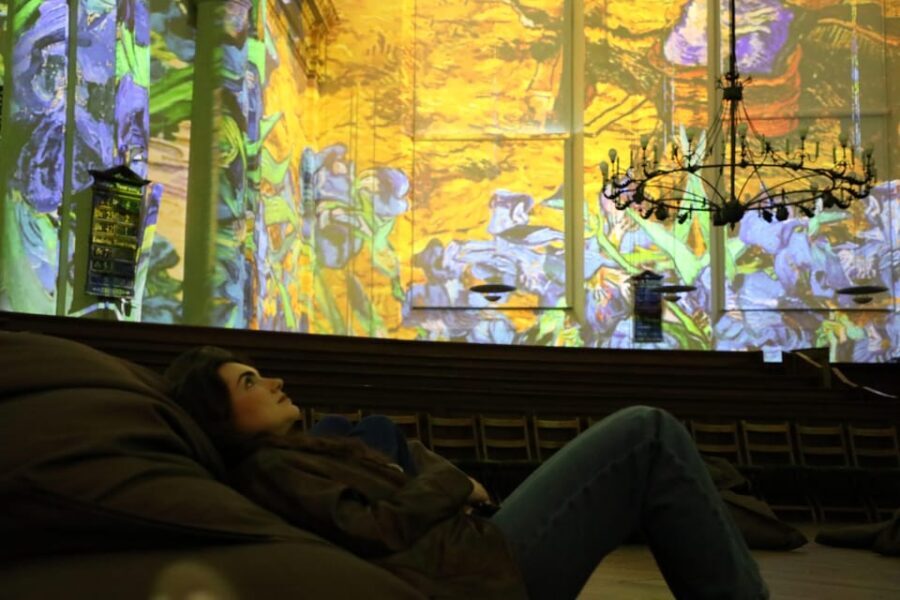
The coolest part is the way the connection between the two artists feels immediate. You’re not just watching paintings on screens; you’re hearing the letters (in English) and seeing how Van Gogh’s fascination with Rembrandt shaped his own work. The comfortable beanbags also make it easy to sit back and let the sound and light do the work.
One note to keep you on track: this is not the Van Gogh Museum. It is focused, time-limited, and told in one go for about 45 minutes, so plan it like an event, not like a casual museum browse.
In This Review
- Key things that make this show worth your time
- Inside Noorderkerk: why this church setting matters in Amsterdam
- The Van Gogh and Rembrandt story, told through letters in English
- How the 360° projections play with your attention span
- Sound and light quality: getting the best seat (without stress)
- Timing in Amsterdam: check-in rules that can make or break it
- Price and value: is $17 a good deal for this format?
- Who this show is best for (and who should skip it)
- What to do before and after the show
- Should you book Van Gogh & Rembrandt: the sound-and-light show in Amsterdam?
- FAQ
- How long is the Van Gogh and Rembrandt sound-and-light entry?
- Where does the show take place in Amsterdam?
- Is this experience wheelchair accessible?
- What language is the story told in?
- Can I bring pets?
- Is it open on Sundays?
Key things that make this show worth your time
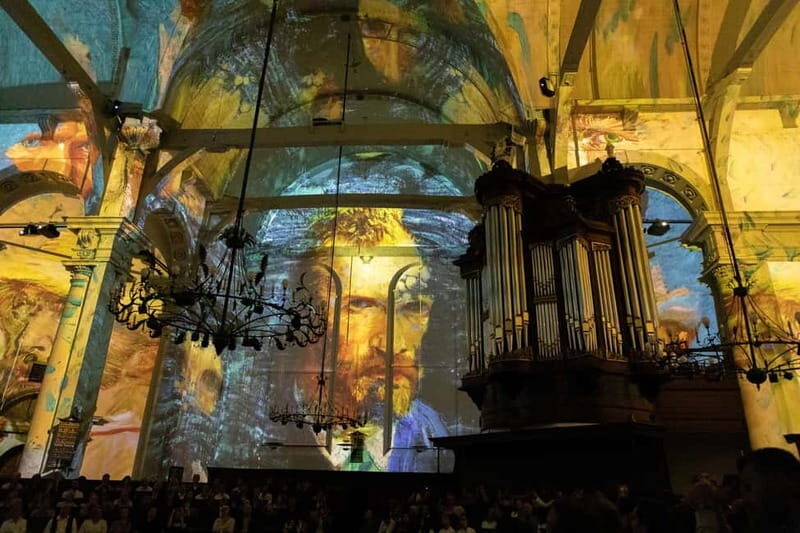
- Noorderkerk becomes the “canvas”: the church interior wraps you in projections, not just framed images on a wall.
- Van Gogh’s letters are part of the script: you get the personal spark behind his admiration for Rembrandt.
- A sound-and-light format, not a lecture: the story unfolds while images shift all around you.
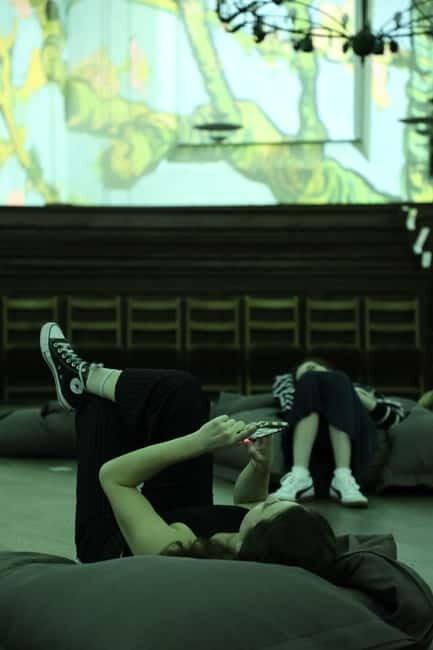
- Beanbags change the experience: you can lie down for the full effect or stroll if you prefer moving.
- Sound quality depends on where you sit: picking cushions around the round area can help.
- Great for art beginners, too: the narrative is built to follow even if you do not know these artists already.
Inside Noorderkerk: why this church setting matters in Amsterdam
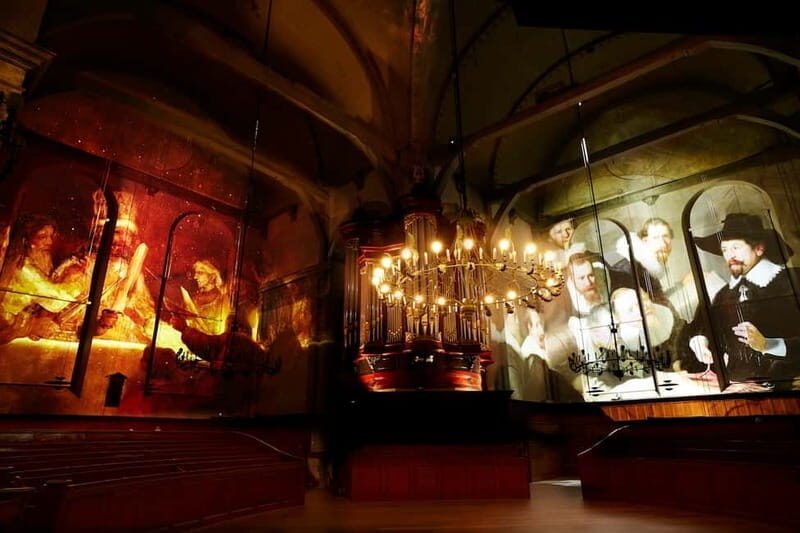
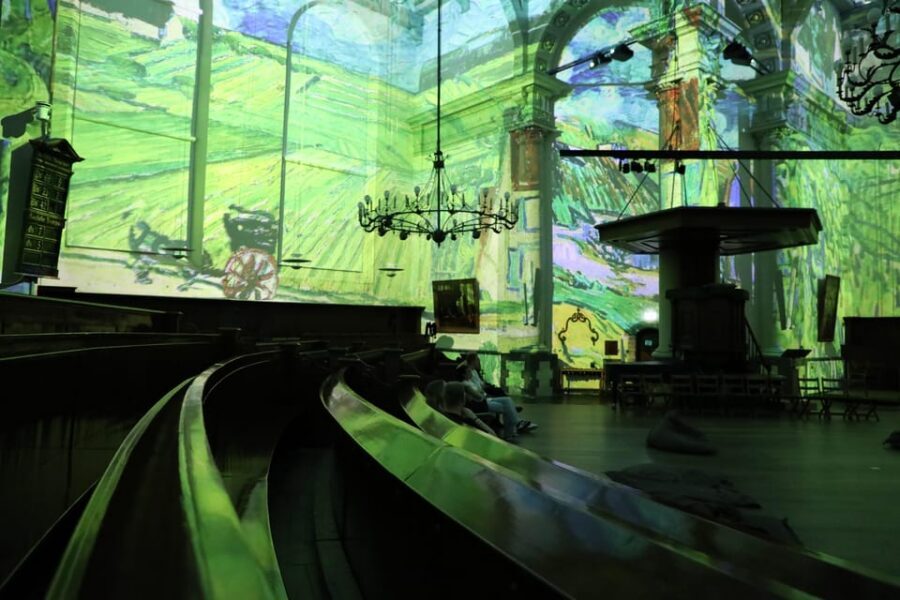
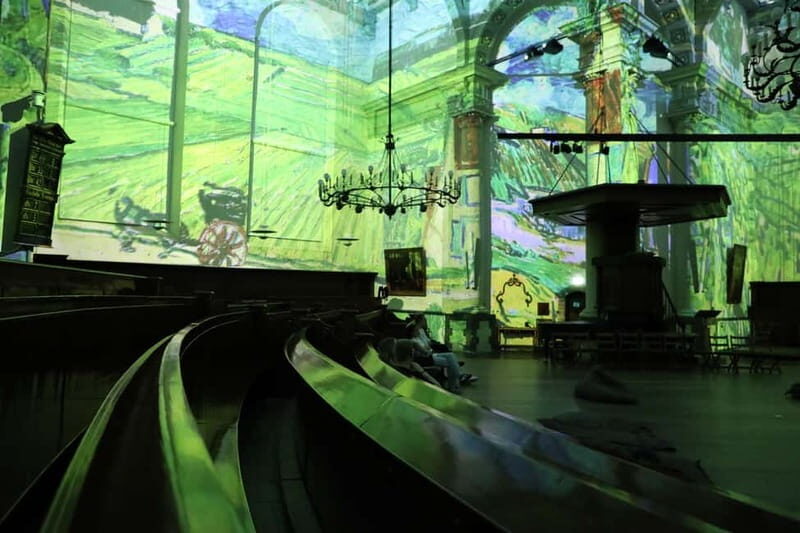
Amsterdam has plenty of art stops, but this one has a special trick: it borrows the drama of a church. The Noorderkerk interior is used as the entire backdrop, so the show feels bigger than the equipment doing it. Instead of a room of artworks, you get a room that turns into an artwork.
What that means for you in practice is simple: you’ll spend most of the time looking up, sideways, and behind you. The story is not confined to one screen. You react to the building as much as to the images, which is why the 360° setup works so well.
Also, the atmosphere matters. You’re in a national monument, in a space that already has its own mood. Then the projections and soundtrack add motion, color, and feeling on top of that space, including sunflowers, angels, and blossom-like visuals.
You can also read our reviews of more tours and experiences in Amsterdam.



The Van Gogh and Rembrandt story, told through letters in English
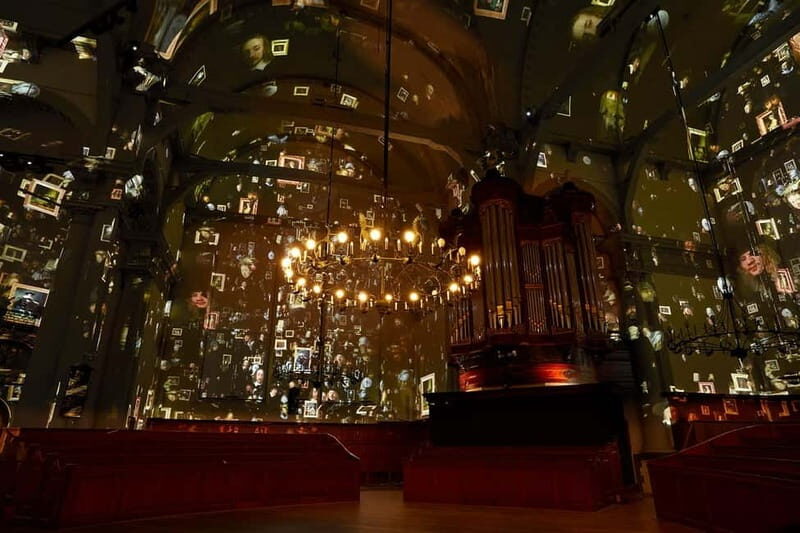
The show’s core idea is connection: how Van Gogh became fascinated by Rembrandt van Rijn, and how admiration turned into inspiration. The script weaves artwork from both artists together with Van Gogh’s letters to his brother, recited in English.
I like how that does two helpful things at once. First, it gives you a reason to care beyond names on a label. Second, it turns art history into a human story: curiosity, writing, influence, and artistic growth.
You’ll also notice the show focuses on themes of admiration rather than trying to teach you everything about either artist. If you’re the type who likes an art “session” that still leaves you feeling like you learned something real, this is a good fit.
One practical tip: if the English narration is new to you, don’t worry about catching every detail. The visuals reinforce the story beats—so you can stay oriented even if your attention slips for a minute.
How the 360° projections play with your attention span
This is a 45-minute program, so it moves with confidence. The projections sweep across surfaces and wrap around you, building images that feel like they’re expanding with the soundtrack. That 360° moving canvas effect is the main reason to pick this over a basic slideshow.
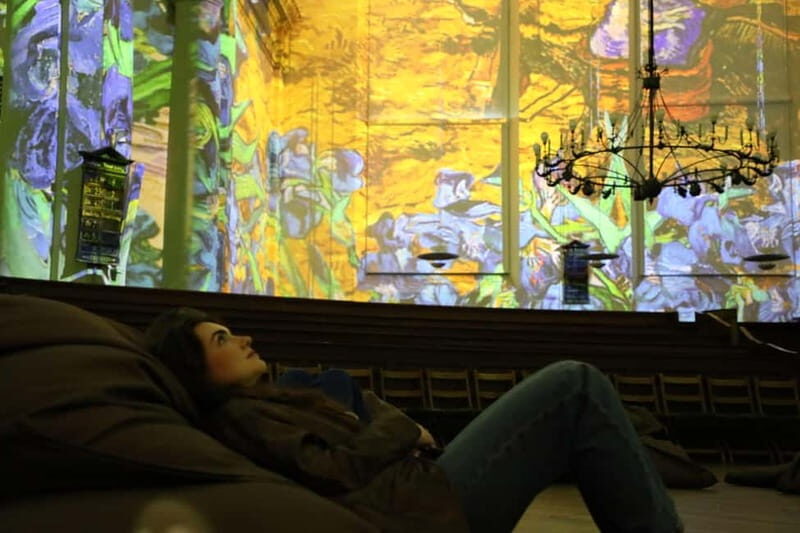
You can experience it two ways: lie back on the beanbags or walk around inside the church while the show runs. Both options work, but they change what you notice. Lying down makes it more like a guided sensory story. Walking can feel more like a tour inside the artwork, where you catch details from changing angles.
If you’re hoping to take photos, keep expectations realistic. The show is designed around viewing and listening, not filming. And since it’s projected onto a full interior, the lighting and angles can make phone photos unpredictable.
Also, keep an eye on the opening moments. There have been small reports of a ceiling projection looking off early on, then correcting later. If something looks slightly dim at first, it may sort itself out as the sequence continues.
Sound and light quality: getting the best seat (without stress)
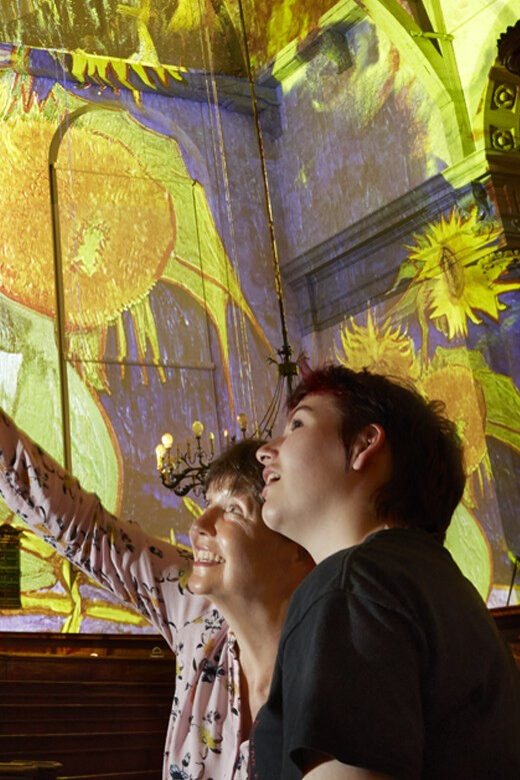
The show is a sound-and-light experience, and sound quality affects how much you “buy in.” The narration and music do more than fill the room; they pace the story and help you track what you’re seeing.
Here’s a simple strategy: choose cushions in the round area if you can. Better sound has been noted in that section, and you’ll probably feel the audio is clearer and more balanced. If you’re sensitive to noise or want a calmer experience, you may prefer sitting where you can still hear without the audio hitting you from every angle.
The good news is the venue setup supports comfort. The seating is built around relaxed viewing—beanbags designed for lying down—so you’re not fighting hard chairs while the narrative plays.
Timing in Amsterdam: check-in rules that can make or break it
This is a 45-minute experience with strict starting times. Check in about 10 minutes early, because late arrivals can miss the start. Amsterdam is great for walking, but it also makes you lose track of time fast once you get distracted by streets, canals, and pastries. I’d treat this like a timed appointment.
Starting times vary by day, and the venue is closed on Sundays. So if you’re building your weekend around art, double-check your calendar before you lock in anything else.
Plan your day so you’re not rushing right before the show. You’ll want a calm arrival, a quick check-in, and time to settle in. Once you’re inside, the show’s flow is the main event.



Price and value: is $17 a good deal for this format?
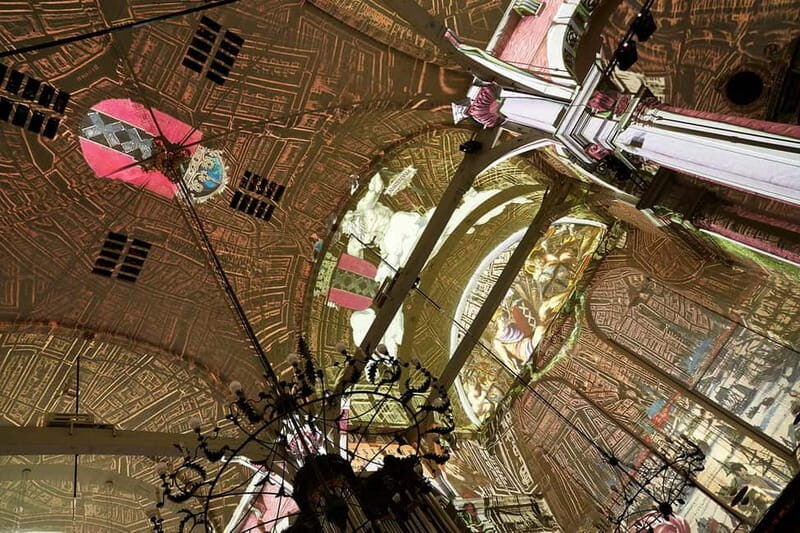
At about $17 per person, this feels like strong value for what you get: entry, a ticketed show, and audio description. You’re paying for a full production experience inside a major historic church, using the building as a giant projection screen.
Is it the same value as a museum ticket that you can use for hours? No. This is not a self-paced collection visit. You’re buying 45 minutes of story-driven spectacle.
But if your travel style is “one great event that feels like Amsterdam,” it adds up. The show is built around major Dutch artists and a clear narrative thread. And the setting is not something you can replicate just by walking around town.
If you’re traveling with kids or teens, or if you don’t want a long museum day, this price point makes it easier to justify. You can pair it with other nearby sights without turning the day into a marathon.
Who this show is best for (and who should skip it)
I think this works especially well if you:
- Love Dutch art but don’t want a heavy lecture format
- Want a unique Amsterdam experience beyond museum galleries
- Like story-driven viewing, with letters and narration in English
- Prefer relaxed seating (beanbags) and a defined time slot
It can also be a good pick for groups because the experience is shared in the same space and you’re not each wandering to different exhibits. That shared focus makes it feel social without needing conversation.
On the other hand, you should avoid it if you have epilepsy, because it is not suitable. Also skip it if you’re looking for a museum-style route with lots of independent choices, since everything is structured around the show.
And if you already planned a visit to the Van Gogh Museum, this shouldn’t replace that. Think of it as a different angle: Van Gogh’s inspiration and Rembrandt’s influence, presented as a crafted production rather than a gallery day.
What to do before and after the show
Because the program is short and focused, you can build a smart day around it. I’d aim to eat before you go, since food and drinks aren’t included. You don’t want to start looking at hunger while angels and blossoms are floating over the nave.
After the show, you’ll probably be in a “paintings feel different now” mood. Use that energy to pick one or two nearby art or cultural stops, rather than trying to cram in five things. The experience is designed to connect Van Gogh and Rembrandt in your mind, and that works best when you follow it with something that lets you reflect.
If you feel like snapping back into reality, a canal stroll after can be a good reset. The projections stay in your head, and that makes normal Amsterdam streets feel extra vivid.
Should you book Van Gogh & Rembrandt: the sound-and-light show in Amsterdam?
Book it if you want a high-impact, time-limited Amsterdam art experience in a real historic monument. The Noorderkerk setting plus the 360° presentation and the story built from Van Gogh’s letters in English make it feel personal, not just decorative.
Skip it if you want a museum collection visit, a long self-guided experience, or if sound-and-light shows are not your thing. And if you’re dealing with epilepsy, don’t choose this one.
If you like your culture days simple and memorable, this is an easy yes at $17, especially when you plan to arrive early, settle in, and let the church become part of the artwork.
FAQ
How long is the Van Gogh and Rembrandt sound-and-light entry?
The experience lasts about 45 minutes.
Where does the show take place in Amsterdam?
It takes place inside the Noorderkerk in Amsterdam.
Is this experience wheelchair accessible?
Yes, it is wheelchair accessible.
What language is the story told in?
The letters are recited in English, and the host or greeter speaks Dutch and English.
Can I bring pets?
Pets are not allowed, but assistance dogs are allowed.
Is it open on Sundays?
No, it is closed on Sundays.