REVIEW · AMSTERDAM
Amsterdam: The Kattenkabinet Cat Museum Entry Ticket
Book on GetYourGuide →Operated by Museum Het Kattenkabinet · Bookable on GetYourGuide
Cats in art form. Real cats too.
Amsterdam’s Kattenkabinet is one of those places that makes you tilt your head and smile. It’s a full museum built around cats, housed in a historic canal-side home on the Herengracht, with art spanning styles and centuries. I especially love the way it mixes serious names like Picasso and Rembrandt with playful cat pieces that don’t take themselves too seriously. The second thing I like is the living part of the experience: you may spot resident cats wandering around as you go.
The setup is also very intimate, so don’t expect a big, hours-long museum crawl. Most visits are quick, and a few areas like parts of the garden can be closed seasonally, so plan for a short outing.
In This Review
- Kattenkabinet in Amsterdam: A cat museum inside a real canal house
- The Bob Meijer collection: where this cat shrine starts
- What you’ll see: Picasso, Rembrandt, and a lot of cat variety
- The 17th-century ceiling painting and the building itself
- Resident cats and the garden: the part you’ll remember most
- How long your visit takes and how to pace it
- Staff vibe and the gift shop you’ll actually want to browse
- Price and value: is $15 worth it?
- Best time to go and how to fit it into an Amsterdam day
- Who should book Kattenkabinet (and who should skip)
- Should you book this entry ticket?
- FAQ
- How long does the Kattenkabinet visit usually take?
- Is the museum only about cat art, or are there real cats too?
- What kinds of art are included?
- Are there famous artists in the collection?
- Where is the museum located?
- Is an entry ticket included?
- Are you allowed to bring food, drinks, or smoke in the garden?
Kattenkabinet in Amsterdam: A cat museum inside a real canal house
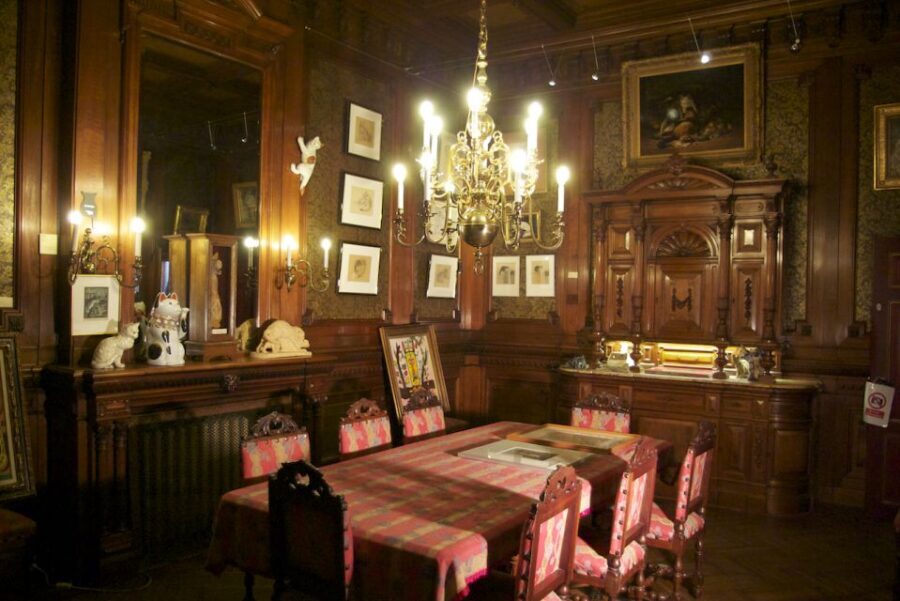
This is not a themed mall exhibit where cats show up on mugs and posters. The Kattenkabinet feels like someone’s lifelong obsession, turned into a visitor-friendly museum. You’re walking through a house setting, so the art lands in rooms that feel personal instead of corporate.
The location matters too. It sits on the Herengracht, one of Amsterdam’s signature canal streets. So even if you only spend part of a day here, you’re adding a distinctive stop to a canal walk, not just jumping into another indoor attraction.
And yes, the cat theme is not subtle. You’re in a museum where the collection is the point, and the resident cats are part of the atmosphere. It’s a change of pace from the usual Amsterdam art route.
The Bob Meijer collection: where this cat shrine starts
A big part of the experience is the origin story of the museum. The collection was established by the museum owner and cat lover Bob Meijer, and the museum explains how the cat that first inspired him ties into the collection’s birth.
This matters because it gives the museum its tone. You’re not just looking at cat art as a novelty. You’re seeing how one person’s passion shaped a collection that covers fine art, prints, photos, and all sorts of cat-related artifacts.
There’s also a respectful, almost ceremonial feel in places, like a cat-photo shrine where you can leave photos of your own cat if you’d like. It’s a small touch, but it turns the visit from a one-way look into something a little more participatory.
You can also read our reviews of more tours and experiences in Amsterdam



What you’ll see: Picasso, Rembrandt, and a lot of cat variety

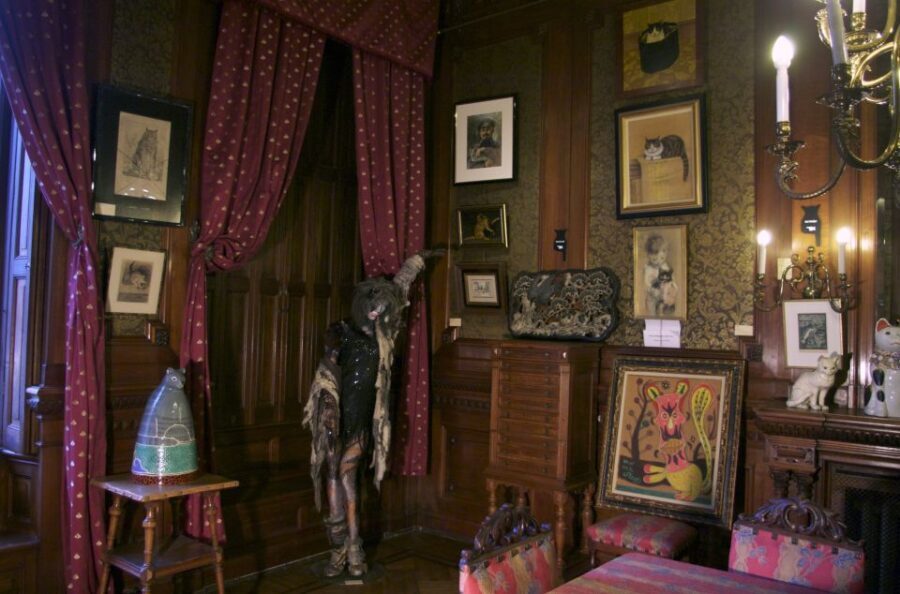
The art range is the biggest reason I think this museum works even for people who are not hard-core cat collectors. The collection includes photos, lithographs, paintings, and various cat-themed objects. You’re not limited to one style or one era.
You can spot well-known art names in the mix, including works connected to artists like Rembrandt, Picasso, and Toulouse-Lautrec, along with other artists. That combination is part surprise, part delight. It also gives you an easy conversation point: you can point out the famous names and then switch to the lighter, stranger, or more curious items.
One detail I really like is the museum doesn’t only show polished gallery-style pieces. You’ll also see a lot of cat-related work by lesser-known artists, which makes the museum feel broader than a celebrity-art pinboard.
And if you want a detail to latch onto, the collection includes a mummified cat dated to about 200 BC. That kind of object makes the cat obsession feel ancient in a way no photo collage ever could.
The 17th-century ceiling painting and the building itself
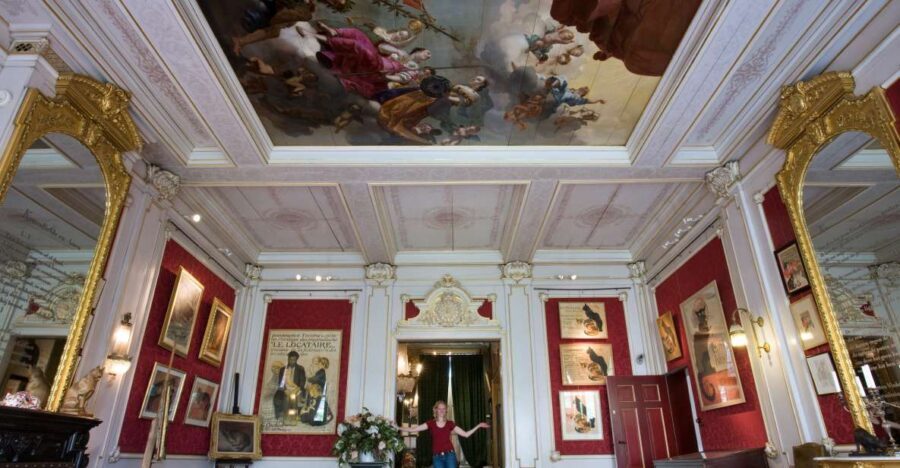
You’re not just in a room with art. You’re in a historic canal home with period features. One stand-out is a 17th-century ceiling painting found in one of the rooms. The painting was revealed after renovations in the 1980s, and it comes from the school of De Lairesse, depicting the Amsterdam City Virgin.
That ceiling matters because it adds context. When you’re inside, the museum doesn’t feel like an afterthought. It feels like cat art living inside actual Amsterdam history.
The building also helps the visit feel different from a white-walled museum. There’s a homey layout and a sense that you’re moving through multiple small rooms, each with its own selection of cat art.
Resident cats and the garden: the part you’ll remember most
If you’re coming for cats, this is where Kattenkabinet delivers. The museum has resident cats you may see wandering through the rooms, and in many cases you can interact in a gentle, visitor-appropriate way. Several visitors describe pets and close encounters, including moments where cats pose for the camera or come up for fuss.
This is also why the atmosphere can feel more like a calm afternoon visit than a strict museum timeline. Cats have their own schedule, so your experience will never be identical to anyone else’s. Some visits may include several cats in view, while others might be quieter.
Outside, there’s a garden area as part of the experience. One thing to keep in mind: in some seasons it can be closed or restricted. If you’re visiting in spring or shoulder months, you might not see the outdoor space available the same way every time.
And there are basic rules: food and drinks aren’t allowed inside the museum, and smoking isn’t allowed in the garden. If you’re used to picnicking your way through attractions, you’ll want to plan your snack stop elsewhere.
How long your visit takes and how to pace it
The Kattenkabinet is small. That’s not a flaw; it’s the whole rhythm. Most people should plan for a short visit, often around an hour or two depending on how closely you read labels and how much time you spend with the cats.
Here’s a practical way to pace it:
- Start by taking in the whole layout once, so you know where each room fits into your route.
- Then slow down in the sections that catch your eye, especially where the big-name art appears.
- Leave extra time if you want to enjoy the garden area when it’s open, or if you’re hoping to catch one of the resident cats out and about.
A couple of rooms are so packed with cat art that you’ll feel like you’re constantly finding something new. That’s a good thing, because it turns a short visit into a dense one.
You can also read our reviews of more museum experiences in Amsterdam






Staff vibe and the gift shop you’ll actually want to browse
The museum experience isn’t only about art and cats. The staff also help shape the mood. People describe friendly reception and a welcoming feel when you arrive, which makes the small space feel easy to enjoy instead of cramped.
The gift shop is another practical win. It’s not just souvenir leftovers. You can find cat-themed items like posters and tote bags, and the shop adds a final “take a piece of this” moment before you head back out into Amsterdam.
If you like shopping during cultural visits, this is one of the stops where the merch matches the theme. You’re unlikely to feel like you’re buying a random postcard when the museum itself is so specific.
Price and value: is $15 worth it?
At about $15 per person, Kattenkabinet sits in the range where value depends on what you care about.
If you love cats and you love art, you’re paying for a rare combo: well-known artists’ names alongside quirky cat artifacts, all in a compact layout that keeps you moving. It’s also not a passive exhibit—there’s a living element in the resident cats, and the museum includes interactive-feeling touches like the photo shrine.
If you don’t care much about cats, it will still be charming, but the museum might feel too narrow. And even cat lovers should know the visit won’t replace a half-day museum plan. It’s best treated as a focused stop—an afternoon anchor, not a full itinerary replacement.
Best time to go and how to fit it into an Amsterdam day
Because the museum is compact, you don’t need a perfect scheduling obsession. What you do need is positioning.
I like pairing it with:
- a canal walk along the Herengracht area, or
- a short indoor break on a day when Amsterdam weather turns
You’ll also want to time it so you’re not rushing. The museum is quick, but you’ll enjoy it more if you give yourself room to wander, re-visit rooms, and wait a minute for cats to do their thing.
Also, if you’re traveling with kids, plan for flexibility. The museum is one of those places where kids are entertained by both the art and the animals, so you won’t need constant “museum lecturing.”
Who should book Kattenkabinet (and who should skip)
Book it if:
- you’re a cat lover, full stop
- you like unusual museums that feel like a personal passion project
- you want a short, family-friendly stop in Amsterdam
It can also work well for mixed groups. Even if one person is more into art history, the museum’s big-name art gives you something to point at. And even if someone’s more into cats, there’s plenty of visuals to enjoy without needing the cats to appear at the exact moment you want.
Skip it if:
- you hate small museums and prefer long, spread-out collections
- you need lots of seating or long relaxation time
- you’re coming mainly for a big gallery experience rather than a cat-centered one
Should you book this entry ticket?
If you want a short Amsterdam stop with real personality, Kattenkabinet is a smart booking. For the price, you get a strong art collection themed around cats plus a living factor with resident cats. It’s also easy to fit into your day since it doesn’t require a half-day time commitment.
My call: book it if cats are your thing and you’re okay with a compact museum. If you’re only mildly interested in cats, consider whether you want a quick art detour or save your time for a larger museum with more room to roam.
FAQ
How long does the Kattenkabinet visit usually take?
The museum is small, so most visits are relatively short. Plan for about an hour to a couple of hours depending on how closely you look and how much time you spend with the cats.
Is the museum only about cat art, or are there real cats too?
It’s a cat art museum, but there are also resident cats in the building that visitors may see while they explore.
What kinds of art are included?
You can expect cat-themed works such as paintings, drawings, sculptures, posters, lithographs, photos, and other cat-related artifacts.
Are there famous artists in the collection?
Yes. The collection includes works associated with artists such as Rembrandt, Picasso, and Toulouse-Lautrec.
Where is the museum located?
It’s located on the Herengracht canal in Amsterdam.
Is an entry ticket included?
Yes. Your ticket includes museum entry.
Are you allowed to bring food, drinks, or smoke in the garden?
Food and drinks aren’t allowed inside the museum, and smoking is not allowed in the garden.