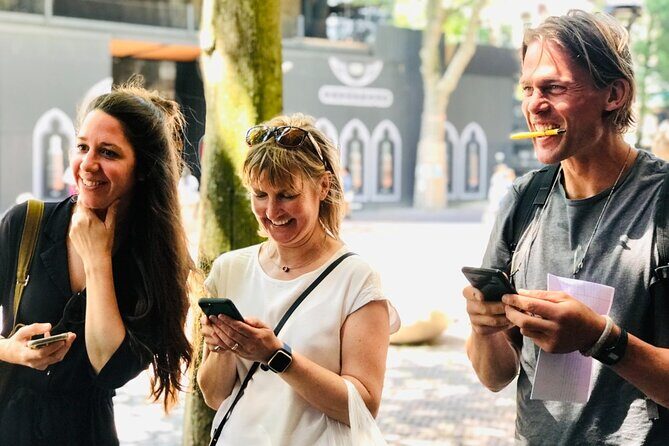
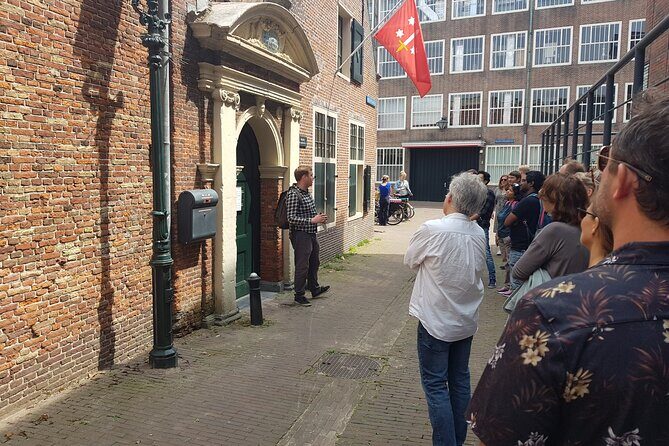
Den Bosch works better when you move at your pace. This e-scavenger hunt turns the city into a game, with GPS guiding you from one landmark to the next while you solve riddles along the way. I like that it is family-friendly and educational, without turning into a stiff guided lecture. You also get a multilingual experience, with languages including English, French, German, Spanish, Italian, and Dutch.
What really wins me over is the format: you’re not stuck with a fixed tour time. You can pause, stop, and restart whenever you want, and you can start any time of day since the trail runs all day. I also love that it is designed for small groups up to 6, so it stays fun and not chaotic.
The main thing to consider is practical: you need a smartphone with enough battery, plus data if the trail requires it. If your phone is always at 5 percent, plan a charger or a power bank, because you’ll use your screen for the whole walk.
In This Review
- Key highlights to know before you go
- Why this Den Bosch scavenger hunt feels different from a normal walking tour
- Price and value for groups up to 6
- What you actually need: smartphone, data, and battery life
- Start at Stationsplein: how to make GPS work for you
- Your 7-stop city trail, step by step
- Stop 1: Stadhuis Den Bosch (Town Hall)
- Stop 2: Grote Kerk Den Bosch
- Stop 3: Den Bosch (a central city stop)
- Stop 4: Het Noordbrabants Museum
- Stop 5: Sint-Janskathedraal
- Stop 6: VVV Bezoekerscentrum De Moriaan
- Stop 7: Jeroen Bosch Huis (’t Root Cruijs)
- How the puzzles keep you focused without feeling like homework
- When this is the best choice for your Den Bosch day
- Pair it with a museum visit or a slower lunch break
- Should you book the e-Scavenger hunt Den Bosch City Trail?
- FAQ
- How much does the e-Scavenger hunt Den Bosch cost?
- How long does the trail take?
- Where does the trail start and end?
- What do I need to bring?
- Can I play at any time?
- What languages are available?
- What is the cancellation policy?
Key highlights to know before you go
- Choose-your-own pacing with a trail you can start, pause, and stop anytime
- GPS keeps you on track while the game still encourages you to look closely
- Multilingual play in English, French, German, Spanish, Italian, Dutch, and more
- 7 landmark stops from Stadhuis Den Bosch to Jeroen Bosch Huis
- Team scoring and feedback that make it feel like a real challenge
- Small-group format for up to 6 people, private for your party
Why this Den Bosch scavenger hunt feels different from a normal walking tour
This is not a scripted walk where you follow a guide talking nonstop for hours. Instead, you’re the boss of your own route inside a clear framework. You start at Stationsplein, then the game nudges you onward with GPS and questions, so you always know what to do next.
The best part is the balance. The trail keeps things moving, but it also gives you space to slow down when something catches your eye. In real city terms, that means you’re not just passing through Den Bosch. You’re paying attention to details, then using the clues to guide your next step.
It also helps that the experience is built for mixed groups. It works well if you’re traveling with kids, but it’s still engaging for adults who like a bit of problem-solving. Many people finish feeling like they saw more than they would have on a rushed first visit.
Price and value for groups up to 6
The cost is $37.15 per group, up to 6 people. That pricing is what makes this one of the easiest “do we go or not?” decisions, especially for families or friends.
Here’s the simple way to think about value:
- With 6 people, the cost per person drops a lot, and the “fun per dollar” tends to feel excellent.
- With 2 people, it is still reasonable for a half-day activity, but you’ll feel it more compared to group pricing.
Duration is about 3 hours on average, and the trail can guide you through the best spots in roughly 2 hours. The key is that there is no hard time limit, so if you stop for photos, a snack, or a longer look inside a building, you can stretch it without feeling guilty.
For budgeting, this is also a low-commitment outing. You can fit it into almost any Den Bosch day plan, and you don’t need museum tickets in advance just to start.
What you actually need: smartphone, data, and battery life
You buy a mobile ticket, then you’ll receive an email with instructions on how to play. It is compatible with both Android and iPhone.
Two practical notes before you start:
- Your smartphone and data are not included, so bring your own.
- Because the route relies on your screen (and likely a data connection), battery matters.
My tip: do a quick battery check before you leave the station. If you’re the kind of person who takes lots of photos and uses GPS often, consider bringing a power bank. It sounds boring, but it saves the day when you’re halfway between stops.
Also, you don’t need to worry about reservations or an exact start time. The trail is available 24/7, so you can choose a time that matches your energy level, weather, and walking pace.
Start at Stationsplein: how to make GPS work for you
Your meeting point is Stationsplein in ’s-Hertogenbosch. The trail ends back at the same spot, so you can think of it as a loop built around seven landmark stops.
GPS does the heavy lifting in one way: it keeps you from wandering in circles while you figure out the next question. But it does not replace the city. When you treat the GPS as a guide, not a babysitter, the experience gets more fun.
If you’re the type who likes to get your bearings visually, you can still do that. Use GPS to reach the right street, then switch to street-level observation while you solve the clue. One of the most common bits of feedback is that the travel between points can feel simple, so making a point of looking around helps.
Your 7-stop city trail, step by step
Expect a mix of walking through the city core and pausing at major landmarks. The game uses questions, challenges, and puzzles, and it gives feedback when you answer.
The trail’s design also means you’ll get brief educational moments without it becoming a long lecture. It keeps moving, but you’re still learning as you go.
Stop 1: Stadhuis Den Bosch (Town Hall)
Your first landmark sets the tone. Stadhuis Den Bosch is a natural place to start because it immediately frames Den Bosch as a real civic city, not just scenery.
In the game, this stop typically kicks off the early puzzle rhythm. You’ll answer questions and get used to how the trail format works. The drawback here is also simple: if you arrive without a clear plan, the early steps can feel like they’re asking you to wake up your brain after travel. Give yourself a few minutes to settle in.
Stop 2: Grote Kerk Den Bosch
Next comes Grote Kerk Den Bosch, a standout church that helps you understand why Den Bosch is worth slowing down for. This is where the trail shifts from learning the format to using the city as your answer key.
The puzzles at church landmarks often reward close looking. You may be asked to notice specific features or follow clues that point toward details you would otherwise miss. If you want the most satisfying experience, take your time here rather than walking past.
Stop 3: Den Bosch (a central city stop)
This one is listed simply as Den Bosch, which is a fun clue in itself. It’s the part of the trail that pulls you deeper into everyday streets and the city’s feel, not only monuments.
This stop is a good moment to slow down and work with your team. If you’re traveling with multiple ages, it’s also where you can split roles in a natural way: one person reads clues, one person checks surroundings, one person navigates the next GPS point.
The main consideration: because this stop is about the city vibe rather than a single huge landmark, you’ll get better results if everyone stays actively involved instead of half-walking and half-scrolling.
Stop 4: Het Noordbrabants Museum
Het Noordbrabants Museum is a smart mid-trail stop. Museums can be a drag if you only do the exterior and you feel like you skipped the real thing, but in this trail it works well as a checkpoint for your next set of questions.
What I like about a museum stop inside a scavenger hunt is that it keeps the walking activity from feeling empty. You’ll have a reason to pause, look, and think, instead of just passing by.
One note: the trail stop does not say museum entry is included. If you want to go inside, treat it as optional add-on time, and plan that based on your schedule.
Stop 5: Sint-Janskathedraal
Then you reach Sint-Janskathedraal, another big religious landmark that gives the trail more variety. This stop feels like a natural next step after the museum pause because it changes the visual and architectural mood.
In practical terms, it’s also a great place to reset your team. Take a short break, regroup, and make sure everyone knows where to look for the next clue.
If you’re doing this with kids, this is often where they start to get the hang of the game and realize the city is basically full of answer hints.
Stop 6: VVV Bezoekerscentrum De Moriaan
VVV Bezoekerscentrum De Moriaan is a useful stop because it connects the game with real visitor services. It’s also a great place for a quick pause, a drink break, or a final sanity check on where your group is in the trail.
Even if you don’t use it for tourist planning, it helps break up the walk and gives you a land-base feel. This kind of checkpoint is what keeps scavenger hunts from becoming a constant stream of walking.
Consideration: if it’s busy or the area is crowded, you may need a moment to find the right angle for reading clues or answering questions calmly.
Stop 7: Jeroen Bosch Huis (’t Root Cruijs)
The final stop is Jeroen Bosch Huis (’t Root Cruijs). Ending here gives the trail a strong finish because it ties Den Bosch to its most famous name: Jeroen Bosch.
This is the moment where the trail often feels most meaningful for art fans. Even if you don’t spend extra time beyond what the game requires, the location makes your final answers feel like they belong to a bigger story about the city.
In terms of pacing, this last stretch is where you’ll either be fully in the zone or slightly tired. If you want the best ending, don’t rush. Let your last answers be a win, not a scramble.
How the puzzles keep you focused without feeling like homework
The scavenger hunt format is built around questions, challenges, and puzzles. That sounds academic, but the key is how short the prompts feel in practice. You get just enough mental work to keep moving, then you’re back in the street again.
A big plus for families is that it encourages active attention. Instead of saying look at that church tower, the game makes you hunt for the right detail. That kind of attention is easier to manage with kids than a normal sightseeing route.
One piece of challenge that stood out in the experience style is that some tasks ask you to look closely for a specific element, like a window detail. So if your group likes spotting tiny things, you’ll likely have a great time. If you hate that sort of scrutiny, you can still play at a faster pace, but you might want to approach as teamwork rather than trying to solve everything alone.
Also, the app offers feedback when you answer. That matters because you don’t waste time wondering if you’re off track. It keeps the game flow steady and reduces frustration.
When this is the best choice for your Den Bosch day
I’d book this if:
- You want an easy way to see a lot of Den Bosch without a rigid itinerary
- You’re traveling with kids or mixed ages and need something that holds attention
- You like puzzles and small challenges more than long commentary
- You want a cultural walk that also feels like play
You might skip it if:
- You prefer tours with a human guide explaining every detail
- Your group hates GPS-based navigation and wants pure map-walking only
- Your phone setup is unreliable (low battery, poor reception, or you dislike using your screen)
The reason it fits so many people is that it works in short bursts. You’re always either walking, scanning, or answering. There aren’t long dead periods.
Pair it with a museum visit or a slower lunch break
Because the trail is self-paced and has no time limit, you can stitch it into a bigger day. One easy plan: do the scavenger hunt first, then add a museum visit if there’s one you want to explore more deeply.
Also, since the route ends back at Stationsplein, it’s simple to grab lunch nearby or continue your day without worrying about long transit plans.
If it’s rainy, you’re still fine. The trail doesn’t punish you with timed pressure. You can pause and keep your rhythm instead of trying to outrun the weather.
Should you book the e-Scavenger hunt Den Bosch City Trail?
Book it if you want Den Bosch in a fun, low-stress format. For the price, it’s a strong deal when you have more than two people. The self-paced nature is the real selling point: you can match the walk to your energy and still hit key landmarks.
Skip it only if you need a traditional guide or if you know your group will get annoyed by phone-based interaction. If your crew likes solving clues together and walking city streets with purpose, this is a smart, practical way to spend a half-day.
FAQ
How much does the e-Scavenger hunt Den Bosch cost?
It costs $37.15 per group for up to 6 people.
How long does the trail take?
The duration is approximately 3 hours on average. It guides you along the best spots in about 2 hours.
Where does the trail start and end?
It starts at Stationsplein, 5211 ’s-Hertogenbosch, Netherlands and ends back at the same meeting point.
What do I need to bring?
You’ll need your own smartphone. Smartphone and data are not included.
Can I play at any time?
Yes. The trail is available 24/7, with no fixed starting times and no time limit.
What languages are available?
The trail is available in multiple languages including English, French, German, Spanish, Italian, Dutch, and more.
What is the cancellation policy?
You can cancel up to 24 hours in advance for a full refund. If you cancel less than 24 hours before the start time, the amount paid is not refunded.